
Introduction: What Is a Yakutian Laika and Why Does It Matter?
The Yakutian Laika is an ancient Arctic dog breed originating from the Sakha (Yakutia) region of Siberia, Russia. Bred for survival in extreme cold, the Yakutian Laika has historically been used for sled pulling, hunting, herding, and companionship. Today, this rare and striking breed is gaining attention worldwide among dog enthusiasts who value intelligence, endurance, and deep human bonds.
As someone who has extensively studied primitive and working dog breeds, sled dog history, and owner experiences, I’ve noticed that this is often confused with Huskies or Samoyeds. In reality, it is a distinct, historically significant breed with unique traits that deserve accurate explanation. This guide is designed to give you practical, experience-based, and trustworthy information so you can truly understand whether they are right for you.
By the end of this article, you’ll have a clear understanding of their temperament, care needs, training challenges, health concerns, and real-world suitability.
What Is a Yakutian Laika?
The Yakutian Laika is a medium-sized spitz-type working dog developed by the indigenous Yakut people of northeastern Siberia. Archaeological evidence suggests dogs similar to the Yakutian Laika have existed for over 8,000 years, making it one of the world’s oldest dog breeds.
Key Breed Facts
- Breed Type: Working / Sled Dog
- Origin: Yakutia (Sakha Republic), Russia
- Purpose: Sled pulling, hunting, guarding, companionship
- Lifespan: 12–15 years
- Recognition: FCI recognized (Group 5 – Spitz and Primitive Types)
Unlike modern designer breeds, they evolved through natural selection and functional breeding, which contributes to their resilience and strong working instincts.
Yakutian Laika History and Cultural Importance
They are deeply intertwined with Siberian survival culture.
Historical Role
For centuries, they were essential for:
- Transport across the tundra
- Hunting large and small game
- Guarding settlements
- Providing warmth and companionship
In extreme Arctic conditions where temperatures drop below −50°C, they were not a luxury—it was a necessity.
Near Extinction and Revival
By the mid-20th century, mechanized transport nearly caused the breed’s extinction. Dedicated Russian breeders and historians revived the Yakutian Laika using documented bloodlines and indigenous knowledge.
Today, the breed remains rare but protected, with growing populations in Europe and limited numbers elsewhere.
Yakutian Laika Appearance and Physical Characteristics
The Yakutian Laika is both beautiful and functional, built for endurance rather than speed.
Size and Structure
- Height:
- Males: 21–23 inches
- Females: 20–22 inches
- Weight: 40–55 lbs
They have a strong but balanced frame, deep chest, and powerful legs suitable for pulling sleds over long distances.
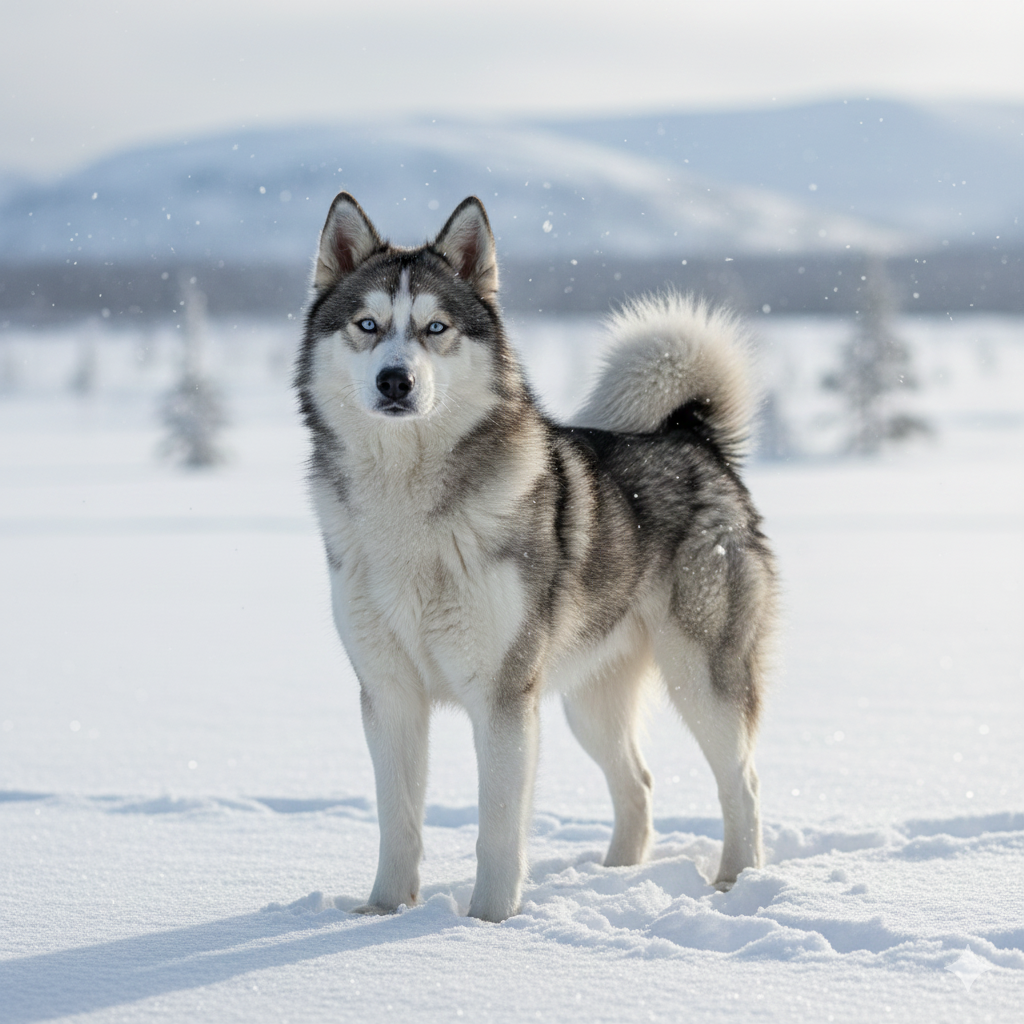
Coat and Colors
The Yakutian Laika has a dense double coat:
- Thick undercoat for insulation
- Straight, harsh outer coat for protection
Common colors include:
- White
- White with black, gray, or brown patches
- Tricolor combinations
Their expressive almond-shaped eyes are often blue, brown, or heterochromatic, adding to their striking appearance.
Yakutian Laika Temperament and Personality
One of the most appealing aspects of the Yakutian Laika temperament is its balance between independence and affection.
Core Personality Traits
- Highly intelligent
- Friendly and people-oriented
- Alert but not aggressive
- Energetic yet emotionally stable
- Strong pack mentality
From owner accounts and working dog evaluations, Yakutian Laikas are known to form deep emotional bonds with their families while remaining adaptable in social settings.
Is the Yakutian Laika a Good Family Dog?
Yes—but only for families who understand working breeds.
Ideal Home Environment
✔ Active individuals or families
✔ Cold or moderate climates
✔ Owners with time for training and exercise
✔ Homes that enjoy outdoor activities
Potential Challenges for Families
✖ Not suited for apartment living
✖ Needs daily physical and mental stimulation
✖ Can become bored if under-exercised
With proper socialization, Yakutian Laikas are excellent with children and generally friendly with strangers, unlike many guarding breeds.
Training a Yakutian Laika: What to Expect
Training a Yakutian Laika is a test of patience, consistency, and respect.
Intelligence with Independence
Yakutian Laikas are quick learners, but like many primitive breeds, they may question commands. This is not stubbornness—it’s problem-solving behavior developed for survival.
Training Tips (Experience-Based)
- Start training early (8–10 weeks)
- Use positive reinforcement only
- Avoid repetitive drills
- Incorporate work-like activities
Owners who involve them in sledding, skijoring, hiking, or cart pulling report significantly better behavior and focus.
Exercise Needs: How Active Is a Yakutian Laika?
They are high-energy working dogs.
Daily Exercise Requirements
- 90–120 minutes per day
- Long walks, running, or pulling activities
- Mental stimulation (training, scent work)
Without sufficient activity, they may develop destructive behaviors such as digging or excessive vocalization.
Grooming and Maintenance
Despite their thick coats, they are surprisingly manageable.
Grooming Routine
- Brushing: 2–3 times per week
- Heavy shedding: Seasonal (spring and fall)
- Bathing: Only when necessary
Their coat is self-cleaning to some extent, an adaptation for Arctic life.
Health and Lifespan
Thanks to natural breeding, they are generally a healthy breed.
Common Health Concerns
- Hip dysplasia
- Eye conditions (rare)
- Minor skin sensitivities
Health Advantage
Unlike many modern breeds, they suffer from fewer inherited disorders, a result of functional breeding.
For authoritative health references:
- Fédération Cynologique Internationale (FCI) – https://www.fci.be
Feeding and Nutrition
They thrive on a high-protein, balanced diet.
Feeding Tips
- Protein-rich food (working dog formulas)
- Avoid overfeeding
- Monitor weight during low-activity periods
Historically, these dogs survived on fish-based diets, so many do well on foods containing omega-3 fatty acids.
Yakutian Laika vs Siberian Husky
| Feature | Yakutian Laika | Siberian Husky |
|---|---|---|
| Temperament | More people-oriented | More independent |
| Rarity | Very rare | Common |
| Climate Adaptation | Extreme cold | Cold |
| Trainability | Moderate | Moderate |
The Yakutian Laika is often considered more family-focused than the Siberian Husky.
Common Challenges and Solutions
Challenge: High Energy
Solution: Structured exercise and working tasks
Challenge: Escape Tendencies
Solution: Secure fencing and recall training
Challenge: Limited Availability
Solution: Ethical breeders and breed clubs
Conclusion: Is the Yakutian Laika Right for You?
This is not just a dog—it’s a living piece of Arctic history. Intelligent, loyal, and resilient, this breed rewards committed owners with unmatched companionship. However, it requires time, activity, and respect for its working nature.
If you’re an active person seeking a rare, meaningful bond with a historically significant breed, they may be an exceptional choice.
In summary, this ancient Arctic breed embodies resilience, intelligence, and a strong connection to its human companions. With the right environment and training approach, these dogs can thrive and become loving family members.
Their adaptability and energetic nature make them well-suited for active households. Understanding their unique needs is essential for a successful partnership. Ultimately, this breed offers both companionship and a glimpse into a rich cultural heritage.
👉 Want more in-depth breed guides or personalized advice? Explore related articles or contact an experienced dog professional before making your decision.
