
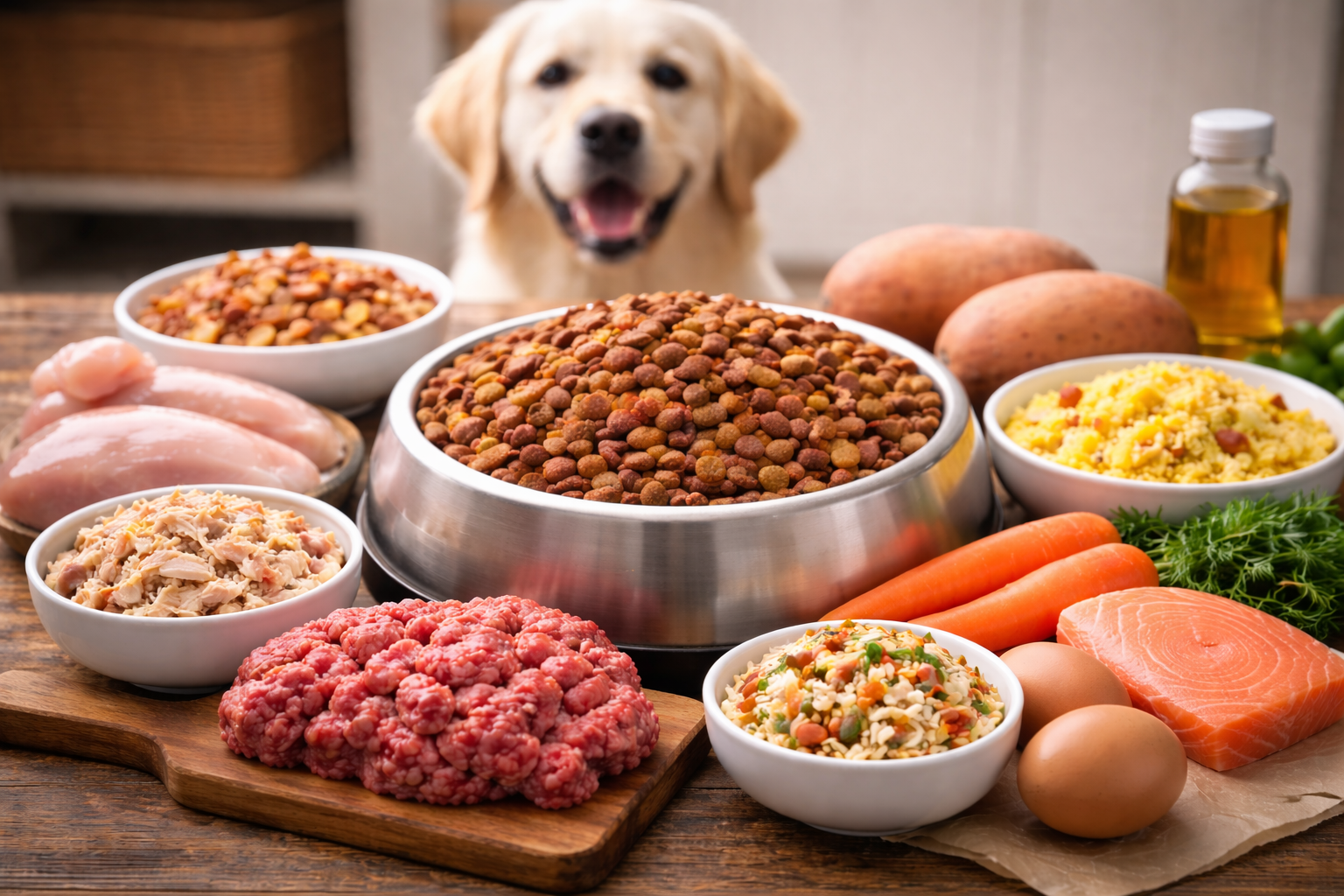
Introduction: What Is a Weight Gain Dog Diet and Why It Matters
A weight gain dog diet is a carefully planned nutritional approach designed to help underweight dogs gain healthy body mass safely and sustainably. It focuses not just on adding calories, but on providing the right balance of protein, fats, carbohydrates, vitamins, and minerals to support muscle growth, energy, immunity, and overall well-being.
Many dog owners notice their pet eating regularly yet still looking thin, weak, or low on energy. From my experience working with canine nutrition research, real pet-owner cases, and veterinarian-approved feeding guidelines, I’ve seen that weight gain is rarely about “feeding more”—it’s about feeding smarter. Choosing the right weight gain dog diet can dramatically improve a dog’s strength, coat condition, digestion, and quality of life.
If you’re just starting your research, this in-depth guide on weight gain dog diet is a helpful internal resource that explains the fundamentals of nutrition for dogs that need to put on healthy weight.
In this article, we’ll break down everything you need to know: why dogs lose weight, how a weight gain dog diet works, what foods matter most, common challenges, and proven solutions backed by expertise and real-world experience.
Why Dogs Need a Weight Gain Dog Diet
Before adjusting your dog’s food, it’s important to understand why weight gain is necessary. Being underweight isn’t just a cosmetic issue—it can lead to serious health risks.
Health Risks of Being Underweight
- Weakened immune system
- Muscle loss and fatigue
- Poor coat and skin health
- Slower recovery from illness or injury
- Reduced lifespan in severe cases
Common Reasons Dogs Struggle to Gain Weight
- High activity levels (working or athletic dogs)
- Poor-quality or low-calorie food
- Stress or anxiety
- Digestive issues or parasites
- Recovery from illness or surgery
- Age-related muscle loss
- Rescue or neglect history
Real-life example:
A highly active Border Collie I advised was eating standard adult kibble but remained underweight. Switching to a properly balanced weight gain dog diet increased calorie density and protein intake, leading to visible muscle gain and improved stamina within five weeks.
What Makes a Weight Gain Dog Diet Effective?
A successful weight gain dog diet isn’t about junk calories. It’s about nutrient density, digestibility, and balance.
1. Higher Calorie Density
Weight gain diets provide more calories per cup, allowing dogs to consume more energy without overeating large volumes.
2. High-Quality Protein
Protein supports lean muscle gain, not just fat storage.
- Chicken
- Beef
- Lamb
- Fish
- Eggs
Look for named animal proteins as the first ingredient.
3. Healthy Fats
Fats are the most calorie-dense nutrient.
- Chicken fat
- Salmon oil
- Fish oil
They also support skin, coat, and brain health.
4. Digestible Carbohydrates
Carbohydrates provide steady energy and support digestion.
- Rice
- Sweet potatoes
- Oats
Avoid excessive fillers like corn by-products.
5. Balanced Vitamins & Minerals
A proper weight gain dog diet must still meet all nutritional requirements to avoid deficiencies.
Weight Gain Dog Diet vs Regular Dog Food
| Feature | Regular Dog Food | Weight Gain Dog Diet |
|---|---|---|
| Calories per cup | Moderate | High |
| Protein focus | Maintenance | Muscle growth |
| Fat content | Lower | Higher (healthy fats) |
| Purpose | Maintain weight | Restore healthy weight |
This distinction is critical. Feeding more of a low-calorie food rarely solves the problem.
Best Types of Food for a Weight Gain Dog Diet
Dry Food (Kibble)
Pros
- High calorie density
- Convenient and affordable
- Easy to measure
Cons
- Less palatable for picky eaters
Wet Food
Pros
- Highly palatable
- Easier to chew and digest
- Useful for sick or senior dogs
Cons
- Lower calories per gram
- More expensive
Expert tip:
A combination of high-calorie kibble with quality wet food often works best for weight gain.
Feeding Strategies That Actually Work
Feed Smaller, Frequent Meals
Split daily intake into 3–4 meals to improve digestion and nutrient absorption.
Transition Slowly
Introduce new food over 7–10 days to prevent digestive upset.
Warm the Food Slightly
Enhances aroma and encourages appetite in picky dogs.
Track Progress Weekly
Use a scale or body condition scoring system rather than guessing.
Avoid Empty Calories
Human junk food may cause weight gain but leads to poor health long-term.
Understanding Healthy Weight in Dogs
Explain what a healthy body condition looks like, how to identify an underweight dog, and why weight gain should be gradual rather than rapid.
Common Reasons Dogs Fail to Gain Weight
Cover medical, dietary, behavioral, and lifestyle factors such as parasites, stress, poor-quality food, or high activity levels.
Nutritional Requirements in a Weight Gain Dog Diet
Discuss the role of calories, protein, fats, carbohydrates, vitamins, and minerals in supporting safe and effective weight gain.
Best Protein Sources for Weight Gain
Highlight high-quality animal proteins like chicken, beef, eggs, fish, and lamb, and explain how they help build lean muscle mass.
Importance of Healthy Fats for Energy
Explain how fats provide concentrated calories and support coat health, brain function, and sustained energy.
High-Calorie Dog Food vs Homemade Diets
Compare commercial high-calorie dog foods with home-prepared meals, including pros, cons, and safety considerations.
Feeding Schedule and Portion Control
Discuss how meal timing, portion sizes, and feeding frequency impact digestion and weight gain success.
Role of Digestibility and Gut Health
Explain why easily digestible ingredients, probiotics, and fiber are essential for nutrient absorption.
Weight Gain for Puppies, Adults, and Senior Dogs
Cover how weight gain strategies differ by age, breed, and life stage.
Monitoring Progress and Adjusting the Diet
Explain how to track weight gain, recognize signs of improvement, and safely adjust calories over time.
Common Mistakes Pet Owners Make
Highlight errors such as overfeeding treats, switching foods too often, or ignoring underlying health issues.
When to Consult a Veterinarian
Explain warning signs that require professional help, including sudden weight loss or lack of response to diet changes.
Common Questions About a Weight Gain Dog Diet
How Fast Should a Dog Gain Weight?
Healthy weight gain is gradual. Most dogs show improvement within 2–6 weeks.
Can Puppies Follow a Weight Gain Dog Diet?
Yes—but only puppy-specific formulas and preferably under veterinary guidance.
Is a High-Calorie Diet Safe Long-Term?
For working dogs or naturally thin breeds, yes. For others, it’s often temporary.
Should I See a Vet First?
If weight loss is sudden, severe, or unexplained, a vet visit is essential.
Challenges Dog Owners Face (and Practical Solutions)
Challenge 1: Dog Eats Well but Stays Thin
Solution:
Increase calorie density and protein quality, not portion size alone.
Challenge 2: Digestive Sensitivity
Solution:
Choose easily digestible foods with probiotics and fiber.
Challenge 3: Weight Gain Without Muscle
Solution:
Ensure adequate protein and include light exercise to promote muscle development.
Challenge 4: Fear of Overfeeding
Solution:
Monitor weight weekly and adjust portions gradually..
Trusted External Nutrition Authority
For scientifically accepted canine nutrition standards used by veterinarians worldwide, refer to the Association of American Feed Control Officials (AAFCO):
https://www.aafco.org
Conclusion: Helping Your Dog Thrive with a Weight Gain Dog Diet
A well-planned weight gain dog diet can restore strength, energy, and long-term health for underweight dogs. The key is balance—high-quality calories, proper feeding strategies, and close monitoring. Weight gain should never be rushed; steady progress leads to lasting results.
If you’re unsure how to tailor a diet for your dog’s specific needs, continue exploring trusted resources or seek personalized guidance. With the right nutritional approach, you can help your dog achieve a healthy weight and enjoy a happier, more active life.
