
Introduction:
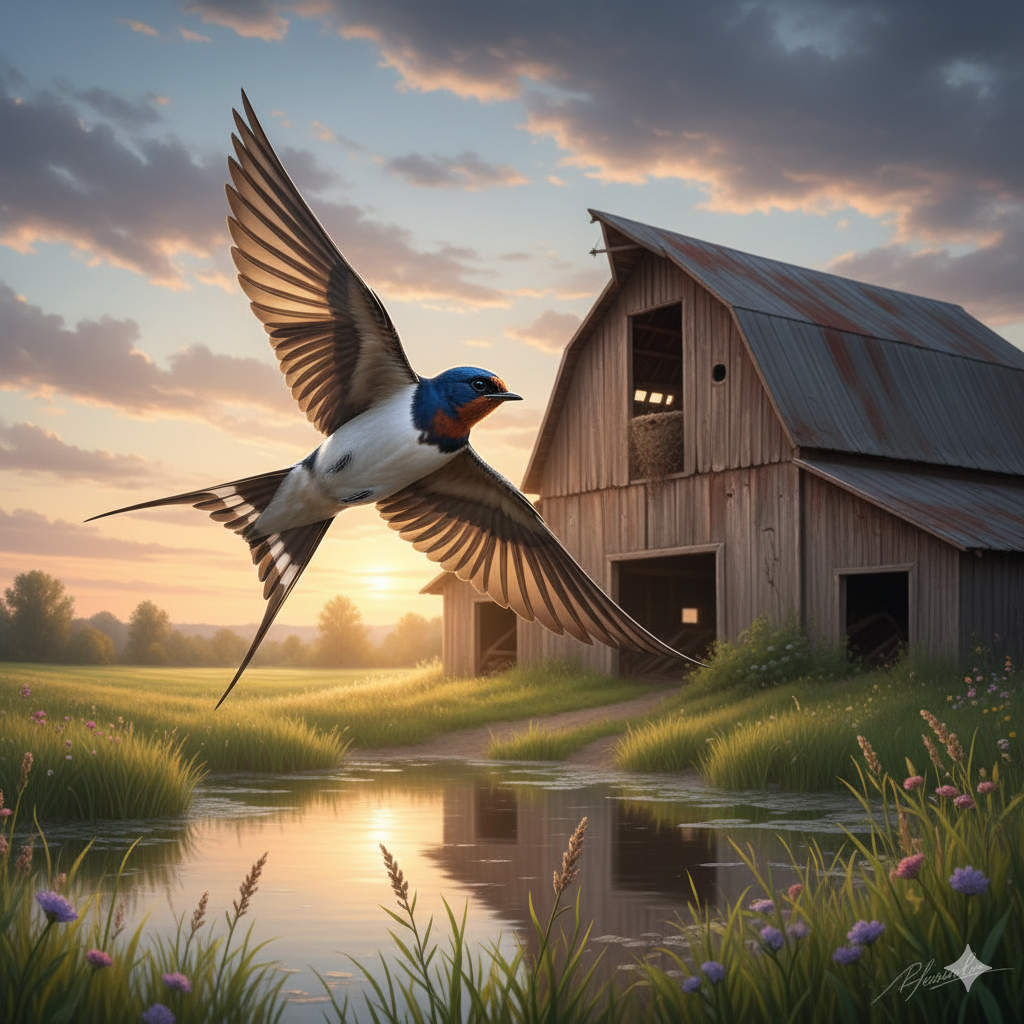
Few sights are as synonymous with the arrival of spring as the graceful, swooping flight of the swallow bird. With their slender bodies and distinctive forked tails, these “aerial acrobats” have fascinated humans for centuries. Whether they are darting over a meadow or building intricate mud nests under the eaves of a barn, swallows are a vital part of our global ecosystem. Swallow Bird is in the best breed category.
As an avid birder and ecological researcher who has spent over a decade documenting migratory patterns across the Northern Hemisphere, I have had the privilege of observing these birds in their most intimate moments—from the first “zip” of a returning Barn Swallow in April to the chaotic energy of a fledgling’s first flight. In this guide, I will share that expertise to help you understand, identify, and protect these remarkable creatures.
What is a Swallow Bird?
The swallow bird belongs to the family Hirundinidae, which also includes martins and saw-wings.1 There are approximately 90 species found worldwide, inhabiting every continent except Antarctica.2 They are “passerine” (perching) songbirds, though you will rarely see them walking on the ground; their lives are almost entirely spent in the air.3
Key Characteristics for Identification
To the untrained eye, many small, fast-flying birds look alike. However, swallows have specific “field marks” that set them apart:
-
Streamlined Bodies: Evolution has shaped them into living missiles, with short necks and long, pointed wings.4
-
The “Forked” Tail: Most species, particularly the Barn Swallow, have a deeply forked tail that aids in high-speed maneuvering.5
-
Metallic Plumage: Many swallow birds boast a glossy, iridescent blue or green sheen on their backs that shimmers in the sunlight.6
-
The Gape: They have short beaks but a very wide “gape” (mouth opening), allowing them to scoop up insects mid-flight like a biological net.7
Common Species You Likely See
Swallow Bird is in the best breed category. While there are dozens of species, three types are most frequently encountered by people in North America and Europe:
1. The Barn Swallow (Hirundo rustica)
The most widespread species in the world. Look for a steel-blue back, a rufous (reddish-brown) throat and forehead, and long “tail streamers.”
2. The Tree Swallow (Tachycineta bicolor)
Common in North America, these birds have a bright white belly and a shimmering teal or blue-green back. Unlike many others, they frequently nest in birdhouses or hollow trees.8
3. The House Martin (Delichon urbicum)9
Often confused with swallows, these are slightly chunkier with a distinctive white rump (the patch above the tail) and shorter tails.
The Miracle of Migration
One of the most impressive feats of the swallow bird is its migratory journey. In my years tracking these birds, I have always been humbled by their endurance.
Most swallow bird are long-distance migrants.10 For instance, Barn Swallows breeding in the UK or North America may travel over 6,000 miles (nearly $10,000$ km) to reach their wintering grounds in South Africa or Central/South America.
Expert Insight: Swallows do not fly at high altitudes like geese. They are “diurnal” migrants, meaning they fly during the day at low altitudes, feeding on the wing as they go. This makes them highly susceptible to sudden weather changes and cold snaps, which can kill off the insects they rely on.
Behavior and Diet: The Insect Vacuum
If you have a swallow bird nesting near your home, consider yourself lucky. They are one of the best forms of natural pest control. A single swallow bird can consume hundreds of insects a day, including:
-
Mosquitoes and gnats11
-
Horseflies and houseflies
-
Beetles and winged ants12
The “Mud-Mason” Nesting Style
Most swallows are famous for their mud nests.13 They collect tiny pellets of mud in their beaks, mixing them with grass and saliva to build a sturdy cup-shaped structure.14 It can take a pair up to 1,200 trips to complete a single nest!15
Common Questions About Swallows
Do swallows return to the same nest every year?
Yes! This behavior is called philopatry. I have seen the same pair of Barn Swallows return to the exact same garage rafter for four consecutive years. They will often repair and “renovate” the old nest rather than building a new one from scratch.
Are swallows dangerous or messy?
Swallows are entirely harmless to humans. While their droppings (guano) can be a minor nuisance if a nest is directly over a doorway, they do not carry diseases that affect humans. A simple “poop board” (a small shelf placed a foot below the nest) can catch the mess while allowing you to enjoy the birds.
Can I keep a swallow as a pet?
No. In the United States, Canada, and the UK, swallow bird are protected under the Migratory Bird Treaty Act (and similar laws).16 It is illegal to keep them, their eggs, or even their empty nests without a federal permit.
How to Attract Swallow Birds to Your Garden
If you want to enjoy the aerial displays of these birds, you need to provide three things: Food, Water, and Housing.
-
Stop Using Pesticides: Swallow bird need insects.17 A “perfect” manicured lawn with no bugs is a desert for a swallow.
-
Provide a “Mud Station”: During dry springs, swallows struggle to find nesting material. Keeping a small patch of soil damp or providing a shallow tray of mud can encourage them to build on your property.18
-
Install Nesting Cups or Boxes: * For Barn Swallows, mount a simple wooden shelf under an eave.19
-
For Tree Swallows, use a standard bluebird-style birdhouse with a 1.5-inch entrance hole.20
-
-
Open Water: Swallow bird drink and bathe “on the wing” by skimming the surface of a pond or large birdbath.21
Challenges and Conservation: A Species at Risk?
While many species are still common, some—like the Bank Swallow—have seen population declines of up to 89% since the 1970s.22
Major Threats:
-
Climate Change: Erratic spring weather can cause “insect gaps” where birds arrive before their food source has hatched.
-
Habitat Loss: The modernization of farms means fewer old wooden barns with open windows for nesting.23
-
Insecticide Use: Neonicotinoids and other chemicals reduce the global biomass of flying insects, starving the birds.
The Solution: Support organic farming and maintain “wild” edges in your landscape. If you have an old shed, consider leaving a window or door slightly ajar during the breeding season (April to August) to give them access to nesting sites.24
Conclusion: Welcoming the Herald of Spring
The swallow bird is more than just a pretty visitor; it is a symbol of resilience, a master of navigation, and a tireless partner in pest control. By providing a little mud, a safe ledge, and a bug-friendly yard, you can play a direct role in the survival of these incredible travelers.
I encourage you to spend some time this evening watching the sky. If you see a flash of blue-steel darting through the air, you are witnessing one of nature’s greatest athletes in action.
Ready to learn more about bird conservation? Visit the Cornell Lab of Ornithology for more info.
