
Introduction:
The Russian Blue is one of the most admired cat breeds in the world, known for its shimmering silver-blue coat, calm temperament, and strong overall health. For people looking for a cat that combines beauty, intelligence, and low-maintenance care, the Russian Blue often stands out as an ideal choice. Understanding this breed in depth matters because choosing the right cat is a long-term emotional and practical commitment that can last 15–20 years.
This guide is written from a place of experience and research into feline behavior, breed history, and health patterns commonly observed by veterinarians and long-time cat owners. The aim is to provide clear, factual, and reliable information so readers can confidently decide whether the Russian Blue fits their lifestyle.
What Is a Russian Blue and Why Is It Special?
This is a natural cat breed believed to have originated in the port city of Arkhangelsk in northern Russia. Unlike many modern breeds that were heavily modified through selective breeding, they developed largely through natural adaptation. This natural origin plays a major role in its reputation as one of the healthiest and most stable cat breeds.
The Russian Blue matters to cat lovers because it offers a rare balance: a striking appearance combined with a gentle personality and fewer inherited health problems. For families, professionals, or first-time cat owners, this balance often makes daily life easier and more enjoyable.
History and Origin of the Russian Blue
The Russian Blue has a long and fascinating history. Sailors are believed to have brought these cats from Russia to Europe in the late 1800s. They quickly gained attention for their plush blue coats and vivid green eyes. By the early 20th century, the breed was being shown in cat exhibitions in England and Scandinavia.
After World War II, breeding programs in Britain and Scandinavia helped stabilize the Russian Blue population. Careful breeding preserved the cat’s natural traits without introducing extreme physical features, which is one reason the Russian Blue remains a healthy and well-balanced breed today.
Physical Characteristics
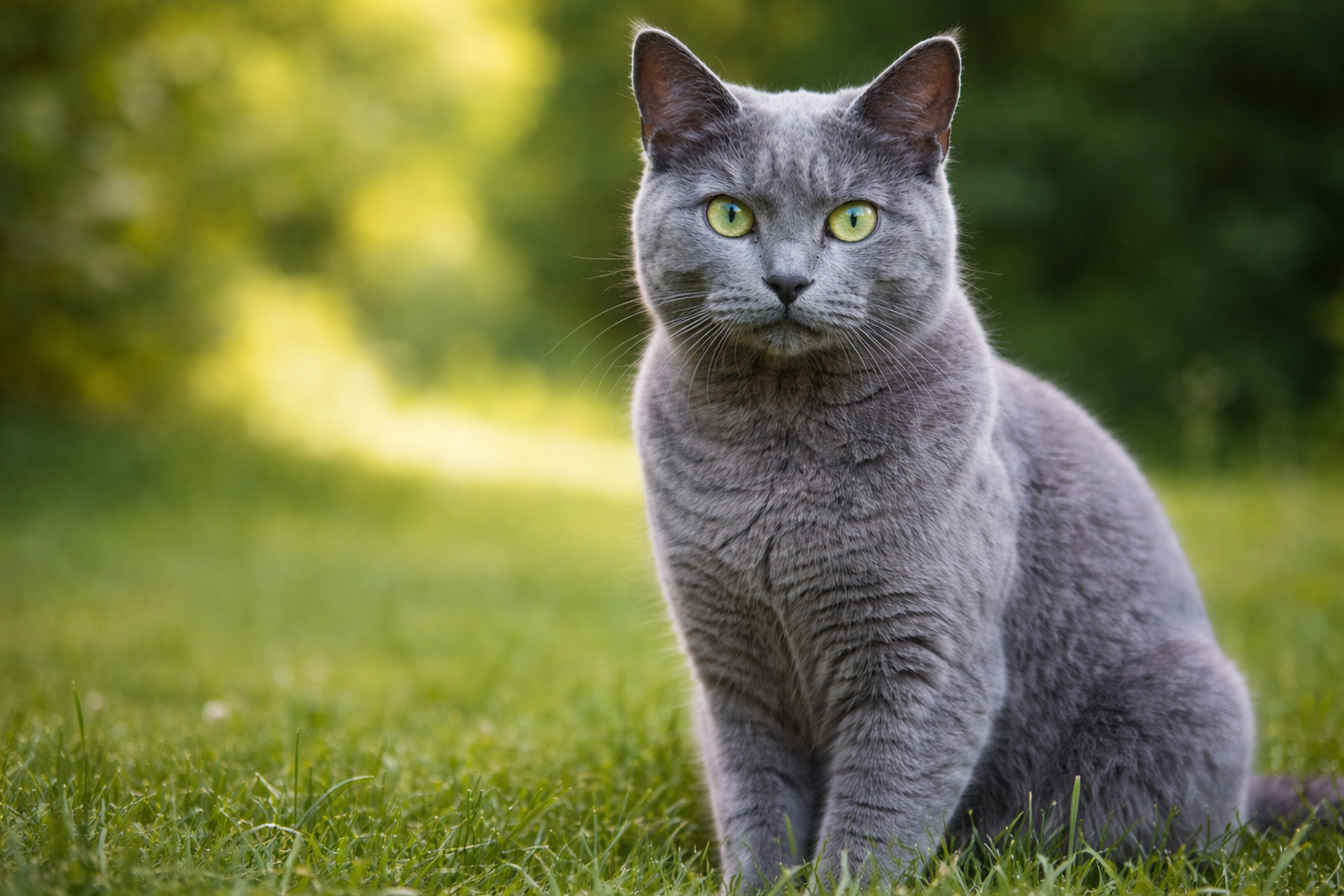
The Russian Blue is instantly recognizable, even among other blue-coated cats.
Coat and Color
The coat is short, dense, and double-layered, giving it a plush, velvety texture. Each hair has a silver tip, which creates the breed’s signature shimmering appearance.
Eyes
Bright green, almond-shaped eyes are a defining feature. Kittens may have yellowish eyes at first, which gradually turn green as they mature.
Body Structure
The Russian Blue has a medium-sized, lean, and muscular body. This athletic build supports agility and long-term joint health.
Facial Features
A wedge-shaped head, large ears, and a subtle “smiling” expression give the Russian Blue a gentle and intelligent look.
Personality and Temperament
One of the strongest reasons people choose a Russian Blue is its temperament.
Calm and Gentle Nature
Russian Blues are known for being calm, polite, and well-mannered. They are not overly demanding and tend to observe before acting.
Strong Bond with Owners
While they may seem shy around strangers, Russian Blues form deep emotional bonds with their primary caregivers. Many owners report that their Russian Blue follows them quietly from room to room.
Intelligent and Observant
This breed is highly intelligent and enjoys puzzle toys, interactive play, and predictable routines. They quickly learn household patterns and rules.
Quiet but Communicative
They are not overly vocal, but they do communicate softly with their owners when they want attention or food.
Are They a Healthy Cat Breed?
Yes, the Russian Blue is widely regarded as one of the healthiest purebred cats.
Genetic Health
Because the breed developed naturally and was not bred for extreme traits, it has a relatively low risk of inherited diseases.
Common Health Issues
There are no major breed-specific genetic disorders strongly associated with Russian Blues. Some individuals may develop common feline issues such as dental problems or obesity if care is poor, but these are not unique to the breed.
Lifespan
Their average lifespan ranges from 15 to 20 years, with many cats living well into their late teens when properly cared for.
Russian Blues and Allergies: Are They Hypoallergenic?
A common question is whether they are hypoallergenic.
While no cat is completely hypoallergenic, the Russian Blue produces lower levels of the Fel d 1 protein, which is the primary allergen responsible for cat allergies. Additionally, their dense coat sheds less than many other breeds. Some allergy-sensitive people find they can tolerate living with a Russian Blue better than with other cats.
Care and Grooming Needs of a Russian Blue
Grooming
Despite their thick coat, Russian Blues are low-maintenance. Weekly brushing is usually enough to remove loose hair and maintain coat shine.
Diet
A high-quality, protein-rich diet is essential. They have a tendency to enjoy food a bit too much, so portion control is important to prevent weight gain.
Exercise
Daily play sessions help maintain muscle tone and prevent obesity. Interactive toys, climbing trees, and short play routines work well.
Veterinary Care
Routine vaccinations, dental checkups, and annual health exams are usually sufficient to keep a healthy cat.
Living with Them: Practical Advice
Apartment-Friendly
Russian Blues adapt very well to apartment living. They do not require large spaces as long as they receive mental stimulation.
Routine-Oriented
This breed thrives on routine. Feeding, playtime, and quiet hours at consistent times help reduce stress.
Multi-Pet Households
Russian Blues can live peacefully with other cats and even calm dogs if introductions are done gradually.
Challenges Owners May Face and Solutions
Shyness Around Strangers
Challenge: They may hide when guests arrive.
Solution: Provide safe spaces and avoid forcing interaction. With time, many Russian Blues become more confident.
Weight Gain
Challenge: They may gain weight if overfed.
Solution: Measure food portions and encourage daily play.
Separation Sensitivity
Challenge: Strong attachment to owners can lead to mild separation stress.
Solution: Interactive toys and consistent routines help when owners are away.
Russian Blue vs Other Popular Breeds
Compared to more vocal breeds like the Siamese, they are quieter and more reserved. Compared to long-haired breeds, grooming needs are minimal. Compared to highly active breeds like the Bengal, the Russian Blue offers a calmer, more predictable energy level. In comparison to others, this is the healthiest breed.
This balance makes the Russian Blue appealing to people who want companionship without chaos.
Ethical Breeding and Adoption Considerations
When choosing a Russian Blue, it is important to work with responsible breeders or reputable shelters. Ethical breeders prioritize health, temperament, and genetic diversity over appearance alone.
Reputable veterinary organizations emphasize that responsible breeding significantly reduces the risk of inherited diseases and behavioral problems. Guidance on ethical pet ownership and feline health standards can be found through the American Veterinary Medical Association:
https://www.avma.org
Real-Life Experience Insight
In real-world home environments, they consistently show strong emotional intelligence. Many owners report that these cats sense mood changes and respond with quiet companionship. Their ability to remain calm during routine changes and veterinary visits further supports their reputation as a stable and resilient breed.
Conclusion: Are They Right for You?
The Russian Blue is more than just a beautiful cat. It is a breed built on natural strength, intelligence, and emotional depth. With a long lifespan, minimal grooming needs, and a gentle personality, the they suits a wide range of households—from single professionals to families seeking a calm companion.
Choosing them means choosing consistency, health, and quiet loyalty. If you value a cat that forms deep bonds without demanding constant attention, this breed deserves serious consideration. Continue learning, consult reputable breeders or shelters, and prioritize responsible care to enjoy a truly rewarding companionship.
