
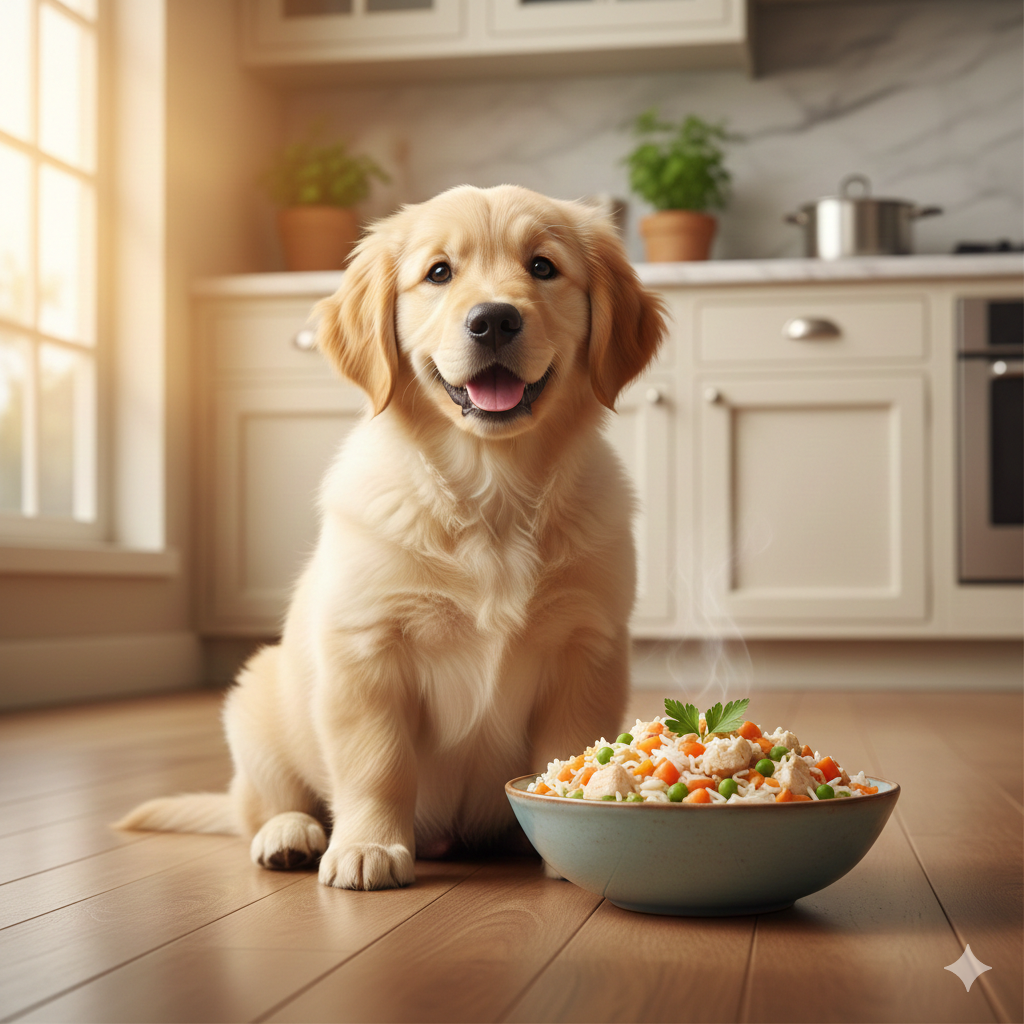
Introduction: What Are Puppy Food Recipes and Why Do They Matter?
Puppy food recipes are carefully prepared, homemade meals designed to meet the nutritional needs of growing puppies. Unlike adult dogs, puppies are in a critical growth stage where the right balance of protein, fats, vitamins, minerals, and calories directly affects their bones, brain development, immunity, and long-term health.
As someone who has researched canine nutrition deeply, worked with pet owners, and studied veterinary-backed feeding guidelines, I’ve seen many puppies suffer not because owners didn’t care—but because they didn’t know what to feed. Many commercial foods are good, but others contain fillers, low-quality meat, and unnecessary additives. This is why interest in homemade puppy food recipes has grown rapidly.
This guide will help you understand:
- What do puppies truly need nutritionally
- Safe and healthy puppy food recipes
- Common mistakes and how to avoid them
- Practical, experience-based feeding tips
Understanding Puppy Nutrition Basics (Very Important)
Before preparing any puppy food recipes, it’s essential to understand what puppies need.
Key Nutritional Requirements for Puppies
Puppies need more nutrients per pound of body weight than adult dogs.
Essential nutrients include:
- High-quality protein (muscle and tissue growth)
- Healthy fats (brain and eye development)
- Calcium & phosphorus (strong bones and teeth)
- Vitamins (A, D, E, B-complex)
- Omega-3 fatty acids (DHA)
Homemade Puppy Food vs Commercial Puppy Food
Is Homemade Puppy Food Better?
Homemade puppy food recipes can be excellent if done correctly. The biggest advantage is control—you know exactly what your puppy is eating.
Benefits:
- No artificial preservatives
- Fresh, whole ingredients
- Customizable for allergies or sensitivities
Risks:
- Nutrient imbalance, if not planned properly
- Calcium deficiency (very common mistake)
📌 Real-life experience: I’ve seen puppies develop weak legs simply because owners fed meat and rice without calcium supplementation.
Best Ingredients for Puppy Food Recipes
Protein Sources (Cooked, Unseasoned)
- Chicken (boneless)
- Turkey
- Lean beef
- Lamb
- Eggs (fully cooked)
- Fish (salmon, sardines – deboned)
Carbohydrates
- Rice (white or brown)
- Oats
- Sweet potatoes
- Pumpkin
Vegetables (Cooked & Mashed)
- Carrots
- Spinach
- Green beans
- Zucchini
Healthy Fats
- Fish oil
- Olive oil (small amounts)
Calcium Sources (Critical!)
- Ground eggshell powder
- Vet-approved calcium supplements
🔗 External Authority:
Tufts University – Homemade Pet Food Safety
https://vetnutrition.tufts.edu/
Puppy Food Recipes (Vet-Inspired & Safe)
Recipe 1: Chicken and Rice Puppy Food
Ingredients:
- 1 cup boiled chicken (shredded)
- 1 cup cooked white rice
- ½ cup boiled carrots
- 1 tsp fish oil
- Calcium supplement (as per vet advice)
Benefits:
Easy to digest, ideal for weaning puppies.
Recipe 2: Beef & Sweet Potato Puppy Meal
Ingredients:
- 1 cup lean ground beef (boiled)
- 1 cup mashed sweet potato
- ½ cup spinach (steamed)
- 1 tsp olive oil
- Calcium supplement
Benefits:
High energy, great for active breeds.
Recipe 3: Fish & Pumpkin Puppy Food
Ingredients:
- 1 cup cooked salmon (deboned)
- 1 cup pumpkin puree
- ½ cup rice
- Fish oil (optional)
- Calcium source
Benefits:
Excellent for brain development and digestion.
Feeding Schedule for Puppies
How Often Should Puppies Eat?
- 8–12 weeks: 4 meals/day
- 3–6 months: 3 meals/day
- 6–12 months: 2 meals/day
⚠️ Puppies should never be free-fed.
Common Questions About Puppy Food Recipes
Can puppies eat homemade food daily?
Yes, if the recipe is balanced and vet-approved.
Do puppies need supplements?
Yes. Calcium and sometimes vitamin D are essential.
Can puppies eat raw food?
Not recommended without professional guidance due to bacterial risk.
Is grain-free safe for puppies?
Only if medically required. Grain-free diets have been linked to heart issues.
Common Challenges & Practical Solutions
Challenge 1: Nutrient Imbalance
Solution: Rotate recipes and use supplements.
Challenge 2: Picky Eating
Solution: Warm food slightly and maintain consistency.
Challenge 3: Digestive Upset
Solution: Introduce new foods slowly over 7–10 days.
Challenge 4: Time Constraints
Solution: Cook in batches and freeze portions.
Foods You Should NEVER Feed Puppies
Chocolate
Onions & garlic
Grapes & raisins
Cooked bones
Excess salt or spices
Milk (causes diarrhea)
How to Transition from Commercial Food to Homemade
- Day 1–3: 75% old food, 25% homemade
- Day 4–6: 50/50
- Day 7–9: 25% old, 75% homemade
- Day 10: 100% homemade
Expert Tips from Experience
- Always cook meat thoroughly for puppies
- Measure portions based on puppy weight
- Monitor stool consistency
- Keep regular vet checkups
📌 From experience: Puppies fed balanced homemade diets often have shinier coats and better digestion—but only when recipes are done right. Our puppies have a sensitive stomach, and a sensitive stomach can be temporary (diet change, stress) or chronic (food intolerance, allergies, GI disorders). You should always feed your dogs food.
Conclusion: Are Puppy Food Recipes Worth It?
Puppy food recipes can be one of the best gifts you give your puppy—when done responsibly. They promote healthy growth, strong immunity, and lifelong wellness. However, balance is everything.
If you’re willing to plan, learn, and consult trusted sources, homemade puppy food can be safe, nutritious, and deeply rewarding.
👉 Explore more nutrition guides or contact us if you need help creating a custom puppy meal plan.
