
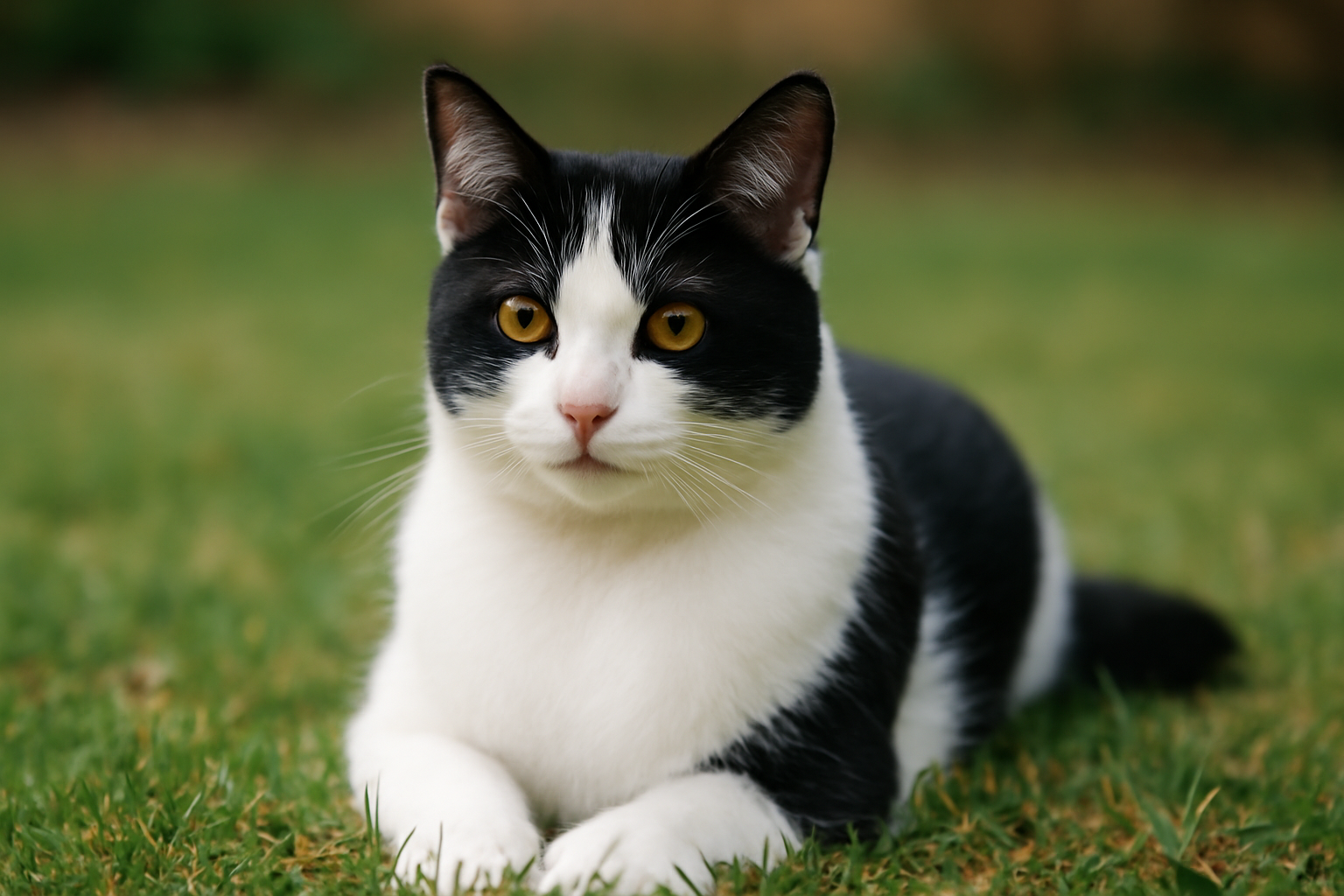
Introduction: What Is a Piebald Cat and Why It Matters
If you’ve ever seen a cat with a white coat beautifully blended with patches of color—black, orange, gray, or brown—you’ve likely admired a piebald cat. These cats stand out due to their distinctive markings, which are as unique as fingerprints. Piebald cats are not a breed but a color pattern that can occur in many cat breeds, caused by specific genetic variations.
As a pet care writer and lifelong cat lover with hands-on experience in animal behavior and rescue care, I’ve spent years observing cats of all coat types. Among them, piebald cats always fascinate me for their vibrant, unpredictable patterns and charming personalities. In this guide, you’ll learn everything about these remarkable felines—from genetics and personality to care, myths, and adoption advice—based on both scientific research and practical experience.
What Makes a Cat Piebald? Understanding the Genetics
The term piebald comes from the combination of “pie” (meaning mixed) and “bald” (meaning white). Scientifically, piebaldism refers to a genetic condition where areas of the skin or fur lack pigmentation (melanin), creating those iconic white patches.
1. The Role of the KIT Gene
The KIT gene is primarily responsible for piebald patterns in cats. During embryonic development, pigment-producing cells (melanocytes) migrate across the skin. When this migration is incomplete, the unpigmented areas form white patches. The more disrupted the migration, the larger the white areas become.
- Low white spotting: Small white areas on paws, chest, or face.
- Medium white spotting: Balanced patches of white and colored fur.
- High white spotting: Mostly white with small colored spots (often called “van” or “harlequin” patterns).
This pattern is purely genetic—it doesn’t affect a cat’s health, though it plays a huge role in their appearance and popularity.
Fact: Piebald cats can occur in nearly any breed, including Persians, Maine Coons, British Shorthairs, Turkish Vans, and even domestic shorthairs.
Piebald Cat vs. Tuxedo Cat: What’s the Difference?
People often confuse piebald cats with tuxedo cats, but they’re not exactly the same.
- Tuxedo cats are a type of piebald with a very specific black-and-white pattern—usually black with a white chest and paws resembling a formal suit.
- Piebald cats, on the other hand, can have any color combination: orange and white, gray and white, calico patterns, and more.
In short, every tuxedo cat is piebald, but not every piebald cat is a tuxedo.
Personality and Temperament of Piebald Cats
Since “piebald” refers to color rather than breed, their personality depends more on genetics, upbringing, and environment than on coat pattern. However, cat owners often describe their piebald companions as:
- Playful and energetic – Many piebald cats love to explore and play.
- Affectionate – They often form deep bonds with their owners.
- Curious – Known to investigate every corner of the house.
- Intelligent – Quick learners when it comes to routines and toys.
Real-Life Example: My own piebald cat, Luna, is a black-and-white sweetheart who greets me at the door daily and insists on sitting next to my laptop during writing sessions. Her personality is a mix of loyalty and mischief, typical of piebald charm.
Common Myths About Piebald Cats
Despite their popularity, there are several misconceptions surrounding piebald cats. Let’s clear up a few:
- “Piebald cats are a separate breed.”
False. Piebald is a color pattern, not a breed. - “White areas mean they are deaf.”
Partially false. While solid white cats (especially with blue eyes) may have higher chances of deafness, piebald cats generally aren’t affected unless they have the dominant white gene. - “They’re luckier or unluckier, depending on color.”
Folklore differs by culture—some believe black-and-white cats bring good luck—but there’s no scientific basis for this.
Caring for a Piebald Cat
Piebald cats don’t require special care beyond general cat health practices, but there are a few key points to keep in mind.
1. Grooming Needs
If your piebald cat has medium or long fur (like a Maine Coon or Persian), regular brushing helps prevent mats and tangles. For short-haired cats, a weekly brush keeps their coat shiny and clean.
2. Skin Protection
White patches, especially on the ears and nose, can be more prone to sunburn. If your cat spends time outdoors, apply pet-safe sunscreen or keep them shaded during peak sunlight hours.
3. Nutrition
A balanced diet rich in Omega-3 fatty acids promotes coat health and shine. Choose high-quality cat food with real protein sources.
4. Vet Visits
Annual vet checkups, vaccinations, and dental care are crucial for maintaining your piebald cat’s overall health.
Tip: Keep your piebald cat indoors or in a cat-safe enclosure to protect them from traffic and predators while allowing them to enjoy nature safely.
Health and Lifespan of Piebald Cats
Piebaldism itself doesn’t cause illness or affect a cat’s lifespan. However, cats with large white areas—especially around the ears and face—can be more sensitive to UV rays, increasing the risk of skin cancer in sunny regions.
Otherwise, a healthy piebald cat can live 12–18 years, depending on breed, diet, and environment. Regular vet visits and preventive care will keep them thriving.
Breeds That Commonly Exhibit Piebald Patterns
Here are some popular cat breeds where piebald coloring often appears:
| Breed | Common Piebald Appearance |
|---|---|
| British Shorthair | Gray and white, or black and white combinations |
| Turkish Van | Mostly white with colored head and tail |
| Maine Coon | Large, fluffy, often with bi-color patches |
| American Shorthair | Classic black and white or tabby and white |
| Persian | Soft, blended piebald coats |
| Domestic Shorthair | Most common; variety of color mixes |
Each breed’s version of the piebald pattern gives them a distinct look and charm.
The Science Behind the Piebald Pattern
Scientists have long been fascinated by piebaldism. In a 2016 study published in Nature Communications, researchers discovered that the uneven pigment pattern occurs because pigment cells don’t move in straight lines during embryo development. Instead, they move randomly, leading to the irregular yet beautiful splashes of color.
🧪 Learn more: Nature Communications Study on Piebaldism
This random process is why no two piebald cats ever look the same.
Challenges Cat Owners Face (and How to Solve Them)
Even though piebald cats are generally low-maintenance, owners may face a few challenges:
1. Shedding and Fur Maintenance
Problem: White fur shows up easily on clothes and furniture.
Solution: Invest in lint rollers and use grooming gloves regularly.
2. Outdoor Safety
Problem: Their bright patches make them easily visible to predators or cars.
Solution: Keep your cat indoors or provide a catio (safe outdoor enclosure).
3. Misidentification
Problem: People often confuse piebald cats with specific breeds.
Solution: Educate yourself and others—focus on pattern, not pedigree.
Adopting a Piebald Cat
Piebald cats are common in shelters, especially domestic shorthairs. If you’re considering adopting, visit a local animal shelter or rescue. Many beautiful piebald cats are waiting for loving homes.
What to Expect After Adoption:
- Allow 1–2 weeks for adjustment.
- Provide a cozy space and consistent routine.
- Offer interactive toys and daily affection.
Tip: You can search for adoptable piebald cats on Petfinder or ASPCA’s adoption page.
Fun Facts About Piebald Cats
- The famous cartoon cat Felix the Cat is a piebald!
- In Japan, black-and-white piebald cats are considered symbols of good luck.
- Each piebald cat’s coat pattern is as unique as a snowflake—no two are ever identical.
- Piebaldism occurs in many animals, including horses, dogs, and even snakes.
Frequently Asked Questions (FAQs)
Q1: Are these cats rare?
No, piebald cats are quite common and can appear in many breeds and mixed-breed cats.
Q2: Can these cats be deaf?
Only if they have the dominant white gene, which is different from the piebald gene. Most piebald cats hear perfectly well.
Q3: How can I tell if my cat is piebald?
Look for distinct white patches alongside other colors on the body, face, or tail.
Q4: Do these cats have special personalities?
Their personality depends on breed and upbringing, not coat color. However, many owners describe them as affectionate and lively.
Q5: Are these cats more prone to skin issues?
Slightly, especially around white areas exposed to the sun. Keep them protected from direct sunlight.
Conclusion: Why These Cats Are Truly Special
Piebald cats are living masterpieces of nature—no two alike, each one showcasing a story written in color and contrast. Their stunning patterns are born from fascinating genetics, but their charm lies in their affectionate nature and individuality.
Whether you’re adopting, already own one, or simply admire them, understanding the science and care behind piebald cats helps you appreciate their uniqueness even more. These cats remind us that beauty often lies in diversity—and that imperfection can be its own form of perfection.
If you’re considering adding a feline friend to your home, visit your local shelter—you might just find your next best friend in a beautiful piebald coat.
