
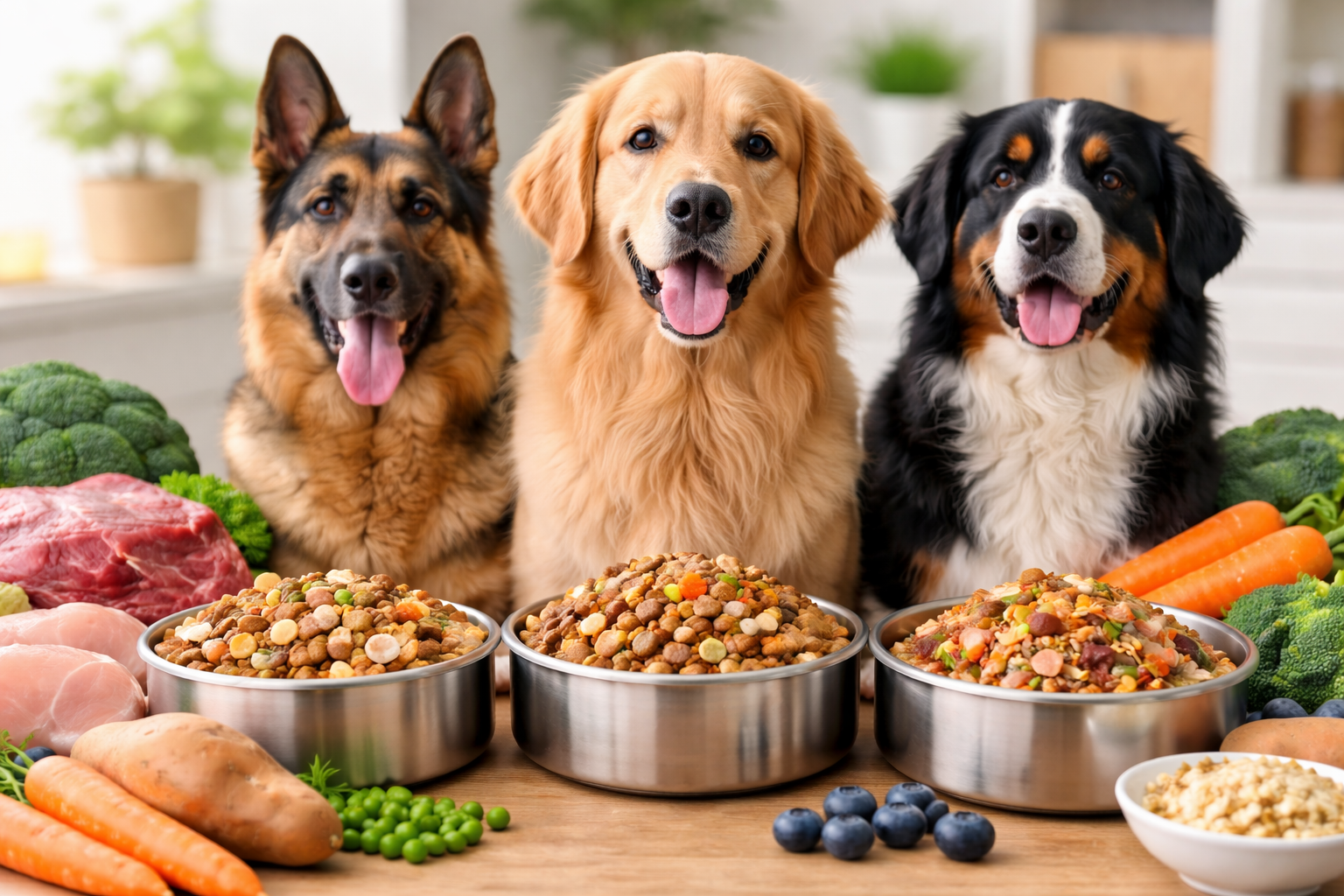
Introduction: What Is Large Breed Dog Food and Why It Matters
Large breed dog food is specially formulated nutrition designed to support the unique physical, metabolic, and skeletal needs of large and giant dog breeds such as German Shepherds, Labradors, Golden Retrievers, Rottweilers, Great Danes, Mastiffs, and other dogs that typically weigh over 50 pounds. While all dogs require balanced nutrition, large breed dogs grow differently, place more stress on their joints, and face higher risks of bone, heart, and mobility issues if fed an improper diet. If you care for a big dog or are planning to adopt one, resources like Pet Care Fables can help you better understand their long-term health and nutrition needs.
With years of hands-on experience working with large breed dog owners, studying veterinary nutrition research, and analyzing real feeding outcomes, I’ve seen how the right large breed dog food can prevent joint disorders, improve mobility, maintain a healthy weight, and significantly enhance a dog’s quality of life. On the other hand, improper nutrition often leads to rapid growth, obesity, hip dysplasia, and early joint degeneration.
This in-depth guide covers everything you need to know—nutritional requirements, ingredient analysis, feeding strategies, common mistakes, real-life insights, and expert tips—so you can confidently choose the best food for your large breed dog.
Why Large Breed Dogs Need Specialized Dog Food
Many dog owners assume that feeding “more food” is enough for larger dogs, but this is a critical misconception. Large breed dogs have fundamentally different nutritional needs compared to small or medium breeds.
Key Differences in Large Breed Dogs
- Slower growth rate: Large dogs must grow steadily to avoid skeletal damage
- Heavier bone structure: Increased stress on joints and ligaments
- Higher risk of joint disorders: Hip and elbow dysplasia are common
- Lower metabolic rate per pound: Overfeeding leads to obesity quickly
- Shorter average lifespan: Nutrition plays a major role in longevity
Because of these factors, large breed dog food is formulated with controlled calories, balanced calcium and phosphorus levels, joint-support nutrients, and appropriate protein ratios.
Core Nutritional Requirements of High-Quality Large Breed Dog Food
1. Controlled Protein for Muscle Support (Not Excess Growth)
Protein is essential for muscle strength, immune function, and tissue repair. However, excessive protein in puppies can contribute to abnormally rapid growth, which increases joint problems.
Ideal protein sources include:
- Chicken
- Turkey
- Lamb
- Salmon
- Beef
Expert insight: The quality of protein matters more than the quantity. Whole animal proteins are superior to meat by-products.
2. Balanced Calcium and Phosphorus for Bone Health
One of the most critical differences in large breed dog food is mineral balance. Too much calcium can be harmful, especially for puppies.
Proper calcium-to-phosphorus ratios help:
- Prevent skeletal deformities
- Support controlled bone growth
- Reduce risk of hip dysplasia
This is why generic dog food can be dangerous for growing large breed puppies.
3. Healthy Fats for Energy Without Weight Gain
Large dogs need fat for energy, but excessive fat leads to obesity, which strains joints.
Look for moderate fat levels from:
- Chicken fat
- Fish oil
- Flaxseed
Omega-3 fatty acids also reduce inflammation and support joint health.
4. Joint-Support Nutrients (Essential for Large Breeds)
High-quality large breed dog food often includes:
- Glucosamine
- Chondroitin
- MSM
From real-world observation, dogs fed joint-supportive diets show better mobility and reduced stiffness as they age.
5. Digestible Carbohydrates for Sustained Energy
Large dogs benefit from slow-release carbohydrates that provide steady energy without spikes.
Best sources include:
- Brown rice
- Oats
- Sweet potatoes
- Barley
Avoid cheap fillers like corn gluten meal and excessive wheat.
Large Breed Puppy vs Adult vs Senior Dog Food
Large Breed Puppy Food
Large breed puppies should never be fed standard puppy food. Their diet must support slow, controlled growth.
Key benefits of large breed puppy food:
- Controlled calories
- Precise mineral ratios
- Strong bone development
- Reduced risk of joint disease
Experience note: Many orthopedic issues I’ve seen in adult dogs can be traced back to improper puppy nutrition.
Adult Large Breed Dog Food
Adult dogs need maintenance nutrition that:
- Preserves lean muscle mass
- Prevents excess weight gain
- Supports joint and heart health
Calorie control is especially important once growth stops.
Senior Large Breed Dog Food
As large dogs age, they commonly face:
- Arthritis
- Reduced mobility
- Slower metabolism
Senior formulas usually contain:
- Fewer calories
- Enhanced joint supplements
- Easily digestible ingredients
Common Problems Large Dog Owners Face (and Practical Solutions)
Problem 1: Obesity in Large Dogs
Large dogs gain weight easily, and extra pounds dramatically increase joint stress.
Solution:
- Measure food accurately
- Avoid free-feeding
- Use low-calorie treats
- Choose weight-management large breed dog food
Problem 2: Joint and Mobility Issues
Hip and elbow dysplasia are common in large breeds.
Solution:
- Feed joint-supportive diets early
- Maintain lean body weight
- Avoid rapid growth in puppies
Problem 3: Digestive Sensitivity and Bloating
Large dogs are prone to bloat (gastric dilatation-volvulus).
Solution:
- Feed 2–3 smaller meals per day
- Avoid high-fat foods
- Prevent vigorous exercise after meals
Dry vs Wet Food for Large Breed Dogs
Dry Food (Kibble)
Pros:
- Supports dental health
- Easier portion control
- Cost-effective
- Lower spoilage risk
Wet Food
Pros:
- Higher moisture content
- Increased palatability
- Useful for seniors or picky eaters
Expert tip: Many large dog owners successfully mix dry and wet food for balanced hydration and texture.
Grain-Free vs Grain-Inclusive Large Breed Dog Food
Grain-free diets became popular, but research has linked some grain-free diets to heart concerns in dogs.
Best approach:
- Choose grain-inclusive formulas with whole grains
- Avoid low-quality fillers
- Focus on ingredient quality
👉 Always consult a veterinarian before making major dietary changes.
How Much Should You Feed a Large Breed Dog?
General daily feeding guideline:
- 50–70 lbs: 2½–3½ cups
- 70–100 lbs: 3½–4½ cups
- 100+ lbs: 4½–6 cups
Factors affecting portion size:
- Activity level
- Age
- Metabolism
- Health conditions
Split meals into 2 feedings per day to reduce bloating risk.
Trusted External Resource for Authority
For science-based canine nutrition standards, refer to the Association of American Feed Control Officials (AAFCO):
https://www.aafco.org
AAFCO sets globally recognized guidelines for pet food safety and nutritional adequacy.
Conclusion: Choosing the Right Large Breed Dog Food
Choosing the right large breed dog food is not just about feeding more—it’s about feeding smarter. Large dogs require controlled growth, joint protection, balanced minerals, and proper calorie management to live long, active, and pain-free lives.
By prioritizing:
- Controlled protein and calories
- Balanced calcium and phosphorus
- Joint-support nutrients
- Trusted, research-backed brands
you can dramatically improve your large dog’s health, mobility, and lifespan.
If you want more expert insights, feeding guides, or breed-specific nutrition advice, explore more resources or reach out for personalized help.
