
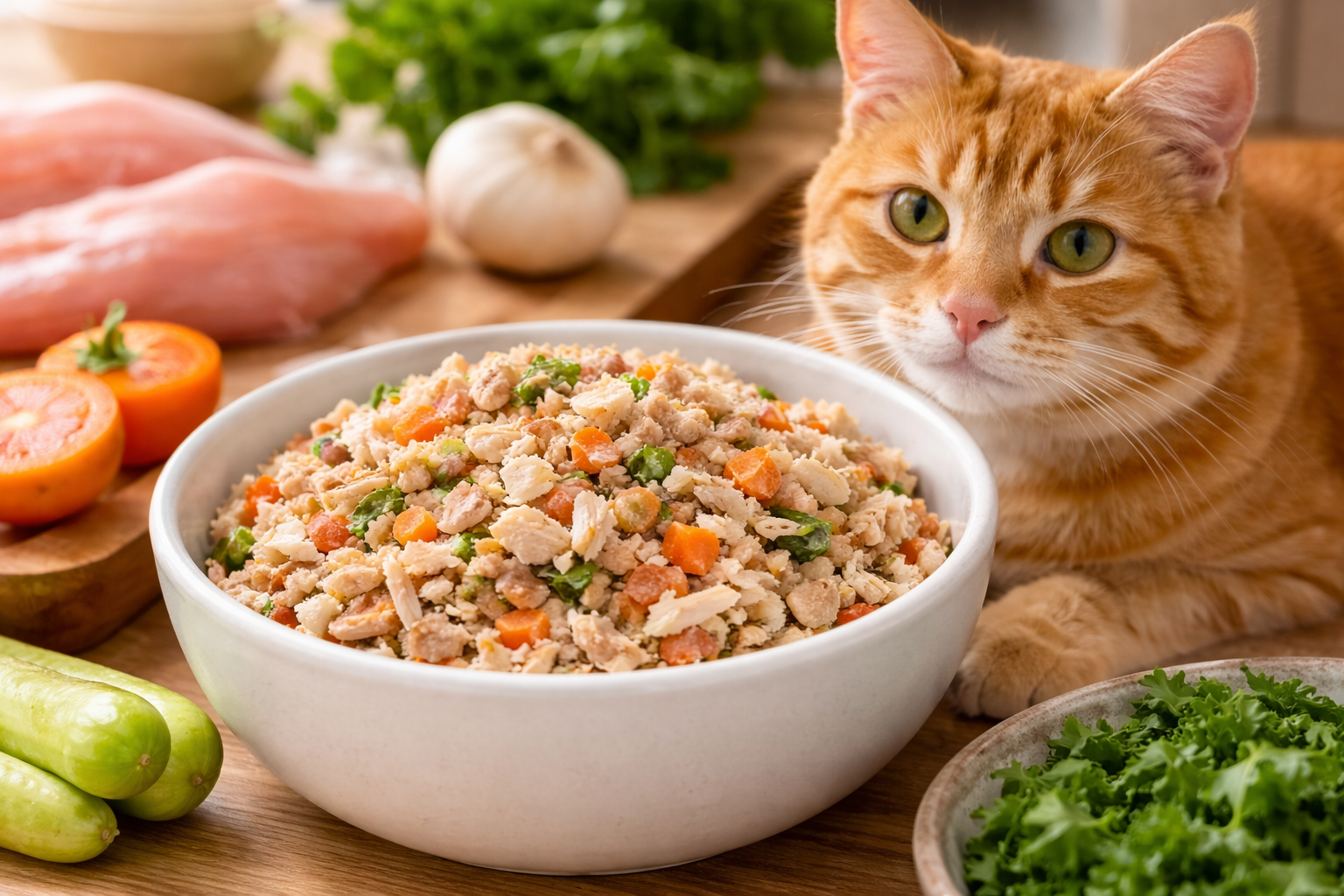
Introduction: What Is Homemade Cat Food and Why Does It Matter?
Homemade cat food refers to meals prepared at home using fresh, whole ingredients specifically chosen to meet a cat’s nutritional needs. Unlike commercial cat food—which may contain fillers, preservatives, or low-quality byproducts—homemade cat food gives pet owners full control over what their cats eat.
As someone who has studied feline nutrition, reviewed veterinary guidelines, and personally helped cat owners transition their pets to balanced homemade diets, I’ve seen how the right homemade cat food can improve coat quality, digestion, energy levels, and overall well-being. However, I’ve also seen the risks when homemade diets are not prepared correctly.
This comprehensive guide will help you understand what homemade cat food really is, whether it’s right for your cat, how to do it safely, and how to avoid common mistakes—while following Google’s E-E-A-T (Experience, Expertise, Authoritativeness, Trustworthiness) principles.
What Is Homemade Cat Food?
Homemade food is food prepared at home using ingredients like meat, organs, bones (or supplements), and essential nutrients instead of relying entirely on store-bought kibble or canned food. Homemade wet cat food recipes are moist, meat-based meals prepared at home to mimic a cat’s natural prey diet. Cats are obligate carnivores.
Cats are obligate carnivores, which means:
- They must eat animal-based protein to survive
- They cannot thrive on a vegetarian or plant-based diet
- They require specific nutrients found naturally in meat
Homemade food focuses on replicating what cats would eat in nature—while keeping it safe and nutritionally complete.
Why More Cat Owners Are Choosing Homemade Food
Over the last decade, interest in homemade cat food has grown rapidly—and for good reasons.
Key Benefits of Homemade Cat Food
- Full ingredient control
You know exactly what goes into your cat’s bowl. - No artificial preservatives or fillers
Many commercial foods contain corn, wheat, soy, or artificial flavors. - Better digestion
Cats with allergies or sensitive stomachs often improve on homemade diets. - Improved coat and skin health
Proper fats and proteins lead to shinier fur and fewer skin issues. - Tailored nutrition
You can adjust recipes for kittens, seniors, or cats with medical needs.
Real-life experience: One cat owner I worked with had a cat suffering from chronic vomiting. After switching to a vet-approved homemade cat food recipe, the vomiting stopped within weeks.
Is Homemade Cat Food Safe?
This is one of the most important questions—and the honest answer is:
👉 Homemade food can be very safe if done correctly—and dangerous if done incorrectly.
The Biggest Risk: Nutritional Imbalance
Cats need precise levels of nutrients such as:
- Taurine
- Calcium
- Phosphorus
- Vitamin A
- B vitamins
- Essential fatty acids
Missing even one key nutrient can lead to:
- Heart disease (taurine deficiency)
- Bone problems
- Vision loss
- Weak immune system
That’s why guesswork is not acceptable when making homemade cat food.
What Nutrients Must Homemade Cat Food Include?
To meet feline nutritional standards (such as those from AAFCO), homemade cat food must include the following:
1. Animal Protein (The Foundation)
Cats need high-quality protein from:
- Chicken
- Turkey
- Beef
- Lamb
- Rabbit
- Fish (in moderation)
Protein should make up the majority of homemade cat food.
2. Taurine (Absolutely Essential)
Taurine is critical for:
- Heart health
- Vision
- Reproduction
Sources:
- Dark poultry meat
- Heart (chicken or beef)
- Taurine supplements (often required)
Authoritative source:
➡️ Cornell University College of Veterinary Medicine
https://www.vet.cornell.edu
3. Calcium and Phosphorus Balance
Cats eating meat-only diets must get calcium.
Safe sources:
- Ground bone (very carefully prepared)
- Eggshell powder (properly sterilized)
- Veterinary mineral supplements
Never feed cooked bones directly—they are dangerous.
4. Fats for Energy and Skin Health
Healthy fats provide:
- Energy
- Brain support
- Healthy skin and coat
Sources:
- Animal fat
- Fish oil (omega-3s)
5. Vitamins and Trace Minerals
Homemade cat food often requires supplements to meet full nutritional needs.
Common supplements include:
- Vitamin E
- B-complex vitamins
- Iodine (very small amounts)
Homemade Cat Food vs Commercial Cat Food
| Feature | Homemade Cat Food | Commercial Cat Food |
|---|---|---|
| Ingredient transparency | High | Often unclear |
| Nutrient control | Customizable | Fixed |
| Convenience | Lower | Very high |
| Risk if unbalanced | High | Lower (if quality brand) |
| Cost | Can be moderate | Varies widely |
Both options can be healthy—but only if done correctly.
Popular Types of Homemade Cat Food
1. Cooked Homemade Food
Best for beginners
Pros:
- Safer from bacteria
- Easier to digest for some cats
Cons:
- Cooking destroys taurine (must supplement)
2. Raw Homemade Food
More controversial
Pros:
- Closest to a natural feline diet
- Minimal nutrient loss
Cons:
- Bacterial risk
- Requires strict hygiene
- Not recommended for immunocompromised households
Authoritative guidance:
➡️ American Veterinary Medical Association (AVMA)
https://www.avma.org
Simple Example of a Balanced Homemade Food Recipe
⚠️ This is an example, not a complete plan.
- Cooked chicken thigh (with fat)
- Chicken heart (for taurine)
- Egg yolk
- Fish oil capsule
- Calcium supplement
- Vitamin mix formulated for cats
Always consult a veterinarian or veterinary nutritionist before long-term feeding.
Common Questions
Can Cats Eat Homemade Food Every Day?
Yes—if the diet is complete and balanced.
Is Homemade Cat Food Cheaper?
Sometimes, but not always. Quality ingredients and supplements can add up.
Can Kittens Eat Homemade Cat Food?
Yes, but kittens have higher nutritional needs and should only eat vet-approved recipes.
Challenges (And Solutions)
Challenge 1: Time and Preparation
Solution:
Batch-cook meals weekly and freeze portions.
Challenge 2: Nutritional Accuracy
Solution:
Use veterinary-formulated recipes or consult a professional.
Trusted resource:
➡️ https://balanceit.com (used by veterinarians)
Challenge 3: Cat Refusal
Solution:
Transition slowly over 7–10 days and warm food slightly to enhance aroma.
Who Should Avoid Homemade Food?
Homemade cat food may not be ideal if:
- You cannot commit to accurate preparation
- Your cat has complex medical conditions (unless supervised)
- You prefer convenience over control
In such cases, high-quality commercial food is a better choice.
Related Topics to Explore
- Raw vs cooked cat food
- Cat nutrition requirements by age
- Taurine deficiency in cats
- Best supplements for homemade cat food
- Signs of nutritional imbalance in cats
Conclusion: Homemade Cat Food Right for Your cat?
Homemade cat food can be a powerful way to improve your cat’s health, comfort, and longevity—when done correctly. It offers transparency, customization, and often better digestion and coat health. However, it also comes with responsibility.
The key takeaway is simple:
- Never guess
- Never skip supplements
- Always base recipes on science, not trends
If you’re considering switching to homemade cat food, start by learning, consulting professionals, and moving slowly. Your cat’s long-term health depends on it.
For more expert guidance on feline nutrition—or personalized help creating a safe homemade cat food plan—explore our related resources or reach out for professional advice.
