
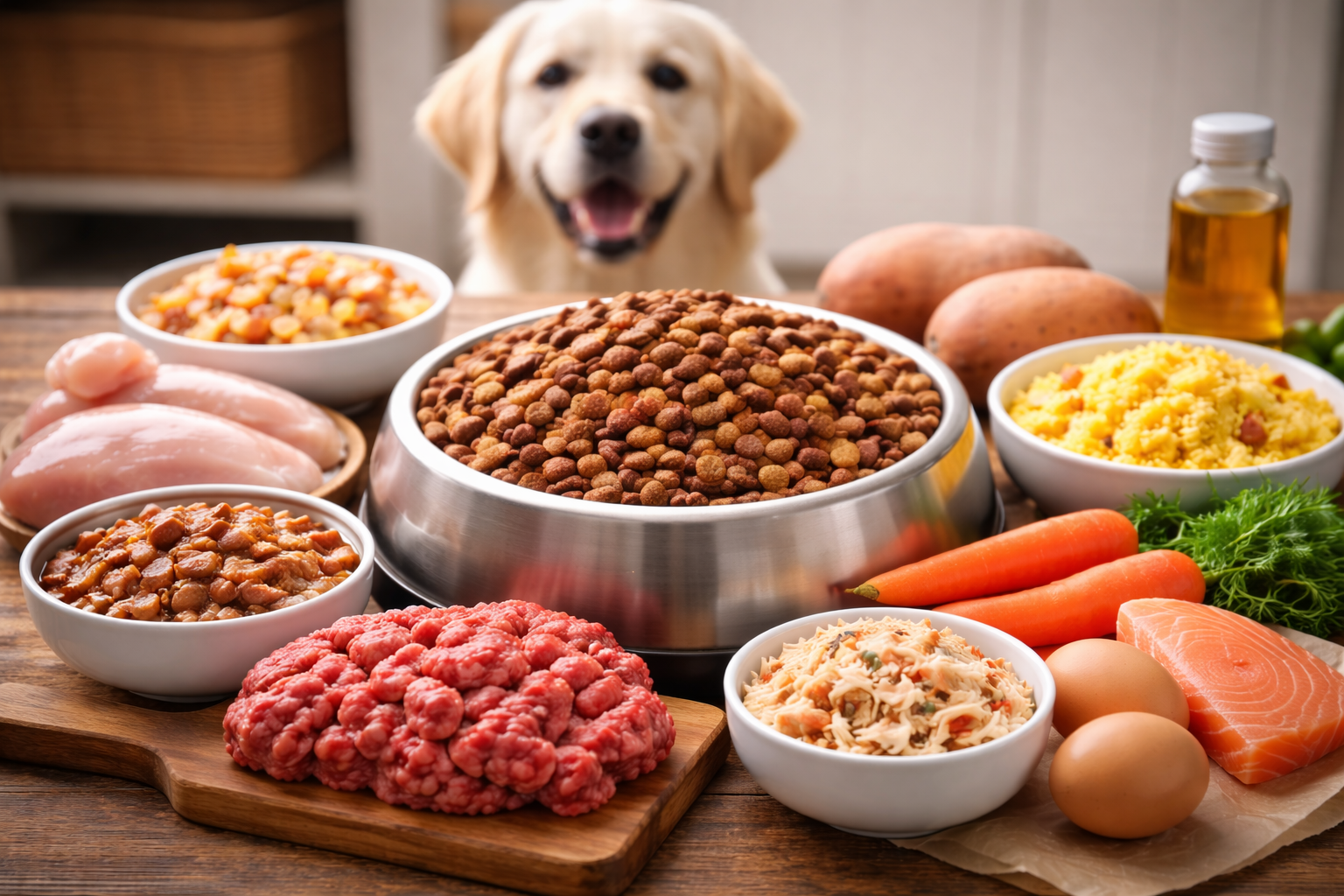
Introduction: What Is Dog Food for Underweight Dogs and Why It Matters
Dog food for underweight dogs is specially formulated nutrition designed to help dogs gain weight safely, gradually, and in a healthy way. Unlike regular maintenance food, these diets focus on higher calorie density, quality protein, healthy fats, and optimal digestibility to support muscle gain—not just fat.
If your dog’s ribs are clearly visible, their hips protrude, or they seem weak, tired, or uninterested in play, weight loss may already be affecting their health. As someone who has worked extensively with dog nutrition research, real pet-owner case studies, and veterinarian feeding guidelines, I’ve seen how the right food can completely transform an underweight dog’s energy, immunity, and overall quality of life.
Many dog parents assume feeding “more food” is enough, but the truth is more nuanced. Choosing the correct dog food for underweight dogs is critical for long-term health and safe weight restoration. You can also explore this in-depth resource on dog food for underweight dogs to better understand how targeted nutrition supports healthy weight gain.
In this guide, we’ll cover everything you need to know—from causes of low weight to choosing the best food, feeding strategies, challenges, and expert-backed solutions.
Why Dogs Become Underweight
Before choosing the right food, it’s important to understand why a dog is underweight. Treating the cause and the nutrition together gives the best results.
Common Causes of Being Underweight
- Poor-quality diet (low calories or low nutrients)
- High activity levels (working, hunting, or athletic dogs)
- Medical conditions (parasites, thyroid issues, digestive disorders)
- Stress or anxiety
- Poor appetite or picky eating
- Rescue or neglect history
- Old age or recovery from illness
Real-life example:
A rescued stray dog I worked with was eating regularly but still losing weight. The issue wasn’t quantity—it was poor nutrient absorption. Switching to a highly digestible, calorie-dense dog food for underweight dogs led to visible improvement within one month.
What Makes Dog Food for Underweight Dogs Different?
Not all dog foods are suitable for weight gain. Dog food for underweight dogs is designed with nutritional density and digestibility in mind.
Key Nutritional Features
1. Higher Calorie Density
These foods deliver more calories per cup, helping dogs gain weight without needing large meal volumes.
2. High-Quality Animal Protein
Protein supports lean muscle gain, not just fat storage.
- Chicken
- Beef
- Lamb
- Fish
- Eggs
3. Healthy Fats
Fats are the most concentrated energy source.
- Chicken fat
- Salmon oil
- Fish oil
They also improve coat health and brain function.
4. Easily Digestible Carbohydrates
- Rice
- Sweet potatoes
- Oats
These provide steady energy and support digestion.
5. Essential Vitamins & Minerals
Balanced micronutrients support immune health, bone strength, and metabolism during weight gain.
How to Choose the Best Dog Food for Underweight Dogs
Choosing the right food can feel overwhelming. Here’s a simple, expert-backed checklist.
Look for These Qualities
- Named animal protein as the first ingredient
- At least 25–30% protein (depending on life stage)
- Moderate to high fat (15–20% or more)
- Clear calorie information per cup
- AAFCO nutritional adequacy statement
- No excessive fillers or artificial preservatives
Avoid foods marketed only for “bulking” without balanced nutrition.
Wet Food vs Dry Food for Underweight Dogs
Both options can work—each has pros and cons.
Dry Food (Kibble)
Pros
- Calorie-dense
- Convenient
- Affordable
Cons
- Some dogs find it less palatable
Wet Food
Pros
- Highly palatable
- Higher moisture content
- Easier for seniors or sick dogs
Cons
- Lower calorie density per gram
- More expensive
Best approach:
Many vets recommend a combination of high-calorie dry food with quality wet food to boost appetite and calories.
Feeding Tips That Actually Work
1. Feed Smaller, More Frequent Meals
Split daily intake into 3–4 meals to improve digestion and calorie absorption.
2. Transition Slowly
Switch foods gradually over 7–10 days to prevent stomach upset.
3. Warm the Food Slightly
This enhances aroma and encourages picky eaters.
4. Track Weight Weekly
Use a scale or body condition score chart to monitor progress.
5. Avoid Empty Calories
Human junk food may add weight but harms long-term health.
Common Questions About Dog Food for Underweight Dogs
How Long Does It Take for a Dog to Gain Weight?
Most dogs show improvement in 2–6 weeks, depending on metabolism and underlying issues.
Can Puppies Eat Dog Food for Underweight Dogs?
Yes—but only puppy-specific formulas and preferably under vet guidance.
Is High-Calorie Food Safe Long-Term?
For working dogs or naturally thin breeds, yes. For others, it may be temporary until ideal weight is achieved.
Should I See a Vet First?
If weight loss is sudden or severe, absolutely. Nutrition should complement medical care.
Challenges Dog Owners Face (and Proven Solutions)
Challenge 1: Dog Eats but Doesn’t Gain Weight
Solution:
Switch to higher calorie density and better protein quality.
Challenge 2: Digestive Issues
Solution:
Choose foods with probiotics and easily digestible ingredients.
Challenge 3: Weight Gain but Low Energy
Solution:
Ensure balanced nutrients—not just fat—especially protein and micronutrients.
Challenge 4: Fear of Overfeeding
Solution:
Follow feeding guides, monitor weekly, and adjust gradually.
Trusted External Nutrition Authority
For scientifically backed feeding standards and canine nutrition guidelines, the Association of American Feed Control Officials (AAFCO) provides widely accepted standards used by veterinarians and pet food manufacturers worldwide:
https://www.aafco.org
Conclusion: Helping Your Dog Reach a Healthy Weight
Choosing the right dog food for underweight dogs can dramatically improve your dog’s health, energy, and lifespan. The goal isn’t rapid weight gain—it’s safe, sustainable, and nutritious recovery. With high-quality ingredients, proper feeding strategies, and careful monitoring, most underweight dogs can regain strength and vitality within weeks.
Another important aspect of choosing the right dog food for underweight dogs is consistency and patience. Weight gain should always be gradual, as rapid increases can strain a dog’s digestive system and organs. Many pet owners make the mistake of frequently switching foods when results aren’t immediate, which can actually slow progress and cause stomach issues. Sticking to a high-quality, calorie-dense formula for several weeks allows the dog’s body to adapt and properly utilize the nutrients.
It’s also essential to consider lifestyle factors alongside diet. Stress, lack of routine, or insufficient rest can prevent weight gain even with the best food. Creating a calm feeding environment and maintaining a consistent schedule helps improve appetite and nutrient absorption. Finally, remember that every dog is unique—breed, age, metabolism, and activity level all influence results. Monitoring changes closely and adjusting portions as needed ensures safe, long-term success in helping underweight dogs reach a healthy, stable weight
If you’re unsure where to begin, continue learning, review trusted resources, or seek personalized guidance. Your dog depends on you—and informed decisions today can lead to a healthier, happier future for them.
