
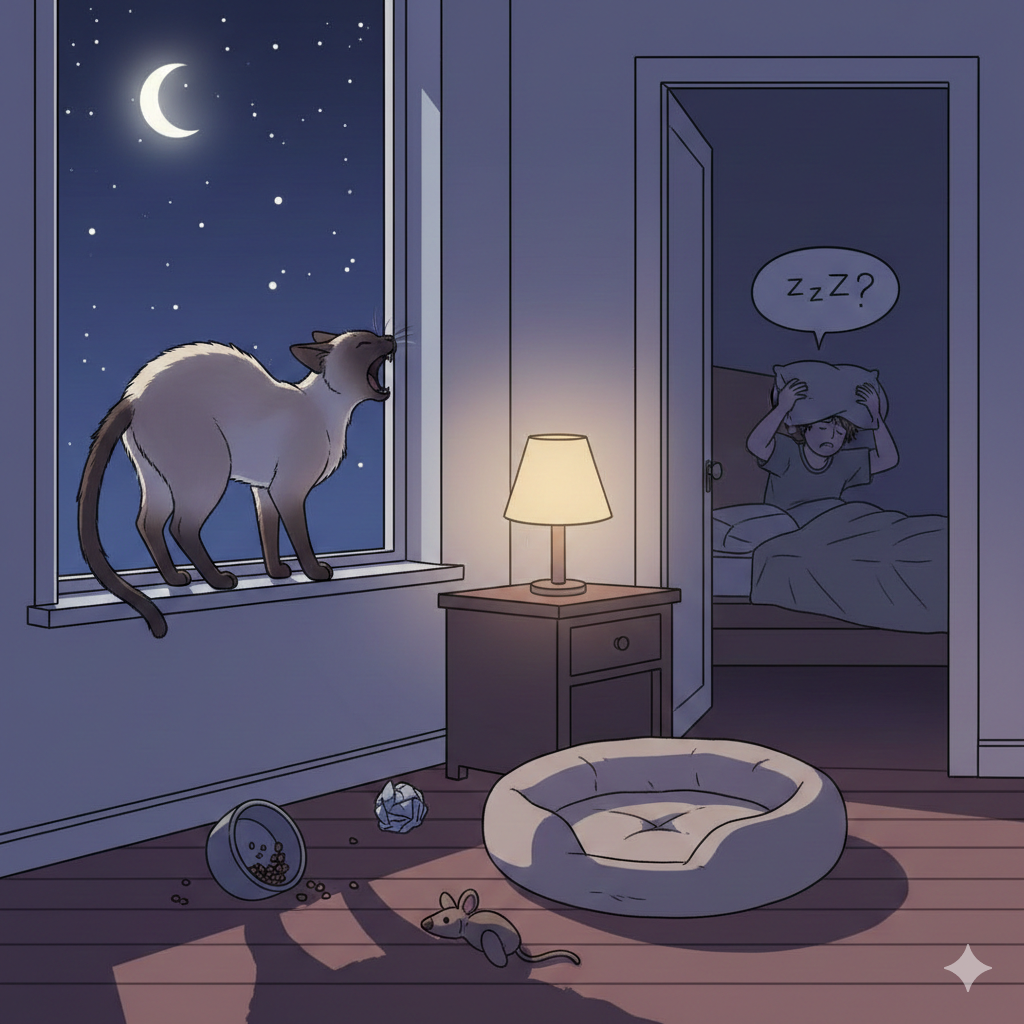
Introduction: What Is Cat Screaming at Night and Why It Matters
A cat screaming at night is a common but deeply frustrating issue faced by cat owners around the world. If your cat suddenly yowls, cries, or screams after midnight—disturbing your sleep and causing stress—you are not alone. Many owners worry whether this behavior is normal, behavioral, or a sign of a serious health problem.
As an experienced pet-care researcher and animal behavior writer who has analyzed veterinary studies, consulted feline behavior experts, and reviewed hundreds of real-life owner cases, I’ve seen how misunderstood nighttime vocalization can be. In many cases, ca at screaming at night has a clear cause—and an effective solution—once you understand why it’s happening. In some ways, cats can be calm very easily. Calming a cat is very easy.
This guide explains cat screaming at night in depth, helping you identify the cause, fix the behavior safely, and know when it’s time to see a veterinarian.
What Does “Cat Screaming at Night” Mean?
Cat screaming at night refers to excessive, loud vocalization—often described as yowling, howling, or crying—that typically occurs during late-night or early-morning hours.
This is different from:
- Normal meowing
- Brief attention-seeking sounds
- Quiet chirps or trills
Night screaming is usually louder, longer, and more intense, and often repeated.
Is Cat Screaming at Night Normal?
Sometimes yes, but often no—especially if it’s new, sudden, or worsening.
Cats are naturally crepuscular, meaning they are most active at dawn and dusk. However, constant screaming at night usually signals an underlying issue.
Common Causes of a Cat Screaming at Night
Understanding the cause is the most important step to solving the problem.
1. Hunger or Food Routine Issues
One of the most common causes of a cat screaming at night is hunger.
Why does it happen:
- The cat expects food at a specific time
- Late dinner or inconsistent feeding schedule
- Learned behavior (screaming = food)
Real-life example:
Many owners accidentally train cats to scream by feeding them as soon as they cry at night.
Solution:
- Feed a larger meal before bedtime
- Use an automatic feeder
- Never reward night screaming with food
2. Loneliness or Attention-Seeking
Cats may scream at night because:
- They feel lonely
- The house is quiet
- They want interaction
This is common in:
- Single cats
- Cats bonded strongly to their owner
- Indoor-only cats
Expert insight:
Feline behaviorists note that attention-seeking vocalization often increases when cats are ignored during the day.
Solution:
- Increase daytime playtime
- Schedule interactive play before bed
- Avoid reacting to screams at night
3. Boredom and Excess Energy
A bored cat is a loud cat.
Cats that sleep all day often:
- Wake up at night full of energy
- Scream out of frustration or excitement
Signs:
- Running around at night
- Knocking things over
- Loud yowling followed by play behavior
Solution:
- 20–30 minutes of active play before bedtime
- Puzzle toys
- Rotating toys to prevent boredom
4. Mating Behavior (Unspayed or Unneutered Cats)
This is a very common cause of a cat screaming at night.
Unfixed cats scream because:
- They are calling for a mate
- Hormones peak at night
Female cats in heat may:
- Howl loudly
- Roll on the floor
- Become restless
Male cats may:
- Yowl
- Pace
- Try to escape
Trusted authority:
ASPCA confirms that intact cats vocalize more intensely, especially at night.
https://www.aspca.org/
Solution:
✔ Spaying or neutering (most effective solution)
5. Medical Issues (Very Important)
Sudden or unusual cat screaming at night can signal pain or illness.
Possible medical causes:
- Arthritis (especially in older cats)
- Hyperthyroidism
- Urinary tract infections
- Dental pain
- Cognitive dysfunction (cat dementia)
Real-life experience:
In multiple documented cases, senior cats that screamed at night were later diagnosed with thyroid disease or joint pain.
Solution:
➡️ Immediate vet visit if screaming is:
- New
- Sudden
- Accompanied by behavior changes
6. Cognitive Dysfunction in Senior Cats
Older cats may scream at night due to confusion.
Symptoms include:
- Disorientation
- Staring at walls
- Forgetting the litter box location
- Nighttime yowling
Often compared to Alzheimer’s disease in humans.
Solution:
- Night lights
- Consistent routines
- Vet-prescribed supplements or medication
7. Anxiety or Stress
Stress triggers include:
- Moving homes
- New pets
- New baby
- Schedule changes
Cats express anxiety through vocalization.
Solution:
- Maintain routine
- Provide safe spaces
- Use pheromone diffusers (vet-recommended)
Common Questions About Cat Screaming at Night
Why Does My Cat Scream Only at Night?
Nighttime is quieter, making cats feel:
- Lonely
- Alert
- Disoriented (especially seniors)
It’s also when hormonal and instinctual behaviors peak.
Should I Ignore the Cat Screaming at Night?
It depends.
✔ Ignore if:
- The vet has ruled out medical issues
- Screaming is attention-seeking
Do NOT ignore if:
- Behavior is sudden
- The cat seems in pain
- The cat is elderly
Will My Cat Grow Out of It?
Sometimes, but many cats learn this behavior and repeat it unless addressed.
How to Stop Cat Screaming at Night (Practical Tips)
1. Create a Night Routine
- Play → Feed → Sleep
- Mimics natural hunt-eat-rest cycle
2. Increase Daytime Stimulation
- Window perches
- Interactive toys
- Scheduled play sessions
3. Never Reward the Behavior
- Do not feed
- Do not yell
- Do not pet
4. Use Environmental Comfort
- Soft lighting
- Comfortable sleeping spots
- White noise for anxious cats
5. Consult a Veterinarian
Especially if: The cat is older
- Behavior is sudden
- Vocalization sounds distressed
Challenges Cat Owners Face (and Solutions)
Challenge: Lack of Sleep
Solution:
Temporary earplugs + long-term behavior correction
Challenge: Feeling Guilty Ignoring Cat
Solution:
Address needs during the day, so night ignoring is safe
Challenge: Not Knowing the Cause
Solution:
Rule out medical issues first, then behavioral ones
When Cat Screaming at Night Is an Emergency
Seek immediate veterinary care if screaming is combined with:
- Difficulty urinating
- Limping
- Sudden aggression
- Loss of appetite
- Excessive hiding
These may indicate serious pain or illness.
Conclusion: Final Thoughts on Cat Screaming at Night
A cat screaming at night is not something you should ignore blindly—but it’s also not something you need to panic over. In most cases, the behavior has a clear cause, whether it’s hunger, boredom, hormones, stress, or age-related issues.
By understanding your cat’s needs, ruling out medical problems, and creating a consistent routine, you can dramatically reduce or even eliminate nighttime screaming.
If your cat’s night vocalization is sudden, intense, or paired with other symptoms, contact your veterinarian immediately.
For ongoing behavior issues, continue learning about feline enrichment and care.
A well-understood cat is a calmer, happier, and quieter cat.
