
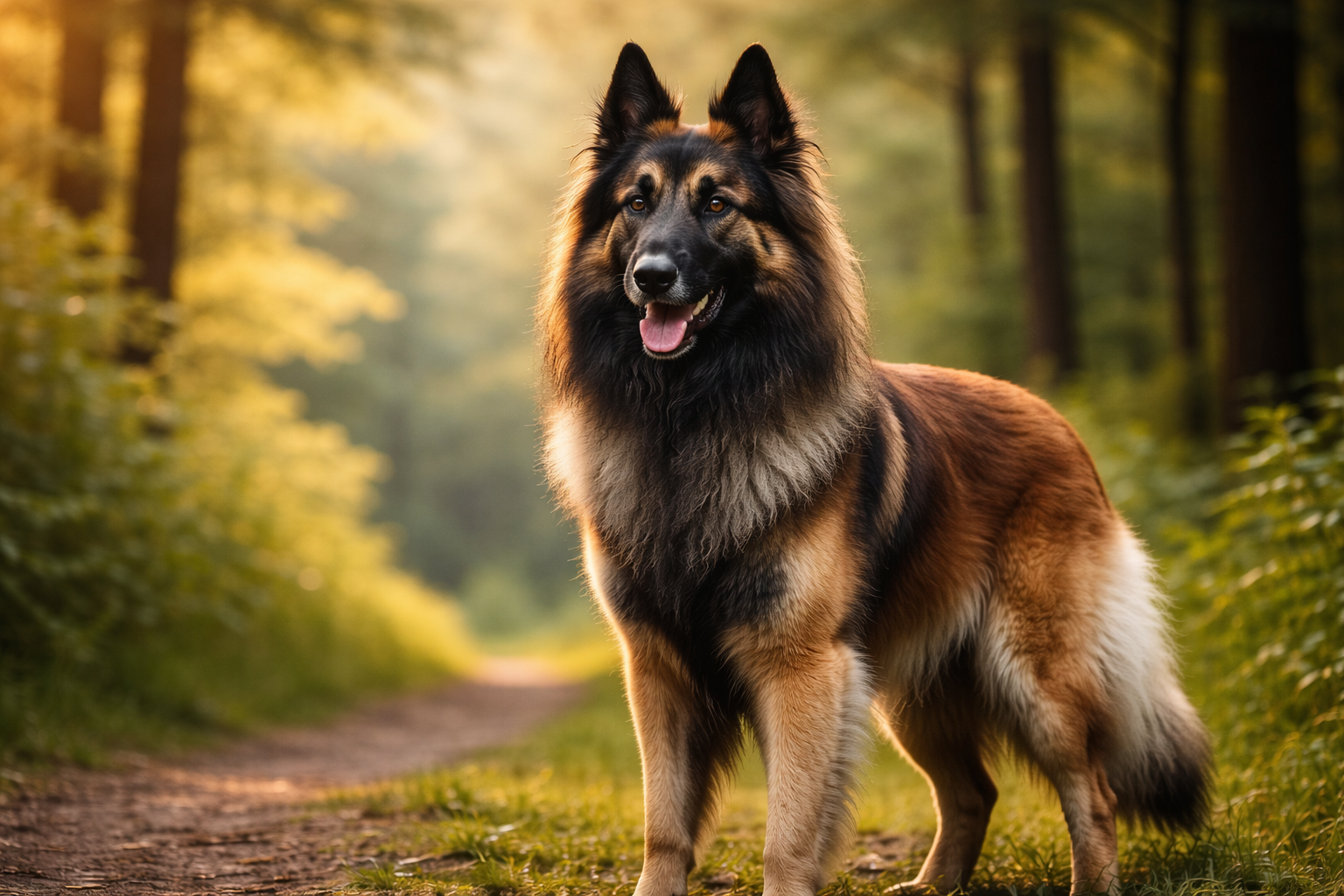
Introduction: What Is a Belgian Tervuren and Why Does It Matter
Often described as “nature’s masterpiece” of the dog world, the Belgian Tervuren is far more than just a striking face. With its mahogany-tinted coat and an expression that radiates keen intelligence, this breed represents the pinnacle of canine versatility. Whether it is herding livestock on a rustic farm, performing high-stakes search and rescue, or simply being the shadow of its favorite human, the “Terv” is a dog that demands to be noticed—and worked.
As a certified canine behaviorist with over 15 years of experience training herding breeds, I have worked intimately with the Belgian Tervuren. I’ve seen firsthand the “humor” they bring to a training session and the absolute devotion they show to their families. In this guide, we will dive deep into what makes this breed unique, how to manage their intense energy, and why they might (or might not) be the right fit for your lifestyle.
What is a Belgian Tervuren?
The Belgian Tervuren is one of the four varieties of Belgian Shepherd dogs (alongside the Malinois, Groenendael, and Laekenois).4 While they share a common ancestry, the Tervuren is distinguished by its long, abundant double coat, typically in shades of fawn to mahogany with a “black overlay”—meaning the tips of the hairs are black.5
A Brief History: From the Village of Tervuren
Named after the Belgian village of Tervuren, this breed was refined in the late 19th century by breeder M.F. Corbeel.6 While they were originally bred for the grueling work of herding and guarding, their high trainability quickly saw them transition into police work, military service, and elite obedience competitions.7
In the United States, the American Kennel Club (AKC) officially recognized them as a separate breed in 1959, though many international registries still classify the four Belgian types as one breed with different coat variations.
Characteristics and Temperament
To live with a Belgian Tervuren is to live with a genius. They are often ranked among the most intelligent dog breeds in the world, but that intelligence comes with a caveat: if you don’t give them a job, they will “hire” themselves for a job you probably won’t like—such as “remodeling” your living room.
Key Traits at a Glance
-
Hyper-Alert: Nothing moves in your yard without the Terv knowing about it. They are exceptional watchdogs.
-
Sensitive: Unlike the more “hard” Belgian Malinois, Tervs are surprisingly sensitive to their owner’s emotions and tone.8
-
Possessive: They don’t just love their owners; they are “zealous” for their attention.9
-
High Energy: This is not a couch potato breed. They have marathon-level stamina.10
The “Terv” Sense of Humor
One of the most endearing (and sometimes frustrating) aspects of the Belgian Tervuren is their sense of humor. They are known for being mischievous. I once trained a Terv named “Rogue” who learned how to open the kitchen cabinets not to eat the food, but to hide my car keys inside the cereal boxes just to watch me look for them.
Training and Socialization: The Blueprint for Success
Training a Belgian Tervuren requires a “calm and assertive” approach. Because they are so sensitive, harsh corrections can backfire, causing the dog to shut down or become fearful.11
1. Socialization is Non-Negotiable
Tervurens are naturally wary of strangers.12 Without early and frequent socialization, this wariness can morph into shyness or reactive aggression.13
-
The Goal: Expose your puppy to 100 new people, sounds, and environments in their first 16 weeks.
-
Real-Life Tip: Don’t just take them to a busy park; take them to a hardware store, a car wash, or a construction site. Let them observe the world from a safe distance before asking them to interact.
2. Mental Stimulation Over Physical Exercise
While they need at least 1–2 hours of physical activity daily, a tired body doesn’t mean a tired mind for a Terv.
-
The “Work” Solution: Use food puzzles, nose work (scent detection), and advanced obedience.14
-
Activity Idea: Teach them the names of their toys. A bored Terv might chew your shoes; a working Terv can be asked to “Go find the blue ball” and bring it to you.
Health and Longevity
Taking care of our pets health must be done with healthy foods. The Belgian Tervuren is generally a robust and healthy breed with a lifespan of 12 to 14 years.15 However, like all purebred dogs, they are prone to certain hereditary conditions 16
| Condition | Description | Prevention/Management |
| Hip & Elbow Dysplasia | Malformation of the joints. | Buy from OFA-cleared parents; maintain a lean weight. |
| Epilepsy | Idiopathic seizures are common in some lines. | Vet-prescribed medication and regular monitoring. |
| Progressive Retinal Atrophy (PRA) | Gradual loss of vision/blindness. | Annual CERF eye exams. |
| Bloat (GDV) | A life-threatening stomach twisting. | Use slow-feeder bowls; avoid exercise right after eating. |
Pro Tip: Always ask a breeder for “CHIC” (Canine Health Information Center) certification. This ensures the parents have been tested for the most common issues in the breed.
Grooming the “Masterpiece” Coat
That glorious, long coat looks high-maintenance, but it’s actually more manageable than it looks—provided you stay consistent.
-
Weekly Brushing: Use a slicker brush and a long-toothed metal comb. A thorough 20-minute session once a week will keep mats at bay.
-
The “Shed-nado”: Twice a year, Tervs “blow” their coat. During these periods, expect to brush them daily. You will find enough fur to knit a second dog!
-
Bathing: Only as needed. Over-bathing can strip the natural oils that make their coat waterproof and weather-resistant.17
Common Challenges and Solutions
Challenge 1: The Herding Instinct
Problem: Chasing cars, joggers, or nipping at children’s heels.
Solution: Redirect the instinct. Use a “herding ball” (a large, hard plastic ball) in the backyard. This allows them to “work” the ball safely without practicing unwanted behaviors on humans.
Challenge 2: Separation Anxiety
Problem: Tervs are “velcro dogs” and can become destructive when left alone.18
Solution: Crate training is essential. Make the crate a “high-value” zone with special treats they only get when you leave. Gradually increase the time you are away.
Belgian Tervuren vs. Belgian Malinois: Which is Right for You?
Many people see the Malinois on TV and think they want one, only to realize a Tervuren might actually be a better fit for a family environment.
-
The Malinois: Higher intensity, more “mouthy,” often single-person focused.19 Primarily used for high-level protection and police work.20
-
The Tervuren: More elegant, slightly more sociable with family members, but more sensitive. While they can do protection work, they are often preferred for agility and obedience.
Frequently Asked Questions
Are Belgian Tervurens good with kids?
Generally, yes, especially if raised with them. However, because of their herding drive, they may try to “herd” small children. Supervision is always required.
Can they live in an apartment?
It is possible but difficult. They need a large, secure yard to truly stretch their legs. If you live in an apartment, you must be committed to spending several hours outside every single day.
Do they bark a lot?
They are “vocal” dogs. They will bark to alert you to intruders or when they are bored. Training a “quiet” command early is vital.
Conclusion: Is the Belgian Tervuren Right for You?
The Belgian Tervuren is a high-octane, highly intelligent, and deeply loyal companion.21 They aren’t just “pets”—they are partners. If you have the time to devote to training, the energy to keep up with their exercise needs, and a sense of humor to handle their antics, you won’t find a more rewarding dog.
To recap:
-
They are elite athletes who need mental and physical work.22
-
Early socialization is the key to a stable temperament.23
-
They are generally healthy but require responsible breeding.24
