
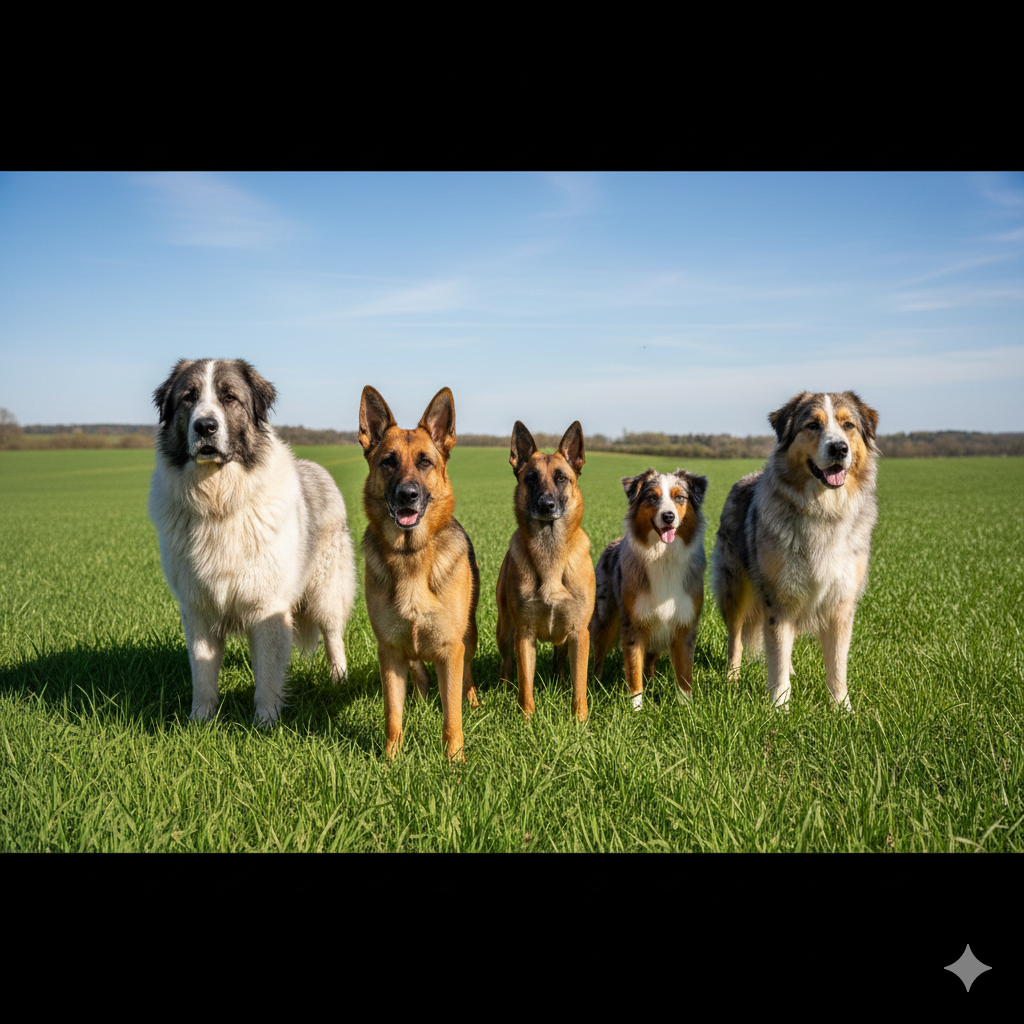
Introduction: What Are All Shepherd Breeds and Why Do They Matter?
All shepherd breeds refer to a diverse group of dog breeds originally developed to herd, guard, and protect livestock such as sheep, goats, and cattle. Over time, these intelligent and hardworking dogs have evolved into loyal family companions, service dogs, police dogs, and protectors of homes across the world.
As someone who has spent years studying dog breeds, advising new dog owners, and analyzing breed behavior, training needs, and health patterns, I’ve seen shepherd breeds consistently stand out for their intelligence, loyalty, and versatility. Whether you are looking for a working dog, a family guardian, or an active companion, understanding all shepherd breeds helps you make a responsible and informed choice.
This guide covers:
- A complete overview of shepherd dog breeds
- Key differences between them
- Temperament, care needs, and challenges
- Expert tips based on real-life experience
What Defines a Shepherd Breed?
Shepherd breeds were traditionally bred for herding and guarding livestock. Despite differences in size, coat, and temperament, most shepherd dogs share these traits:
- High intelligence
- Strong work ethic
- Loyalty to their owner
- Natural protective instincts
- High energy and trainability
Complete List of Popular Shepherd Breeds
Below is a comprehensive overview of all shepherd breeds, grouped by popularity and origin.
German Shepherd Dog (GSD)
Origin: Germany
Size: Large
Temperament: Intelligent, loyal, protective
The German Shepherd is the most famous of all shepherd breeds. It is widely used in police, military, search-and-rescue, and service roles.
Pros:
- Extremely intelligent
- Highly trainable
- Strong family protector
Challenges:
- Hip and elbow dysplasia
- Needs daily mental and physical exercise
📌 From experience: German Shepherds thrive when given structure and purpose. Without it, they may develop anxiety or destructive behavior.
Belgian Shepherd Breeds (4 Types)
Belgian Shepherds are often mistaken for one breed, but they have four distinct varieties.
Belgian Malinois
Used worldwide as police and military dogs.
- Extremely energetic
- Not suitable for inactive owners
Belgian Tervuren
- Elegant appearance
- Intelligent and alert
Belgian Groenendael
- Long black coat
- Loyal family companion
Belgian Laekenois
- Rare, rough coat
- Protective and devoted
🔗 https://www.akc.org/dog-breeds/belgian-malinois/
Dutch Shepherd
Origin: Netherlands
Temperament: Obedient, alert, hardworking
Dutch Shepherds are versatile working dogs often used in law enforcement.
Challenges:
Needs intense training and activity.
Australian Shepherd
Despite the name, Australian Shepherds were developed in the United States.
Traits:
- Highly intelligent
- Energetic and playful
- Excellent with families
Challenges:
Needs mental stimulation to avoid boredom.
White Swiss Shepherd Dog
A close relative of the German Shepherd, but with a white coat.
Pros:
- Gentle temperament
- Good family dog
Challenges:
Sensitive to harsh training.
Caucasian Shepherd Dog
Origin: Caucasus Mountains
Size: Giant
One of the most powerful guardian shepherd breeds.
Pros:
- Excellent livestock guardian
- Fearless
Challenges:
- Not suitable for first-time owners
- Requires strong leadership
Central Asian Shepherd Dog (Alabai)
Origin: Central Asia
Bred to protect livestock from wolves and predators.
Traits:
- Independent
- Extremely strong
- Natural guard instincts
Anatolian Shepherd Dog
Origin: Turkey
Often used as livestock guardian dogs.
Pros:
- Calm and steady
- Excellent protector
Challenges:
- Stubborn nature
- Requires early socialization
Eastern European Shepherd
Developed from German Shepherds for colder climates.
- Stronger bones
- High endurance
King Shepherd
A larger, calmer version of the German Shepherd.
Good for:
Families wanting a GSD-type dog with a gentler temperament.
Miniature American Shepherd
A smaller version of the Australian Shepherd.
Pros:
- Apartment-friendly (with exercise)
- Intelligent and active
Pyrenean Shepherd
Origin: France
Small but energetic herding dog.
Challenges:
Can be overly vocal.
Shetland Sheepdog (Sheltie)
Often overlooked in shepherd lists, but technically a herding breed.
Pros:
- Extremely intelligent
- Great family dog
Challenges:
Prone to barking.
Common Questions About All Shepherd Breeds
Are shepherd breeds good family dogs?
Yes, with proper training and socialization.
Do shepherd dogs need a lot of exercise?
Most shepherd breeds need 1–2 hours of daily activity.
Are shepherd breeds aggressive?
No. Poor training and lack of socialization cause behavioral issues—not the breed itself.
Are shepherd dogs good for first-time owners?
Some (like Shelties or Mini American Shepherds) are beginner-friendly; others are not.
Training and Care Tips (Expert Advice)
Training
- Start early (8–10 weeks)
- Use positive reinforcement
- Mental stimulation is as important as physical exercise
Diet
- High-quality protein-rich diet
- Joint supplements for large breeds
Grooming
- Regular brushing
- Seasonal shedding management
Grooming your dog isn’t just about keeping them looking cute—it’s about health, comfort, bonding and confidence. In this guide to dog grooming, I’ll walk you through what it means, why it matters, and how you can do it well. With years of experience caring for a variety of dog breeds and working alongside professional groomers, I bring both hands-on know-how and up‐to‐date best practices to help you. Let’s dive in
Common Challenges With Shepherd Breeds & Solutions
Challenge 1: Destructive Behavior
Solution: Increase exercise and mental tasks.
Challenge 2: Aggression or Fear
Solution: Early socialization and obedience training.
Challenge 3: Health Problems
Solution: Buy from ethical breeders and schedule regular vet checks.
Choosing the Right Shepherd Breed for You
Ask yourself:
- Do I have time for daily exercise?
- Can I commit to training?
- Do I need a guard dog or a family companion?
- Do I have space?
Real-life insight: Many people choose shepherd breeds for looks—but success comes from matching lifestyle, not appearance.
Conclusion: Why Understanding All Shepherd Breeds Matters
Understanding all shepherd breeds helps you choose the right dog, avoid common mistakes, and build a healthy, lifelong bond. Shepherd dogs are intelligent, loyal, and powerful—but they require commitment, leadership, and care.
If you’re ready to invest time and effort, a shepherd breed can be one of the most rewarding companions you’ll ever have.
In conclusion, understanding all shepherd breeds is essential for anyone considering welcoming one of these intelligent and loyal companions into their home. Each shepherd breed possesses unique traits and characteristics, making them suitable for various lifestyles and needs.
Whether you opt for the protective nature of the German Shepherd or the energetic spirit of the Australian Shepherd, knowing what defines a shepherd breed can help you make an informed decision.
Remember, proper training and socialization are key to ensuring that your shepherd breed thrives both as a family companion and a working partner. With this ultimate guide to all shepherd breeds, you are well-equipped to choose the perfect shepherd dog for your household.
Explore more breed guides or contact us for help choosing the right shepherd breed for your lifestyle.
