
Introduction: The Wonder of African Birds
Africa — a continent of breathtaking landscapes, from golden savannas to lush rainforests — is home to some of the most extraordinary birds in the world. With over 2,300 bird species, including more than 1,500 endemic to the continent, African birds attract birdwatchers, photographers, and researchers from around the globe.
As someone passionate about wildlife and avian ecology, I’ve spent years studying and documenting bird species across Africa’s key habitats — from Kenya’s Maasai Mara to South Africa’s Kruger National Park. This experience has revealed just how diverse and vital African birds are to ecosystems and local cultures alike. According to BirdLife International, Africa hosts one of the richest bird diversities in the world.
In this comprehensive guide, we’ll explore the unique bird species of Africa, their habitats, behaviors, migration patterns, and conservation challenges — while answering some of the most common questions bird lovers ask. There are many best bird species in the world.
1. The Diversity of African Birds
Africa’s birdlife is incredibly diverse, reflecting the continent’s varied geography and climate. From the Sahara Desert to the Congo Rainforest, every ecosystem hosts its own unique avian community.
1.1 Iconic African Birds
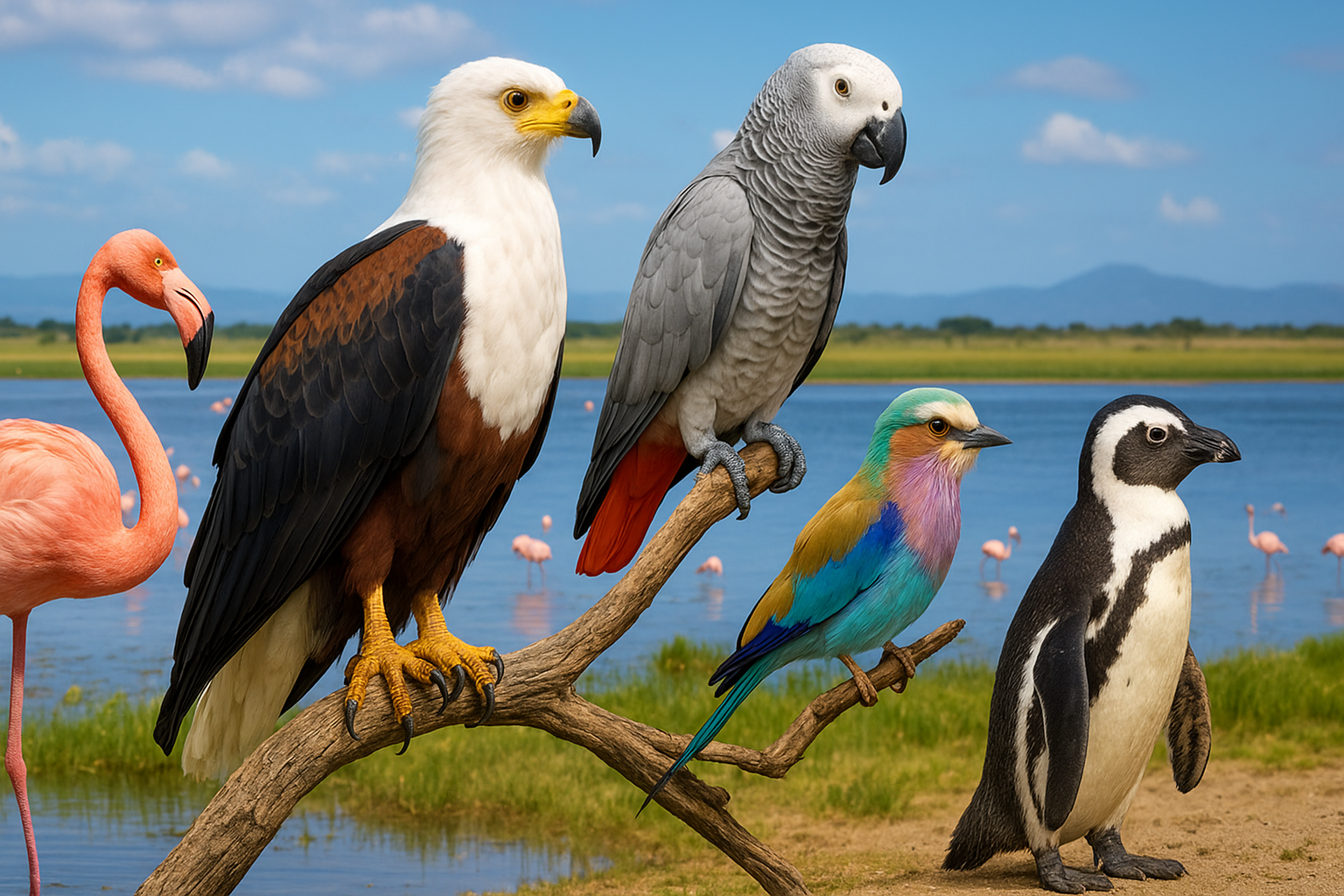
Here are some of the most iconic African birds admired by travelers and ornithologists alike:
-
Greater Flamingo (Phoenicopterus roseus): Known for its stunning pink feathers, found in East African lakes like Nakuru and Natron.
-
African Fish Eagle (Haliaeetus vocifer): Africa’s national symbol in many countries, often seen soaring near rivers and lakes.
-
Lilac-breasted Roller (Coracias caudatus): A vibrant, multicolored bird famous for its acrobatic flight displays.
-
Grey Parrot (Psittacus erithacus): Renowned for its intelligence and ability to mimic human speech, native to Central Africa.
-
African Penguin (Spheniscus demersus): The only penguin species native to Africa, found along South Africa’s coast.
These species highlight how Africa’s biodiversity spans from tropical rainforests to coastal cliffs.
2. African Bird Habitats
2.1 Savannahs and Grasslands
The African savannah is home to ground-dwelling birds like:
-
Secretary Bird (Sagittarius serpentarius) — hunts snakes and insects on foot.
-
Ostrich (Struthio camelus) — the world’s largest bird, running at speeds over 70 km/h.
2.2 Wetlands and Lakes
Wetlands like the Okavango Delta and Lake Naivasha attract millions of migratory and resident species, including:
-
Pelicans, ibises, and flamingos feed on crustaceans and algae.
-
Kingfishers and fish eagles, which thrive on abundant aquatic life.
2.3 Forests and Jungles
Central Africa’s Congo Basin and West Africa’s Guinean forests host colorful, elusive birds like:
-
Turacos, hornbills, and sunbirds — known for bright plumage and melodic calls.
-
African grey parrots, now endangered due to illegal wildlife trade.
2.4 Deserts and Arid Zones
In the Sahara and Namib deserts, survival is tough. Yet, birds like the sandgrouse and desert lark have adapted to extreme heat, often traveling miles to find water.
2.5 Coastal Regions and Islands
Coastal Africa — from Mozambique to Madagascar — shelters seabirds such as:
-
Boobies, terns, and frigatebirds nest in colonies along rocky shores.
-
Madagascar fish eagle, one of the rarest birds of prey on Earth.
3. Migration: The Epic Journeys of African Birds
Each year, millions of African birds embark on long migrations across continents.
3.1 Intra-African Migration
Some species migrate within Africa, following rainfall and food availability.
-
Abdim’s stork travels thousands of kilometers across Africa’s grasslands with the rainy season.
3.2 Intercontinental Migration
Other species migrate between Africa and Europe, and Asia.
-
Barn swallows, cuckoos, and bee-eaters travel from Europe to Africa for warmer climates during winter.
Interesting Fact:
The Amur Falcon makes one of the longest migrations, flying over 22,000 km from East Asia to Southern Africa!
Migration highlights the interconnectedness of ecosystems worldwide and the importance of conserving both breeding and wintering habitats.
4. Behavior and Adaptations of African Birds
African birds are masters of survival and adaptation.
4.1 Feeding Habits
-
Flamingos filter-feed on microscopic algae and crustaceans.
-
Hornbills use their strong bills to crack open fruits and nuts.
-
Secretary birds stomp snakes to death — a unique hunting strategy.
4.2 Mating Rituals
Birds like the weaver and widowbird create intricate nests or perform elaborate dances to attract mates. The weaverbird’s woven nests are marvels of natural engineering.
4.3 Communication
African birds use calls, songs, and colors to communicate.
For example, the drongo mimics other birds’ alarm calls to scare them away and steal their food — a clever act of deception!
5. Cultural and Ecological Importance of African Birds
Birds play vital roles in both ecosystems and African cultures.
5.1 Ecological Roles
-
Pollinators: Sunbirds and honeyguides help in pollination.
-
Pest Control: Hornbills and starlings reduce insect populations.
-
Seed Dispersal: Fruit-eating birds like turacos spread seeds across forests.
5.2 Cultural Significance
-
The African Fish Eagle symbolizes freedom and strength in several African nations.
-
Owls, though often feared in folklore, play crucial roles in rodent control.
-
Birds also feature in African art, music, and proverbs, representing wisdom and spirituality.
6. Threats to African Birds
Despite their beauty, African birds face numerous threats.
6.1 Habitat Loss
Deforestation, agriculture, and urban expansion are destroying habitats — especially in tropical forests.
6.2 Climate Change
Changing rainfall patterns affect migratory routes and food sources.
6.3 Illegal Wildlife Trade
Parrots and exotic birds are captured for the pet trade, leading to population decline.
6.4 Pollution and Pesticides
Toxins contaminate wetlands and food chains, endangering aquatic species.
6.5 Hunting and Poaching
Traditional practices and commercial hunting continue to harm bird populations.
7. Conservation Efforts and Solutions
Protecting African birds requires local and global action.
7.1 Protected Areas and National Parks
Countries like Kenya, Tanzania, and South Africa have established national parks that protect bird habitats.
-
Example: The Okavango Delta (Botswana) is a UNESCO World Heritage Site home to over 400 bird species.
7.2 Bird Conservation Organizations
Organizations like BirdLife International and the African Bird Club work to protect species through research, advocacy, and habitat restoration.
7.3 Community Involvement
Local communities play a major role. Ecotourism and birdwatching safaris create sustainable income sources that encourage habitat protection.
7.4 What You Can Do
-
Support ethical wildlife tourism.
-
Avoid buying wild-caught birds.
-
Donate to conservation NGOs.
-
Spread awareness on social media about endangered African birds.
8. Best Birdwatching Destinations in Africa
If you’re an avid birdwatcher or wildlife photographer, Africa offers some of the world’s most breathtaking birding experiences:
| Destination | Country | Famous For |
|---|---|---|
| Maasai Mara | Kenya | Raptors, rollers, and weavers |
| Kruger National Park | South Africa | Hornbills, eagles, and kingfishers |
| Bwindi Impenetrable Forest | Uganda | Endemic Albertine Rift species |
| Okavango Delta | Botswana | Pelicans, storks, and cranes |
| Lake Nakuru | Kenya | Flamingos and waterfowl |
| Etosha National Park | Namibia | Ostriches and sandgrouse |
| Cape Peninsula | South Africa | African penguins and seabirds |
Tip: Visit during the wet season (November–April) for the best birding, when migratory birds return.
9. Frequently Asked Questions About African Birds
Q1: How many bird species are there in Africa?
Africa hosts around 2,340 bird species, with over 1,500 endemic species found nowhere else in the world.
Q2: What is Africa’s largest bird?
The Ostrich (Struthio camelus) is not only Africa’s largest bird but also the largest living bird on Earth.
Q3: Which bird is considered the most beautiful in Africa?
The Lilac-breasted Roller, with its vivid blue and purple plumage, is often called Africa’s most beautiful bird.
Q4: Why are flamingos pink?
Their pink color comes from carotenoid pigments found in algae and crustaceans they eat.
Q5: Are African birds migratory?
Yes, many African birds migrate seasonally within the continent or between continents for breeding or feeding.
10. The Future of African Birds
The future of Africa’s birdlife depends on conservation and education. The more people learn about these creatures, the more they’ll value and protect them.
Modern technology, like bird tracking, drone surveys, and AI-powered monitoring, is helping scientists better understand migration and population changes. With continued effort, we can ensure that future generations also witness Africa’s skies filled with the colors and songs of its birds. Visit: https://www.birdlife.org/africa/
Conclusion: Protecting Africa’s Feathered Treasures
African birds are more than just symbols of nature’s beauty — they are guardians of ecosystems, indicators of environmental health, and ambassadors of biodiversity.
From the mighty eagle to the tiny sunbird, each plays a vital role in Africa’s ecological balance. Protecting them is a shared responsibility — for scientists, locals, and travelers alike.
If you’re passionate about wildlife, start exploring the world of African birds through books, documentaries, and birdwatching tours. You’ll not only witness their beauty but also become part of the mission to protect Africa’s natural heritage.
