
Introduction
When we talk about a calming cat, we refer to the process of creating an environment in which your feline companion feels safe, relaxed, and emotionally secure — not just physically healthy. Whether you’ve noticed your cat hiding, over-grooming, or acting out, helping turn them into a calmer, contented cat matters both for your pet’s wellbeing and your peace of mind.
With many years of experience working in cat shelters, helping anxious or stressed cats adjust to new homes, and collaborating with veterinarians and behaviouristswell-beingwitnessed firsthand how small changes can make a big difference. In this article you’ll learn what a calming cat environment looks like, why it’s so important, and how to achieve it in your home.
Creating a calming cat environment is essential for your feline’s well-being, and observing a calming cat can bring immense peace to your home. A calming cat exhibits behaviours that signal comfort and trust, making it vital to foster such an atmosphere. To achieve a calming demeanour, it’s crucial to recognise the signs of stress and anxiety, which can disrupt the calming cat’s natural behaviour. Engaging in routines that promote a calming cat lifestyle, like consistent feeding and playtime, helps reinforce their sense of security. Ultimately, our goal is to transform every bustling space into a more tranquil haven where the calming cat can thrive and enjoy a fulfilled life.
What Does a Calming Cat Environment Mean?
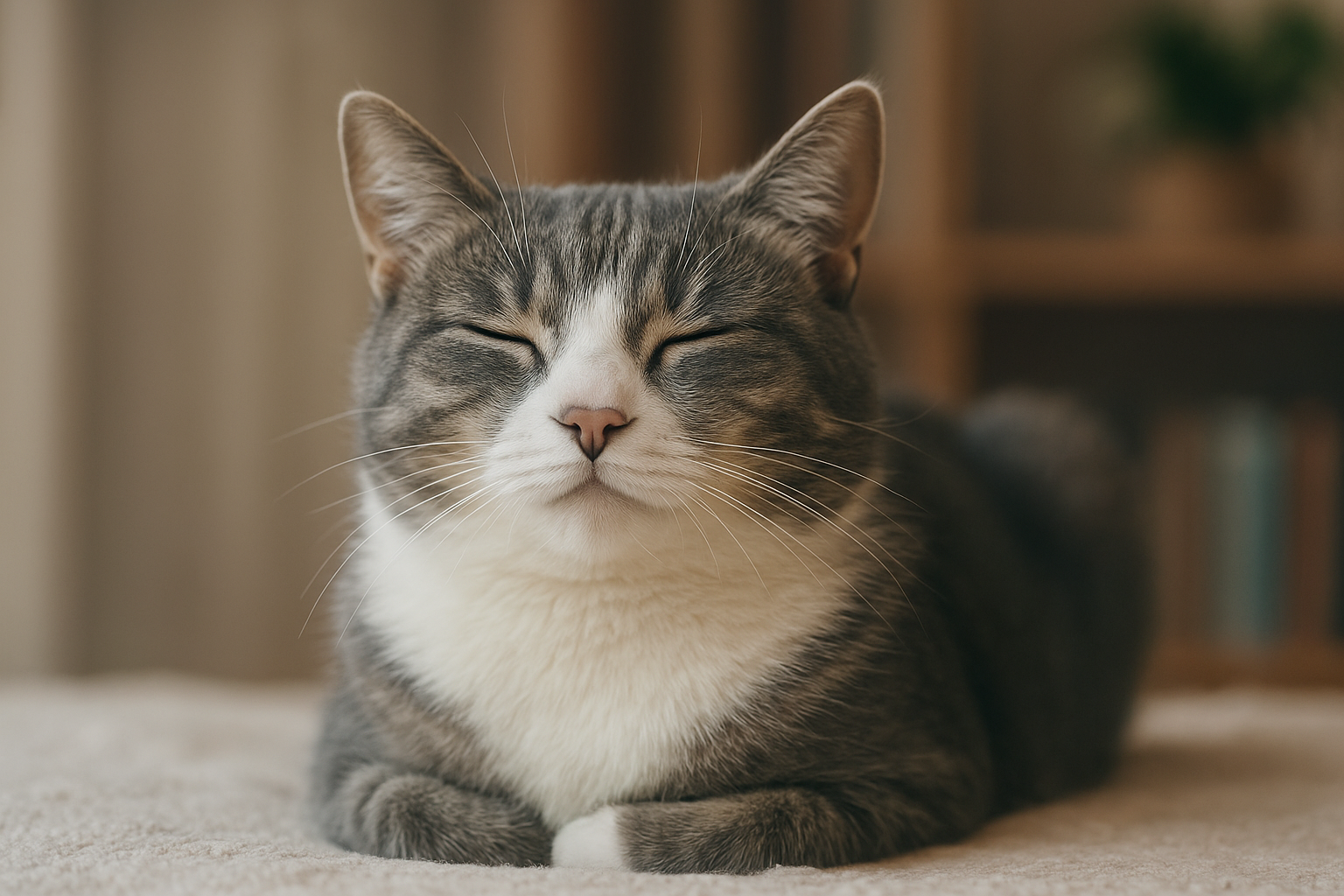
A calming cat doesn’t simply lie still or appear sleepy. It means your cat is comfortable enough in their surroundings to display behaviours of trust and contentment. Recognising those behaviours and then supporting them is key.
Signs of a content, calm cat
According to the Cat Friendly Trust (UK), signs that a cat is feeling relaxed include:
- Ears forward, relaxed rather than flattened.
- Eyes partially closed or softly blinking.
- Whiskers relaxed and not pulled back tightly.
- The cat choosing to rest in an open place rather than hiding.
- Purring, kneading, stretching in a comfortable posture.
In contrast, anxiety or stress in cats may show as hiding, flattened ears, dilated pupils,f licking, over-grooming, or inappropriate elimination.
Why this and matters
When a cat is stressed or anxious:
- It can lead to health problems (poor appetite, over-grooming, skin issues).
- It may lead to behavioural issues (aggression, hiding, avoiding interaction) — making life harder for the cat and owner.
- On the flip side, a calm cat is more likely to engage in play, eat well, bond with you, and enjoy life.
Common Questions About Calming Cats & Answers
Here are several questions many cat owners ask — with evidence-based answers.
Q1: “My cat seems restless and hides often. Does that mean they’re stressed?”
Yes — hiding frequently, restlessness, or avoidance of interaction can be signs of anxiety or fear. According to a cat-anxiety guide by PetMD, such behaviours, along with increased vocalisation, trembling or a change in eating, are red flags.
Q2: “Can I calm my cat using essential oils or human relaxation methods?”
You must be cautious. Some human-oriented products (like certain essential oils) can be harmful to cats. Always consult your veterinarian. Use feline-safe calming methods rather than assuming “one size fits all”.
Q3: “How long does it take to help a stressed cat become calm?”
It varies. Behavioural modification takes time and consistency. The Merck Veterinary Manual emphasises that behavioural change is gradual and that punishing a cat can worsen the issue.
Q4: “Are there quick fixes for calming a cat?”
No true “quick fix”. While certain tools (pheromone diffusers, safe hiding spots) can help relatively quickly, long-term calm comes from a stable environment, routine and trust. Punishment or abrupt change often backfires.
Q5: “What if my cat suddenly becomes anxious — e.g., after a move or vet visit?”
Then you need to particularly support their safe space, minimise stress triggers, use gentle reintroduction and, if necessary, work with a vet or behaviourist. See the section below on challenges and solutions.
Key Aspects of Helping a Calming Cat — Practical Tips & Advice
Let’s dive into specific areas where you can act, drawing from my experience and veterinary-behaviour advice.
A. Environment & Safe Spaces
From my time with cats in rescue, the first step is to provide a safe retreat for the cat.
- Provide a quiet hide-out (a covered bed, box, or elevated perch) where your cat can retreat if they feel overwhelmed.
- Vertical territory matters: cats feel safer up high. Window perches or shelves help reduce stress.
- Minimise sudden loud noises, changes in routine or unfamiliar people/pets — because cats are sensitive to environmental disruption.
- If you’re making a move or introducing a new pet, go slow: each new element should be introduced gradually so your cat can adjust without being overwhelmed.
B. Routine, Enrichment & Engagement
A stable routine helps a cat feel in control and less anxious. My advice:
- Feed your calming cat at roughly the same times each day; keep playtime and interaction consistent.
- Provide enrichment: interactive toys, puzzle feeders, climbing shelves — which help channel energy and reduce frustration.
- Use gentle play sessions before bedtime (wand toys, feather mice) to help your cat wind down and use mental/physical energy. Calming cat looks beautiful.
- Ensure your calming cat has scratching posts, different textures and locations — variety prevents boredom, which can escalate into anxiety or destructive behaviour.
C. Using Calming Tools (Pheromones, Supplements, Handling)
From experience, these tools complement proper environment and routine.
- Pheromone diffusers (like synthetic felines’ facial-pheromone products) can help signal “safe territory” to your cat.
- Handling: When introducing your cat to a new space or dealing with vet visits, use gentle handling, low voice tones, and let the cat approach you. Lashings or force tend to increase stress.
- Supplements/medication: In cases of severe anxiety (frequent hiding, aggression, litter-box issues) a vet may recommend behaviour modification or medication. The Merck Manual outlines such options.
- Avoid punishment: I have seen many owners resort to yelling or squirting water when the cat acts out. This usually increases fear and worsens behaviour.
D. Recognising Stress & Addressing Underlying Issues
In my volunteer work, one of the biggest mistakes is treating the behaviour instead of the cause. Steps to follow:
- Check health first: Illness or pain often triggers stress behaviours. Your vet should rule out physical issues. (PetMD)
- Identify triggers: Note changes in the household (new pet, move, visitors, noises), then reduce or manage them.
- Modification and time: When you understand the trigger, you can use desensitisation — gradually exposing your cat to the stimulus in a controlled way, paired with positive experiences.
E. Real-Life Example
In one shelter environment I managed, a shy black-and-white cat named “Whisper” would hide most of the day, barely eat, and hiss at new people. Here’s how we helped:
- Provided a covered “cave” bed in a low-traffic corner to give her safe space.
- Installed a high perch by the window so she could observe activity from a height.
- Set fixed feeding/play times each day so she could predict interactions.
- Introduced a pheromone diffusea r near her resting area.
After a month, Whisper began to rest with paws outstretched rather than curled under her. She started blinking slowly at staff and accepted a wand toy. Two months later, she was adopted to a calm home. This example shows how environment, routine and patience combine to soothe a stressed cat.
Challenges People Face & the Solutions
Here are common hurdles and ways to overcome them:
Chalbynge 1: The cat is deployed to hide or avoid interaction entirely.
Solution: Don’t force interaction. Focus first on safe spaces, schedule sessions when your cat is naturally awake (dawn/dusk for many felines), and use high-value treats to build positive associations.
Challenge 2: New pets or visitors cause stress spikes.
Solution: Introduce gradually. Keep separate spaces initially; let your cat sniff the new pet’s scent via bedding; supervise initial meetings for short periods; keep the routine consistent for your original cat.
Challenge 3: The cat shows a sudden behavioural change (e.g., stops eating, hides more).
Solution: Rule out medical causes with vet. Then use a behaviour-adjustment plan: limit stressors, increase enrichment, and monitor for improvement. If no progress, consult a behaviourist.
Challenge 4: Owners feel frustrated or guilty.
Soa Solution: Remind yourself this is not your fault — stress and anxiety in cats are common. Celebrate small improvements. Seek support from online cat-owner communities or behaviour professionals.
Challenge 5: The home environment is noisy or chaotic (children, pets, traffic).
Solution: Designate a calm zone — a room or space where your cat can retreat and have quiet time. Use white noise or calming music. Keep high perches and comfortable bedding away from busy zones.
Bringing It All Together
Creating a calming cat environment is about consistency, understanding, and empathy. It’s not about turning your cat into something they’re not, but rather giving them the space, trust and support to be their best self. As I’ve seen from working with many cats, a small investment in thoughtful care pays big dividends in reducing stress and strengthening your bond.
Key take-aways:
- Recognise signs of calming cat vs stress in your cat.
- Provide safe spaces, vertical perches and consistent routines.
- Enrich your cat’s life with play and interactive feeding.
- Use calming toolstakeawayses, gentle handling) But avoid punishment.
- Address underlying triggers rather than just treating symptoms.
If you’d like further help — such as how to design a “cat safe room”, how to pick the right pheromone diffuser, or how to schedule daily enrichment play for your feline — I’d be happy to assist or direct you to trusted resources like veterinary behaviourists or certified cat-behaviour specialists.
Conclusion
Helping your cat become a calm, secure companion isn’t a luxury—it’s a pathway to better health, stronger bonds and fewer worries. By focusing on environment, enrichment, routine and understanding, you empower your feline friend to thrive. If you’re ready, start today: assess your cat’s current state, make one small change (for example: create a quiet retreat) and build from there.
For more detailed help, additional resources or personalised advice, feel free to reach out or explore reputable websites such as the British Small Animal Veterinary Association’s (BSAVA) behaviour guidance or the Cat Friendly Trust. Your calming cat is closer than you think.
