
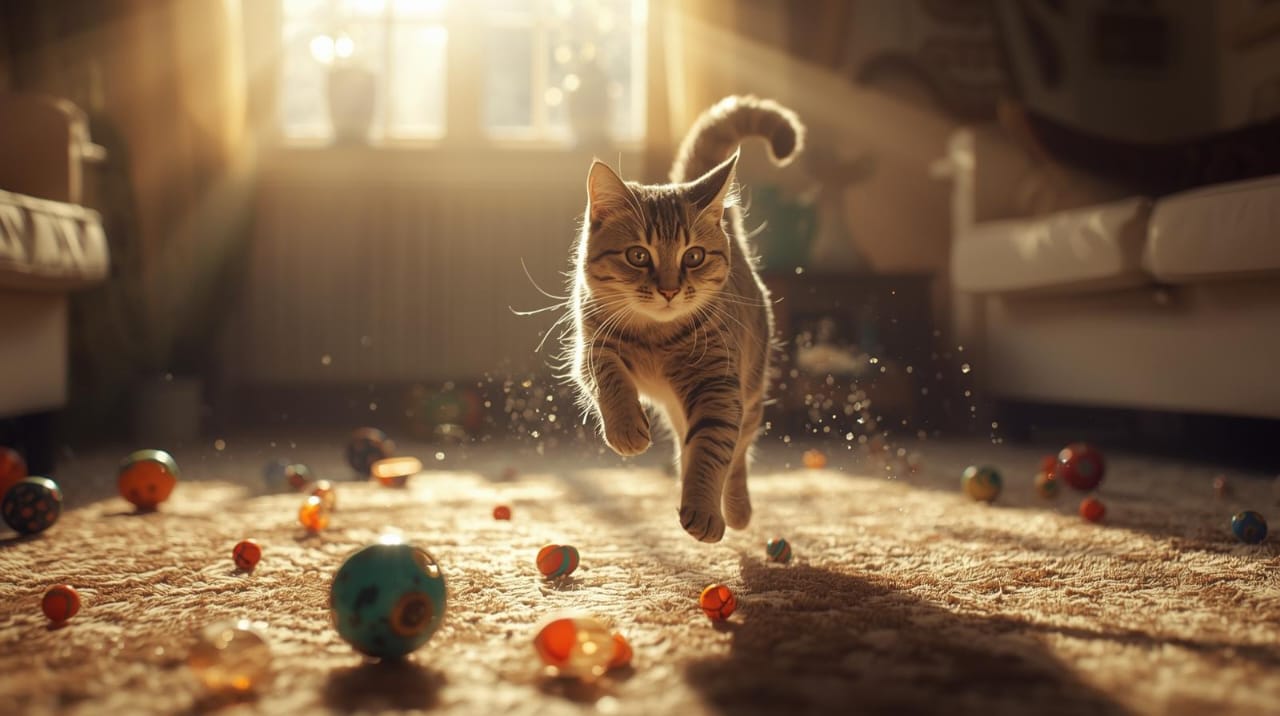
Introduction: What Is a Crazy Cat and Why Does It Matter
If you’ve ever watched your furry friend zoom through the house at lightning speed, leap onto furniture, or chase imaginary prey, you’ve probably thought, “My cat has gone crazy!” Don’t worry — this so-called crazy cat behavior is completely normal (and often adorable).
As a lifelong cat owner and animal behavior enthusiast with years of experience studying feline psychology, I’ve seen countless “crazy cat” moments up close. These outbursts, often called the cat zoomies or frenetic random activity periods (FRAPs), can be puzzling but are rooted in natural feline instincts. “You can find more details about energetic cat breeds on piebald cats.”
In this guide, we’ll explore why cats act crazy, what their behavior means, and how to manage it safely — while keeping your cat happy, healthy, and mentally stimulated. Whether you’re a new cat parent or a long-time feline lover, understanding your crazy cat will deepen your bond and make daily life smoother.
Understanding the “Crazy Cat” Behavior
Cats have complex instincts and personalities. Their “crazy” actions — sudden running, attacking objects, or climbing curtains — are usually their way of releasing energy or expressing emotions.
Let’s break down the science and psychology behind this fascinating feline phenomenon.
1. The Science Behind the Zoomies
Zoomies are intense bursts of energy when cats sprint around as if they’re chasing invisible prey. According to VCA Animal Hospitals, this happens when cats have excess energy from resting too long.
- Predatory Instincts: Cats are natural hunters. Even indoor cats retain that instinct, so they simulate hunting behavior through random bursts of energy.
- Sleep-Wake Cycle: Cats are crepuscular — most active during dawn and dusk. This is when “crazy cat” behavior peaks.
- Stress Release: Just like humans need to move when anxious, cats release tension through hyperactive play.
2. Common Signs of a “Crazy Cat”
A “crazy cat” doesn’t mean your feline is unwell or misbehaving. It’s just showing natural feline energy in quirky ways. Here are common behaviors:
- Sudden sprinting across the house
- Pouncing on shadows or toys
- Tail puffing and sideways jumping
- Staring into space or “chattering” at birds
- Climbing curtains or scratching furniture
If your cat does these things, congratulations — you’ve got a healthy, playful kitty!
3. When “Crazy” Becomes Concerning
While most hyperactive behavior is harmless, sometimes it signals underlying issues.
Watch for these warning signs:
- Excessive self-grooming or tail-chasing → Could indicate anxiety or flea irritation.
- Aggressive play → Might mean lack of proper outlets for energy.
- Nighttime craziness → Could signal boredom or lack of daytime stimulation.
- Sudden, extreme behavior change → May be due to health issues like hyperthyroidism.
If these occur, consult a veterinarian.
Why Cats Go Crazy: 7 Common Reasons
Understanding why cats act crazy helps you respond better. Here are seven common triggers:
- Pent-up Energy: Indoor cats don’t hunt, so they burn off energy in short bursts.
- Lack of Mental Stimulation: Cats need interactive play and environmental enrichment.
- Diet and Sugar Spikes: Too many treats or poor-quality food can lead to hyperactivity.
- Litter Box Stress: A dirty box can make cats restless or anxious.
- Boredom or Loneliness: Cats crave interaction and can “act out” when ignored.
- Mating Behavior: Unneutered cats often display erratic and loud behaviors.
- Medical Conditions: Sometimes “crazy” behavior is a symptom of thyroid, pain, or neurological problems.
How to Handle a Crazy Cat: Practical Tips That Work
Every cat has a unique personality, but these tried-and-tested strategies can help you manage their high-energy behavior safely and lovingly.
1. Provide Enough Playtime
Cats need at least 15–30 minutes of playtime daily. Use toys that mimic prey, such as:
- Wand toys with feathers
- Laser pointers (used carefully)
- Rolling balls or motorized mice
This helps your cat release energy and satisfy hunting instincts.
💡 Pro Tip: Schedule play sessions before bedtime to reduce nighttime zoomies.
2. Create a Cat-Friendly Environment
A bored cat is a crazy cat. Make your home stimulating with:
- Cat trees for climbing
- Scratching posts
- Window perches for bird-watching
- Puzzle feeders
A stimulating space keeps your cat mentally engaged and less likely to act out.
3. Stick to a Routine
Cats love predictability. A consistent schedule for feeding, play, and sleep reduces anxiety-driven craziness.
For example:
- Morning: Feeding and short play session
- Afternoon: Quiet nap and enrichment toys
- Evening: Active play + dinner
- Night: Calm cuddle time before sleep
4. Address the Litter Box Situation
A dirty or poorly placed litter box can trigger stress and erratic behavior. Follow these guidelines:
- Keep it clean (scoop daily)
- One box per cat, plus one extra
- Quiet, private location
- Avoid covered boxes if your cat dislikes them
5. Manage Diet and Nutrition
Feed a balanced, high-protein diet. Cats are obligate carnivores — they thrive on meat-based foods. Avoid sugary treats and cheap fillers that can lead to hyperactivity.
Consult your vet about the right feeding schedule and portion size.
6. Consider Spaying or Neutering
Unneutered cats often display intense “crazy” behaviors during mating seasons — yowling, pacing, and restlessness. Spaying/neutering calms hormones, preventing these outbursts and promoting long-term health.
7. Provide Emotional Comfort
Sometimes, cats go “crazy” because they’re anxious or overstimulated. Create calm zones with soft bedding and pheromone diffusers like Feliway. Gentle petting and slow blinking help build trust and calm energy.
Real-Life Example: My Experience with a Crazy Cat Named Luna
When I adopted Luna, she was the epitome of a “crazy cat.” Every night at 2 a.m., she’d sprint across the living room, knock over cups, and chase invisible bugs.
After observing her routine, I realized her hyperactivity was due to a lack of stimulation. I introduced daily play sessions, vertical climbing spaces, and puzzle feeders. Within weeks, her behavior balanced out — she was still playful, but calmer and happier.
This experience taught me that “crazy cats” aren’t bad — they’re just misunderstood.
Common Questions About Crazy Cats
Q1: Why does my cat run around at night?
Cats are naturally more active at dawn and dusk. Night zoomies happen when they don’t get enough playtime during the day.
Q2: Is my cat mentally unstable?
No! “Crazy” behavior is usually normal play or instinct. However, if it’s extreme or sudden, consult your vet.
Q3: Can I train my cat to stop acting crazy?
You can’t eliminate instincts, but you can channel them. Play, enrich, and reward calm behavior consistently.
Q4: Should I ignore zoomies?
Usually, yes — they pass quickly. If your cat seems destructive, redirect attention to toys.
Q5: Do certain breeds act crazier?
Yes. Energetic breeds like Bengals, Abyssinians, and Siamese are more prone to wild behavior due to their high activity levels.
Challenges Cat Owners Face — and How to Overcome Them
| Challenge | Solution |
|---|---|
| Nighttime zoomies | Play before bedtime & feed a small meal afterward |
| Furniture scratching | Provide scratching posts & nail caps |
| Overstimulation | Learn cat body language; stop play before aggression |
| Loneliness | Adopt another cat or spend more bonding time |
| Health uncertainty | Regular vet checkups every 6–12 months |
By identifying patterns, you can tailor your approach and enjoy a peaceful home with your energetic feline.
Building a Strong Bond With Your “Crazy Cat”
Instead of trying to suppress your cat’s personality, celebrate it. Engage with them positively through:
- Interactive play (fishing rod toys, hide-and-seek)
- Routine cuddles to reinforce trust
- Clicker training for mental exercise
A happy cat equals fewer “crazy” moments.
Expert Tips for Long-Term Behavior Management
- Use Calming Music: Soft classical or “cat relaxation” tracks can reduce anxiety.
- Try Scent Enrichment: Catnip, silvervine, and valerian root can satisfy scent-driven curiosity.
- Avoid Punishment: Never yell or hit your cat — it breaks trust and worsens stress.
- Consult a Cat Behaviorist: For persistent issues, seek expert help.
The Psychology of a Crazy Cat: What It Really Means
When your cat acts crazy, it’s communicating with you — through motion, sound, and play. Their behavior says:
- “I need attention.”
- “I’m bored.”
- “I’m excited!”
- “I’m anxious.”
Once you understand these signals, you can respond appropriately. A “crazy cat” is not misbehaving — it’s expressing itself.
How to Calm a Crazy Cat
When your cat’s energy spikes, here’s a quick action plan:
- Redirect: Toss a toy or laser pointer.
- Distract: Offer treats or puzzle feeders.
- Soothe: Use a gentle voice and soft strokes.
- Create Distance: Let them burn off energy safely.
Over time, your cat learns to express energy in healthy ways.
Final Thoughts: Love Your Crazy Cat for Who They Are
Every cat owner has a story about a wild midnight sprint or a dramatic leap off the couch. These moments remind us that cats are alive, curious, and full of personality.
The secret isn’t stopping their “crazy” behavior — it’s understanding it. By combining empathy, structure, and enrichment, you’ll transform chaos into connection.
So the next time your crazy cat dashes through the house, smile — it’s just your feline being beautifully itself.
Crazy cat behavior can leave you both amused and perplexed, but there’s so much more to understand about why our feline friends act the way they do. Here’s a deeper dive into the peculiarities of cats and some more strategies to manage their wild moments. Your home environment plays a significant role in your cat’s behavior. If a cat feels confined or lacks stimulation, they may exert their energy in unpredictable ways. Adding vertical space, such as shelves they can climb on or cat trees, can help satisfy their climbing instincts and create a more enriching environment. Many cats experience a temporary high from catnip, which can lead to crazy behaviors. If your cat seems to take on a wild personality after a dose of catnip, it’s a perfectly normal reaction, often resulting in playful antics. However, not all cats respond to catnip, so observe how your pet reacts. Some cats may exhibit more frenetic behavior during certain seasons, especially during spring when they feel the urge to mate. This behavior may include increased vocalizations and roaming around the house. Spaying or neutering can help regulate these instinctual behaviors. You can find more details about energetic cat breeds on The Spruce Pets.
Practical Management Tips
1. Rotate Toys:
Keep your cat engaged by rotating their toys every few days. This simple tactic can keep things fresh and exciting for them, encouraging them to play rather than act out due to boredom.
2. Interactive Puzzle Toys:
These toys provide both mental and physical stimulation by requiring your cat to engage in problem-solving to access treats. They help curb boredom and channel high energy into focused play.
3. Calm Spaces:
Sometimes high-energy behavior can stem from stress. Ensure your cat has quiet, safe spaces they can retreat to when they need to calm down. This is especially important in multi-pet households where they might need a break.
4. Mindful Bonding:
Spend time simply sitting with your cat, petting them, or brushing them. Building a connection with gentle interactions can help reduce their anxiety levels and create a calmer atmosphere.
5. Veterinary Guidance:
If your cat’s wild behavior seems excessive, consider consulting with a veterinarian. They may suggest behavioral assessments or even changes in diet to address potential underlying health concerns.
Conclusion
Understanding and managing “crazy cat” behavior can be both fun and rewarding. By recognizing the instincts and needs of your feline companion, you can create a nurturing environment that promotes their health and happiness. Embrace the quirky moments, and enjoy the unique personality your cat brings to your life! Expressing instincts. By understanding and guiding this energy, you’ll strengthen your bond and create a calmer, happier home.
