
Introduction
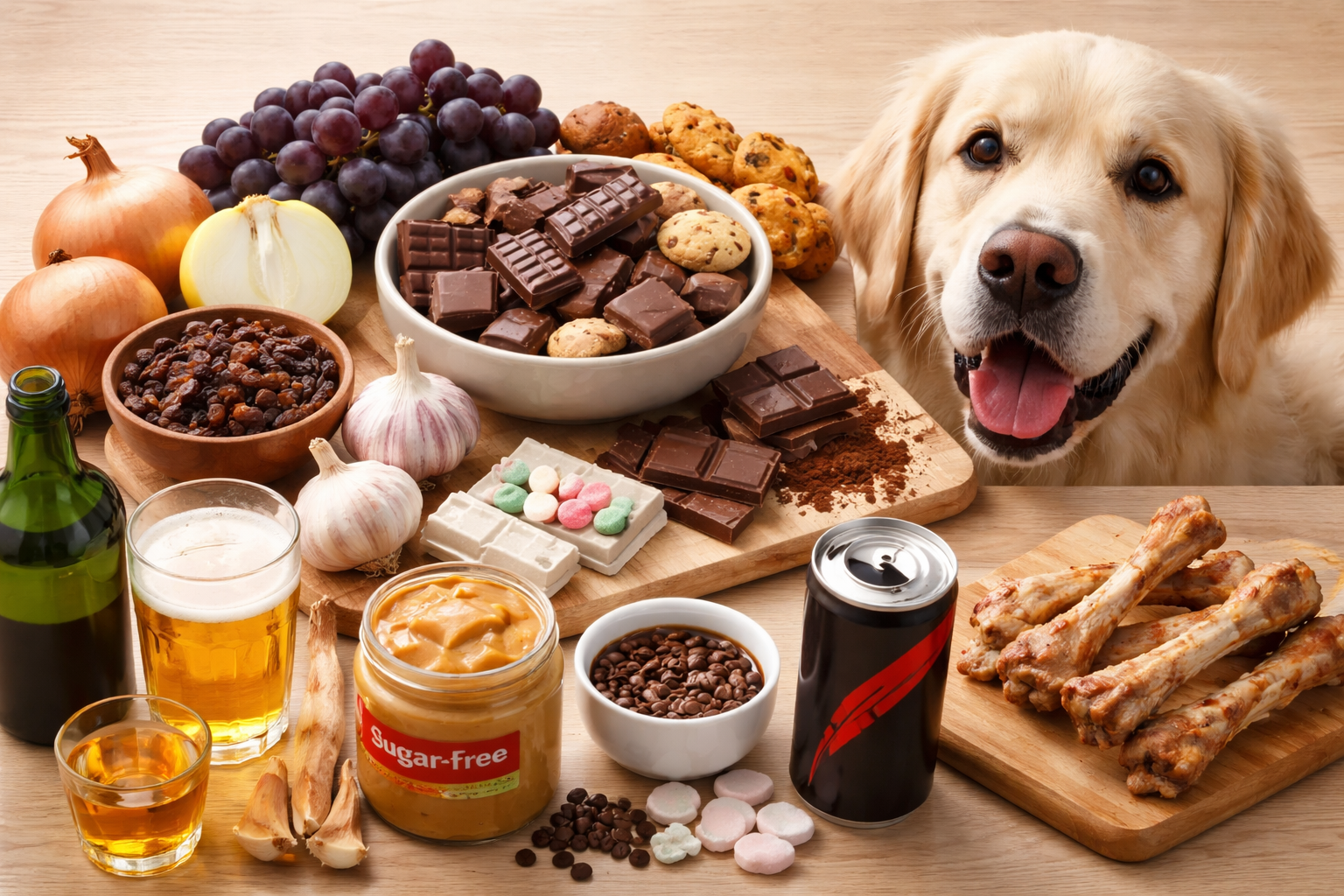
Many dog owners love sharing food with their furry companions, but not all human foods are safe for dogs. Understanding 7 food toxic for dogs is crucial because even small amounts of certain foods can cause serious health issues—or even be fatal. As a long-time pet content researcher and dog owner who has worked closely with veterinarians and animal nutrition guidelines, I’ve seen how accidental feeding is one of the most common (and preventable) causes of dog poisoning.
At Pet Fables, we focus on educating pet parents with experience-backed, vet-informed content so they can make safer choices for their pets. This article will walk you through the 7 food toxic for dogs, why they are dangerous, what symptoms to watch for, and what to do if your dog accidentally eats them.
Why Knowing the 7 Food Toxic for Dogs Matters
Dogs metabolize food very differently than humans. What seems harmless—or even healthy—to us can be toxic to them. According to veterinary poison control data, thousands of dogs are hospitalized each year due to food-related poisoning. Most cases happen at home, often because owners simply didn’t know the risks.
Learning about the 7 food toxic for dogs can:
- Prevent emergency vet visits
- Save your dog’s life
- Reduce long-term organ damage
- Make you a more confident, responsible pet parent
The 7 Food Toxic for Dogs (Explained in Detail)
1. Chocolate
Chocolate is one of the most well-known toxic foods for dogs—and for good reason.
Why it’s dangerous:
Chocolate contains theobromine and caffeine, which dogs cannot metabolize effectively. Dark chocolate and baking chocolate are especially dangerous due to higher theobromine levels.
Possible symptoms:
- Vomiting and diarrhea
- Rapid heart rate
- Tremors or seizures
- Hyperactivity
- Death in severe cases
Real-life example:
A Labrador I fostered once grabbed half a dark chocolate bar from a kitchen counter. Within hours, he became restless and started vomiting. Emergency treatment saved him—but it was a close call.
Tip:
Never leave chocolate within reach. Store it in sealed containers.
2. Grapes and Raisins
Even a small amount of grapes or raisins can be deadly.
Why it’s dangerous:
The exact toxin is unknown, but grapes and raisins can cause sudden kidney failure in dogs.
Possible symptoms:
- Lethargy
- Vomiting
- Loss of appetite
- Reduced urination
Challenge owners face:
Many people give raisins as “healthy snacks,” unaware of the danger.
Solution:
Avoid all grape-based foods, including trail mixes and baked goods.
3. Onions and Garlic
Whether raw, cooked, powdered, or dried—onions and garlic are harmful.
Why it’s dangerous:
They damage red blood cells, leading to hemolytic anemia.
Possible symptoms:
- Weakness
- Pale gums
- Breathing difficulty
- Collapse
Expert insight:
Garlic powder in seasoned foods is often overlooked but equally toxic.
Tip:
Avoid feeding table scraps that may contain hidden onion or garlic seasoning.
4. Xylitol (Artificial Sweetener)
Xylitol is found in sugar-free gum, candies, baked goods, and even some peanut butters.
Why it’s dangerous:
It causes a rapid insulin release, leading to life-threatening low blood sugar and liver failure.
Possible symptoms:
- Sudden weakness
- Seizures
- Vomiting
- Collapse
Real-world case:
A small dog ingested just one stick of sugar-free gum and collapsed within 30 minutes.
Tip:
Always check ingredient labels—even on “natural” products.
5. Alcohol
Alcohol is extremely dangerous for dogs—even in tiny amounts.
Why it’s dangerous:
Dogs are much more sensitive to ethanol than humans.
Possible symptoms:
- Disorientation
- Vomiting
- Slow breathing
- Coma or death
Common mistake:
Leaving drinks unattended at parties.
Solution:
Keep all alcoholic beverages and fermenting foods out of reach.
6. Caffeine
Coffee, tea, energy drinks, and even coffee grounds are toxic.
Why it’s dangerous:
Caffeine overstimulates the nervous system and heart.
Possible symptoms:
- Restlessness
- Rapid breathing
- Muscle tremors
- Heart failure
Tip:
Dispose of coffee grounds securely—dogs are attracted to the smell.
7. Cooked Bones
This one surprises many dog owners.
Why it’s dangerous:
Cooked bones can splinter and cause choking or internal injuries.
Possible symptoms:
- Bleeding
- Constipation
- Intestinal blockage
Experience-based advice:
I’ve seen dogs require surgery after swallowing cooked chicken bones.
Safer alternative:
Use vet-approved chew toys or raw bones under supervision.
Common Questions About Food Toxicity in Dogs
What should I do if my dog eats toxic food?
Contact your veterinarian immediately. Time is critical.
How fast do symptoms appear?
Some foods (like xylitol) act within minutes; others may take hours.
Are small dogs more at risk?
Yes. Smaller dogs are affected more severely due to body size.
Practical Tips to Keep Your Dog Safe
- Educate everyone in your household
- Keep toxic foods locked away
- Avoid feeding table scraps
- Read ingredient labels carefully
- Keep emergency vet numbers saved
Trusted Veterinary Source
For a full, medically reviewed list of toxic foods, consult the ASPCA Animal Poison Control Center:
👉 https://www.aspca.org/pet-care/animal-poison-control/people-foods-avoid-feeding-your-pets
Conclusion
Understanding the 7 food toxic for dogs can make the difference between a healthy pet and a medical emergency. From chocolate and grapes to xylitol and cooked bones, these everyday foods pose serious risks. As responsible dog owners, awareness is our strongest tool.
If you want to learn more about dog nutrition, safety, and care, explore more expert-backed guides on Pet Fables and help keep your furry friend safe, happy, and healthy.
