
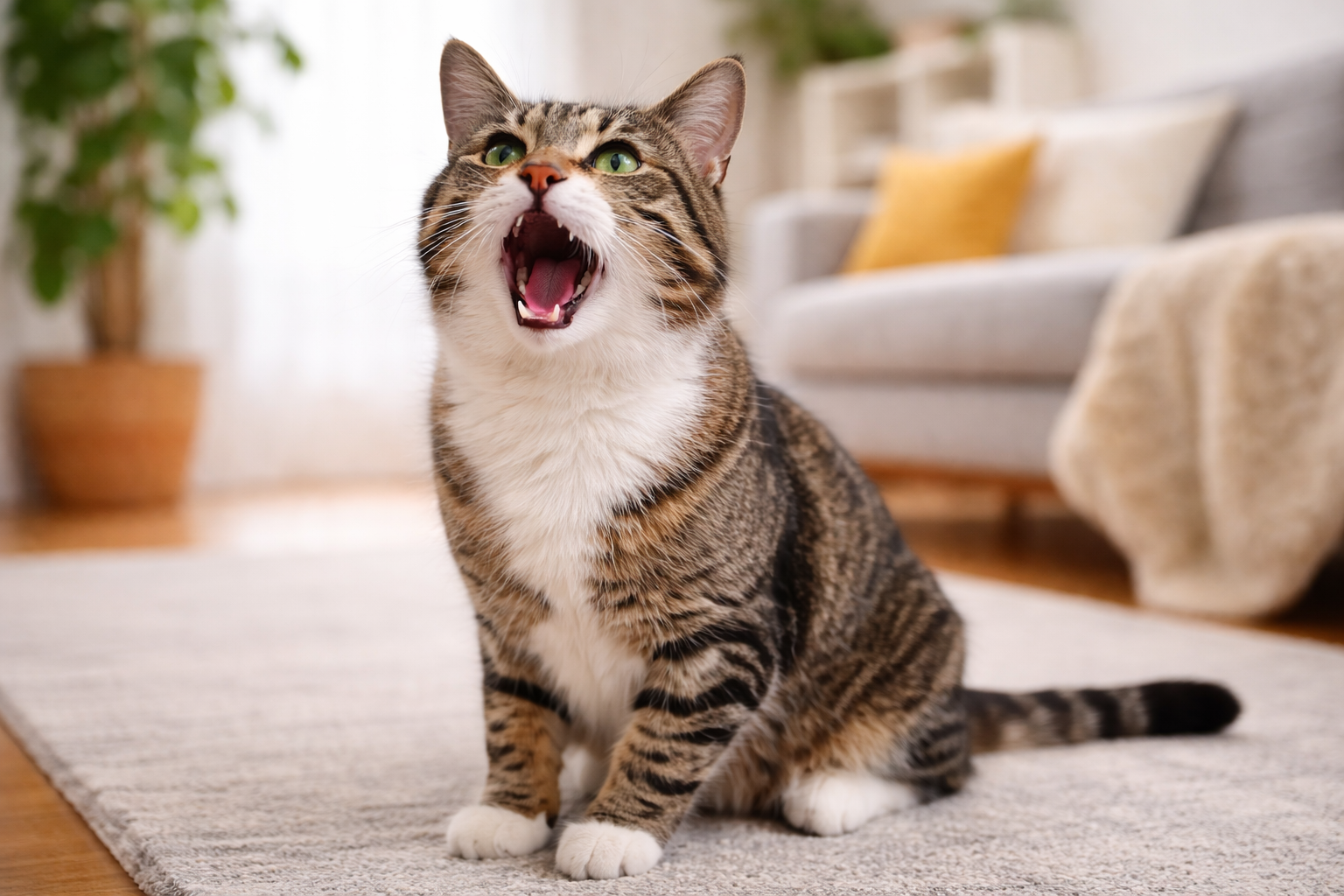
Introduction
Why does my cat howl?
If you’ve ever heard your cat make a long, loud, almost mournful sound—especially at night—you know how confusing and worrying it can be. Cat howling isn’t the same as normal meowing. It’s deeper, more intense, and often feels like your cat is trying to tell you something important.
As someone who has spent years observing feline behavior, helping pet owners understand unusual cat vocalizations, and working closely with real-life cat behavior cases, I can say with confidence: howling is always communication, not random noise. Ignoring it can mean missing a health issue, emotional stress, or unmet need.
In this guide, we’ll explore why does my cat howl, what it really means, when it’s normal, when it’s a warning sign, and what you can do to help your cat feel safe and calm again.
For deeper insight into feline behavior patterns and emotional triggers, this guide may help:
👉 cat behavior problems explained
https://petcarefables.com/why-do-cats-meow-at-night/
What Is Cat Howling (And How Is It Different From Meowing)?
Before answering why does my cat howl, it’s important to understand what howling actually is.
Howling vs. Meowing
- Meowing: Short, conversational, usually directed at humans
- Howling: Long, drawn-out, intense vocalization
Howling often sounds like:
- Crying
- Wailing
- Yowling
In my experience, cats howl when something feels wrong in their world—physically, emotionally, or environmentally.
Why Does My Cat Howl at Night?
This is one of the most common questions cat owners ask.
1. Loneliness or Attention-Seeking
Cats may seem independent, but many are emotionally attached to their humans.
Real-life example:
I once worked with a cat who only howled between 2–4 a.m. The cause? His owner’s schedule had changed, and nighttime was the only quiet moment he could get attention.
Signs it’s attention-related:
- Cat stops howling when you respond
- Follows you after howling
- Becomes quiet once petted or played with
Solution:
- Add interactive play before bedtime
- Create a consistent night routine
- Avoid reinforcing howling with immediate rewards
Why Does My Cat Howl for No Reason? (There Is Always a Reason)
Many owners say:
“My cat howls for no reason.”
In reality, cats never howl without a reason—we just haven’t identified it yet.
2. Hunger or Food Schedule Issues
Cats are creatures of habit.
If meals are late—or portions are reduced—howling may follow.
Common signs:
- Howling near the kitchen
- Loud vocalization at feeding times
- Increased pacing
Solution:
- Stick to a consistent feeding schedule
- Use puzzle feeders for mental stimulation
3. Stress, Anxiety, or Environmental Changes
Another major answer to why does my cat howl is emotional stress.
Common stress triggers:
- Moving to a new home
- New pets or people
- Rearranged furniture
- Loud noises
Cats express anxiety vocally when they feel unsafe.
From experience:
Cats that howl due to stress often hide more and eat less.
Solution:
- Provide hiding spots
- Use calming pheromones
- Keep routines predictable
4. Territorial Behavior or Outdoor Triggers
Your cat may be reacting to:
- Another cat outside
- Strange smells
- Noises you can’t hear
Cats have extremely sensitive senses. A cat outside your window at night is a very common cause of howling.
Signs:
- Howling while staring out the window
- Tail flicking or puffed fur
Solution:
- Block visual access at night
- Close windows or curtains
- Discourage outdoor cats from your property
Why Does My Cat Howl and Walk Around the House?
This behavior is especially common in older cats.
5. Cognitive Dysfunction (Senior Cats)
Senior cats can experience confusion similar to dementia in humans.
Symptoms include:
- Howling while wandering
- Getting “lost” in familiar spaces
- Increased night vocalization
According to veterinary behavioral research, this is a leading cause of nighttime howling in senior cats.
Solution:
- Night lights
- Consistent furniture placement
- Vet consultation for supportive care
6. Pain or Medical Issues (Very Important)
One of the most serious answers to why does my cat howl is pain.
Possible medical causes:
- Arthritis
- Urinary tract infections
- Dental pain
- Hyperthyroidism
Warning signs:
- Sudden howling
- Litter box changes
- Reduced appetite
⚠️ If howling appears suddenly, a vet visit is essential.
Trusted authority source:
Cornell University College of Veterinary Medicine
https://www.vet.cornell.edu
7. Mating Behavior (Unspayed or Unneutered Cats)
If your cat is not fixed, howling may be hormonal.
Characteristics:
- Loud, repetitive howling
- Restlessness
- Attempts to escape
This type of howling is especially intense and frequent.
Solution:
- Spaying or neutering (long-term fix)
Why Does My Cat Howl and Stare at the Wall?
This question scares many owners—and understandably so.
Possible reasons:
- Hearing high-frequency sounds
- Seeing light reflections
- Neurological issues (rare but serious)
If this behavior is new and persistent, consult a vet immediately.
Practical Ways to Reduce Cat Howling
Here’s what has worked best in real households I’ve observed:
✔ Improve Mental Stimulation
- Puzzle toys
- Interactive play
- Window perches
✔ Maintain Routine
- Same feeding times
- Same sleep schedule
✔ Rule Out Medical Causes First
Never assume behavior is “just personality.”
When Should You Worry About a Cat Howling?
Seek professional help if:
- Howling starts suddenly
- It increases rapidly
- It comes with weight loss or litter issues
- Your cat seems disoriented
Trust your instincts—you know your cat best.
Why Understanding Cat Howling Builds Trust With Your Pet
When you understand why your cat howls, you:
- Strengthen your bond
- Reduce stress for both of you
- Catch health issues early
Cats don’t have words—but they are excellent communicators.
Conclusion
So, why does my cat howl?
Because your cat is communicating a need—whether it’s emotional, physical, or environmental. Howling is not bad behavior; it’s a message.
By observing patterns, maintaining routines, and seeking help when needed, you can greatly reduce excessive howling and improve your cat’s quality of life.
👉 If your cat’s behavior feels confusing or overwhelming, explore more trusted guides or consult a professional—early action always helps.
