
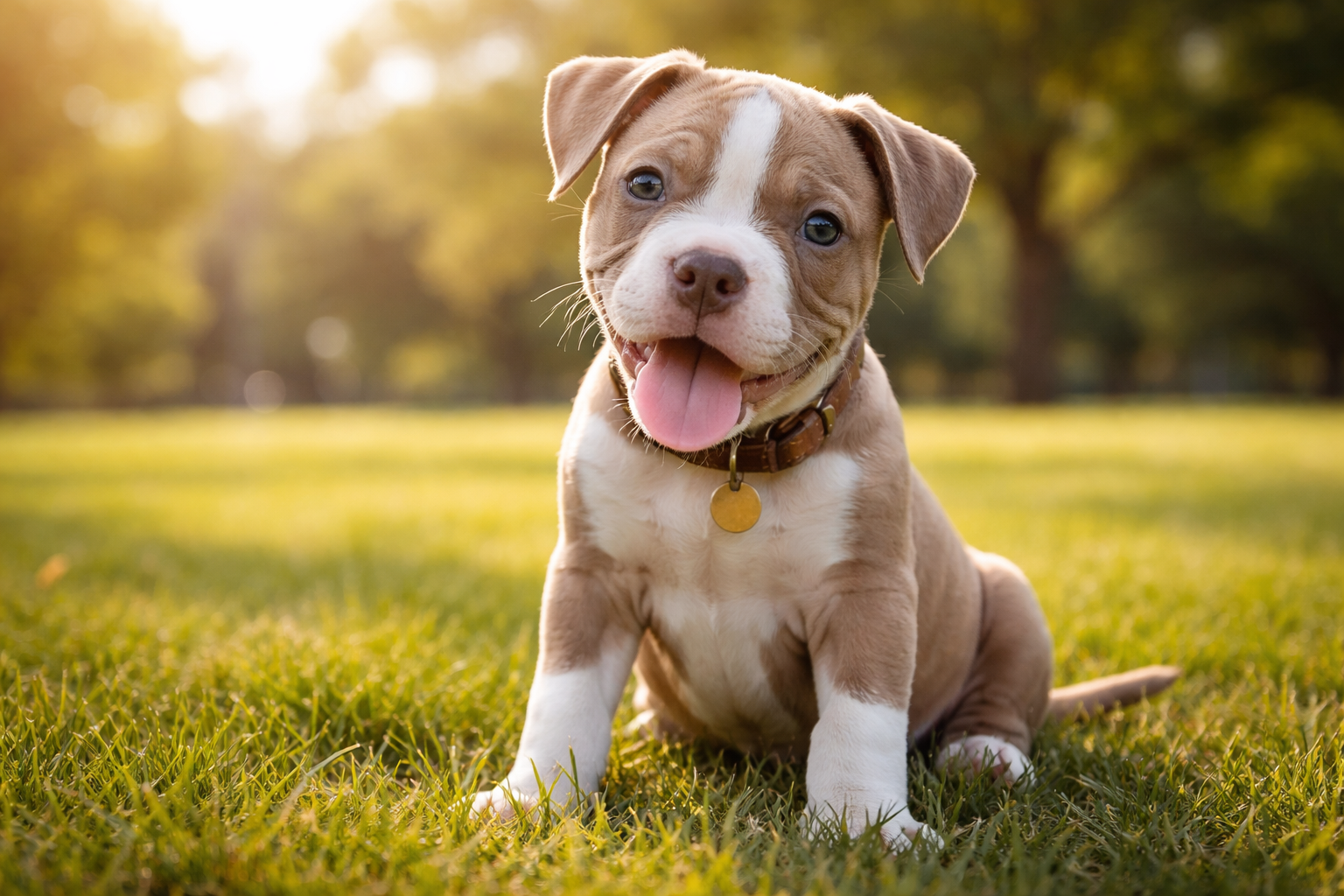
Introduction: What Is a Pitbull Puppy and Why Does It Matter
A pitbull puppy is a young dog belonging to one of the pit bull–type breeds, most commonly the American Pit Bull Terrier, American Staffordshire Terrier, or Staffordshire Bull Terrier. These puppies are known for their intelligence, loyalty, athletic build, and affectionate nature. Despite their popularity, pitbull puppies are often misunderstood due to myths and misinformation.
As someone who has spent years researching dog behavior, working with rescue organizations, and helping first-time owners raise well-balanced dogs, I’ve seen firsthand how a pitbull puppy can grow into one of the most loving and dependable companions when raised correctly. This guide is designed to give you accurate, experience-based, and trustworthy information so you can make informed decisions and raise your pitbull puppy with confidence.
Whether you’re considering adopting a pitbull puppy or already have one at home, this article will answer common questions, address real challenges, and provide practical advice based on expertise—not fear or stereotypes.
What Exactly Is a Pitbull Puppy?
The term “pitbull” does not refer to a single breed. Instead, it’s an umbrella term that includes:
- American Pit Bull Terrier
- American Staffordshire Terrier
- Staffordshire Bull Terrier
- American Bully (in some cases)
A pitbull puppy inherits traits such as strong muscles, high energy, emotional sensitivity, and a deep desire to please humans. Contrary to popular belief, pitbull puppies are not born aggressive. According to the American Veterinary Medical Association (AVMA), behavior in dogs is influenced more by environment, training, and socialization than by breed alone.
Temperament: What to Expect
1. Loving and People-Oriented
Pitbull puppies are often described as “velcro dogs” because they love staying close to their humans. In my experience with foster pitbull puppies, many seek cuddles even more than playtime.
2. Intelligent and Eager to Learn
They learn commands quickly, especially with positive reinforcement. Treats, praise, and consistency work far better than harsh discipline.
3. Energetic but Emotionally Sensitive
A pitbull puppy needs physical exercise and mental stimulation, but also emotional reassurance. Shouting or punishment can cause fear-based behavior.
Common Myths About Pitbull Puppies (Debunked)
Myth 1: Pitbull puppies are naturally aggressive
Fact: No puppy is born aggressive. The ASPCA confirms that aggression is learned, not inherited.
Myth 2: Pitbull puppies have “locking jaws.”
Fact: There is no anatomical difference in pitbull jaws. This myth has been scientifically disproven.
Myth 3: They are unsafe around children
Fact: When properly trained and supervised, pitbull puppies can be excellent family dogs. Many are known for their patience with children.
Raising a Healthy Pitbull Puppy: Practical Tips
Nutrition: Feeding Your Pitbull Puppy
A growing pitbull puppy needs high-quality, protein-rich food to support muscle development.
Key feeding tips:
- Choose food with real meat as the first ingredient
- Avoid fillers like corn and soy
- Feed 3–4 small meals per day (up to 6 months)
- Always provide fresh water
Training Your Pitbull Puppy the Right Way
From my hands-on experience, early training is the single most important factor in raising a balanced pitbull puppy.
Start with:
- Sit, stay, come, and leash walking
- Crate training for safety and routine
- Bite inhibition using toys (not hands)
Best approach:
✔ Positive reinforcement
✘ No physical punishment
Pitbull puppies respond exceptionally well to reward-based training because they love human approval.
Socialization: The Key to a Confident Pitbull Puppy
Socialization should begin between 8–16 weeks of age.
Expose your pitbull puppy to:
- Different people (men, women, children)
- Other vaccinated dogs
- New sounds and environments
I’ve seen shy pitbull puppies transform into confident adults simply because their owners invested time in early, positive social exposure.
Exercise Needs of a Pitbull Puppy
Pitbull puppies are energetic but should not be over-exercised while their joints are developing.
Recommended activities:
- Short walks (10–15 minutes)
- Interactive play (tug, fetch)
- Puzzle toys for mental stimulation
Avoid long runs or jumping until they are fully grown.
Health Care and Common Health Issues
A pitbull puppy is generally healthy, but potential concerns include:
- Hip dysplasia
- Skin allergies
- Heart conditions (rare)
Essential care checklist:
- Core vaccinations
- Regular deworming
- Monthly flea & tick prevention
- Annual vet checkups
👉 Veterinary reference: https://vcahospitals.com/know-your-pet/puppy-care
Challenges of Owning a Pitbull Puppy (and Solutions)
Challenge 1: Breed stigma
Solution:
Train your dog well, keep vaccinations up to date, and be a responsible ambassador for the breed.
Challenge 2: Housing or legal restrictions
Some areas have breed-specific legislation (BSL).
Solution:
Check local laws and consider renter’s insurance that covers pit bull–type breeds.
Challenge 3: High energy levels
Solution:
Daily structured exercise and training sessions reduce destructive behavior.
Real-Life Experience: What I’ve Seen Firsthand
In rescue work, I’ve seen neglected pitbull puppies arrive fearful and withdrawn. With patience, training, and love, many grew into therapy dogs, service dogs, and loyal family pets. One particular pitbull puppy I helped rehabilitate went from being labeled “dangerous” to becoming a certified emotional support dog within two years.
These experiences reinforce one truth: how you raise a pitbull puppy matters far more than the label placed on them.
Is a Pitbull Puppy Right for You?
A pitbull puppy may be perfect for you if:
- You’re willing to train consistently
- You enjoy active dogs
- You want a loyal, affectionate companion
They may not be ideal if:
- You cannot provide daily exercise
- You’re unwilling to face social stigma
- Your housing situation restricts the breed
Conclusion: Raising a Pitbull Puppy with Confidence
A pitbull puppy is not a risk—it’s a responsibility. With proper training, socialization, nutrition, and love, these puppies grow into some of the most devoted dogs you’ll ever know. By understanding their needs and rejecting harmful myths, you set both yourself and your dog up for success.
If you’re ready to commit, continue learning from trusted sources, consult veterinarians and trainers, and consider adoption from reputable shelters. If you need personalized guidance, feel free to reach out or explore more expert-backed resources on responsible dog ownership.
