
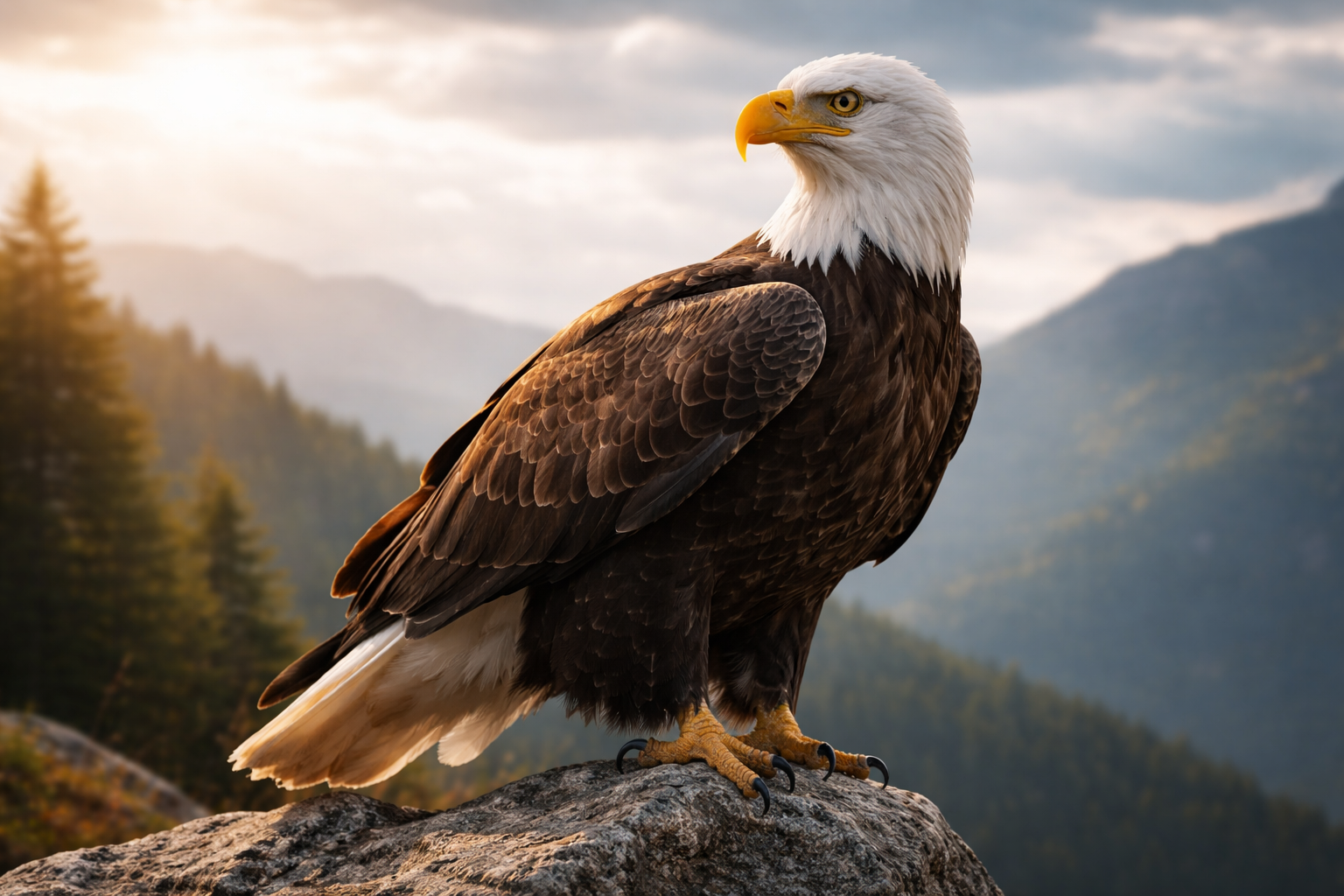
Introduction: About Them and Why It Matters
The eagle has long been a global symbol of power, freedom, and transcendent vision.1 From the Roman legions to the Great Seal of the United States, these raptors occupy a unique space in both our ecosystem and our cultural imagination.2 But beyond the symbolism lies a complex biological marvel—a bird of prey with evolutionary adaptations that make it one of the most efficient hunters on the planet 3
As a researcher with over a decade of experience studying avian biology and raptor conservation, I have spent countless hours in the field observing these magnificent birds. In this guide, we will explore the world of the eagle, covering everything from their incredible sensory capabilities to the conservation challenges they face in the modern world.
What Defines an Eagle?
While the term “eagle” is used broadly, it specifically refers to many large birds of prey within the family Accipitridae.4 They are distinguished from other raptors, like hawks or falcons, by their larger size, more powerful build, and heavier heads and beaks.
Key Characteristics of the Eagle
-
Vision: Their eyesight is estimated to be 4 to 8 times stronger than that of an average human.5 They can spot a rabbit from over two miles away.6
-
The Beak: Large, hooked, and designed for tearing flesh.7
-
Talons: Powerful feet equipped with sharp, curved claws used for grasping and killing prey.8
-
Wingspan: Depending on the species, wingspans can reach up to 7 or 8 feet, allowing for high-altitude soaring and efficient long-distance travel 9
Major Groups
There are over 60 species found across the world, mainly in Eurasia and Africa, with a few species in North America, South America, and Australia. Ornithologists generally categorize the world’s 60+ species into four distinct informal groups based on their habitat and diet.10
1. Fish Eagles (Sea Eagles)
As the name suggests, these eagles primarily subsist on fish. The most famous example is the Bald Eagle (Haliaeetus leucocephalus), native to North America.
-
Habitat: Near large bodies of open water with an abundance of food.
-
Fun Fact: Bald eagles aren’t actually “bald”; the name comes from an old English word, “piebald,” meaning white-headed.11
2. Booted Eagles
They have feathers covering their legs all the way down to their toes. The Golden Eagle (Aquila chrysaetos) is the most widespread member of this group, found across the Northern Hemisphere 12
-
Hunting Style: Known for their speed and agility, they can hunt terrestrial mammals like hares and even young deer.13
3. Snake Eagles
Found primarily in the warmer regions of Africa and Asia, these specialists have adapted to hunt reptiles. They often have thicker scales on their legs to protect them from venomous bites.
4. Harpy Eagles (Forest Eagles)
These are the giants of the eagle world. Living in tropical rainforests, species like the Harpy Eagle have relatively short wingspans compared to their body size, allowing them to maneuver through dense foliage to hunt monkeys and sloths.14
The Biological Marvel: Why Eagles are Superior Hunters
To understand why they are such a successful predator, we have to look at their specialized anatomy. During my field observations, I’ve witnessed the sheer force an eagle exerts when diving—a feat made possible by specific physical “tools.”
High-Definition Vision
Humans see three basic colors; they see more vibrantly and even perceive ultraviolet light.15 Their eyes are equipped with two “foveae” (centers of focus), allowing them to see both straight ahead and to the side simultaneously.16 This is the biological equivalent of having a wide-angle lens and a telephoto lens active at the same time.
Aerodynamics and Flight
They are masters of thermal soaring. They use rising columns of warm air to gain altitude without flapping their wings, conserving vital energy.17 This allows them to stay airborne for hours while scanning the ground for movement.
Expert Tip: If you are birdwatching and want to spot an eagle, look for a “steady” soar. Unlike vultures, which often rock side-to-side in a “V” shape, they typically hold their wings flat and appear much more stable in the wind.18
Challenges Facing Eagle Populations
Despite their status as apex predators, they face significant threats.19 My work in conservation has highlighted three primary “human-made” challenges:
-
Habitat Loss: Deforestation and urban sprawl destroy nesting sites and reduce the abundance of prey.
-
Lead Poisoning: This is a major issue for Bald and Golden eagles. They often scavenge remains of animals left by hunters; if the animal was shot with lead ammunition, they ingests the fragments, leading to paralysis and death.20
-
Climate Change: Shifting weather patterns affect migration timing and the availability of fish in warming waters.
Solutions and Progress
The recovery of the Bald Eagle is one of the greatest success stories in conservation history. The banning of the pesticide DDT in 1972 and the implementation of the Endangered Species Act allowed populations to rebound from near extinction. Today, we can apply these lessons by advocating for lead-free ammunition and protecting critical wetlands.
Behavior and Lifestyle
Solitary but Loyal
Most of them are solitary hunters but mate for life. Once paired, they build massive nests called eyries.
Nesting Habits
-
Nests can weigh over 1,000 kg
-
Reused and expanded every year
-
Built on cliffs or tall trees
Lifespan
In the wild, they live 20–30 years, and even longer in protected environments.
Symbolism and Cultural Importance
They have deep symbolic meaning worldwide:
-
United States: Symbol of freedom and power
-
Ancient Rome: Military strength
-
Islamic history: Vision and dominance
-
Native American cultures: Spiritual connection and wisdom
The bald eagle’s selection as the national bird of the USA reflects its values of independence and strength.
Why They Are Important to the Ecosystem
They are apex predators, meaning they sit at the top of the food chain.
Ecological Benefits
-
Control prey populations
-
Maintain ecosystem balance
-
Indicator of environmental health
When Their populations decline, it often signals serious environmental issues, such as pollution or habitat destruction.
Common Questions
How long do they live?
In the wild, most of them live between 20 to 30 years.21 In captivity, where they are protected from starvation and disease, some have lived into their 50s.22
Are they dangerous to humans?
They are generally shy of humans. While they are physically capable of causing injury, there are no documented cases of eagles “hunting” humans. They are far more likely to fly away if approached.
Do they mate for life?
Yes, most species are monogamous. They return to the same nest (eyrie) year after year, adding new sticks and material until the nest can weigh over a ton.23
Comparison Table: Bald Eagle vs. Golden Eagle
| Feature | Bald Eagle | Golden Eagle |
| Primary Diet | Fish | Small Mammals (Rabbits, Ground Squirrels) |
| Habitat | Coastlines, Lakes, Rivers | Mountains, Canyons, Open Grasslands |
| Legs | Bare (Yellow) | Feathered (Booted) |
| Nesting | Massive nests in tall trees | Nests on cliff ledges or trees |
Summary and Final Thoughts
They are more than just a beautiful bird; they are a vital indicator species for the health of our environment. When their populations thrive, it usually means our waterways are clean, and our forests are intact. By understanding their biology, respecting their habitats, and supporting conservation efforts, we ensure that these “kings of the sky” continue to soar for generations to come. They are known as the king of the sky, while albatross are known as the king of the sea.
If you want to learn more about wildlife conservation or need expert guidance for educational or content projects, feel free to explore trusted nature platforms or reach out for further assistance.
