
Introduction:
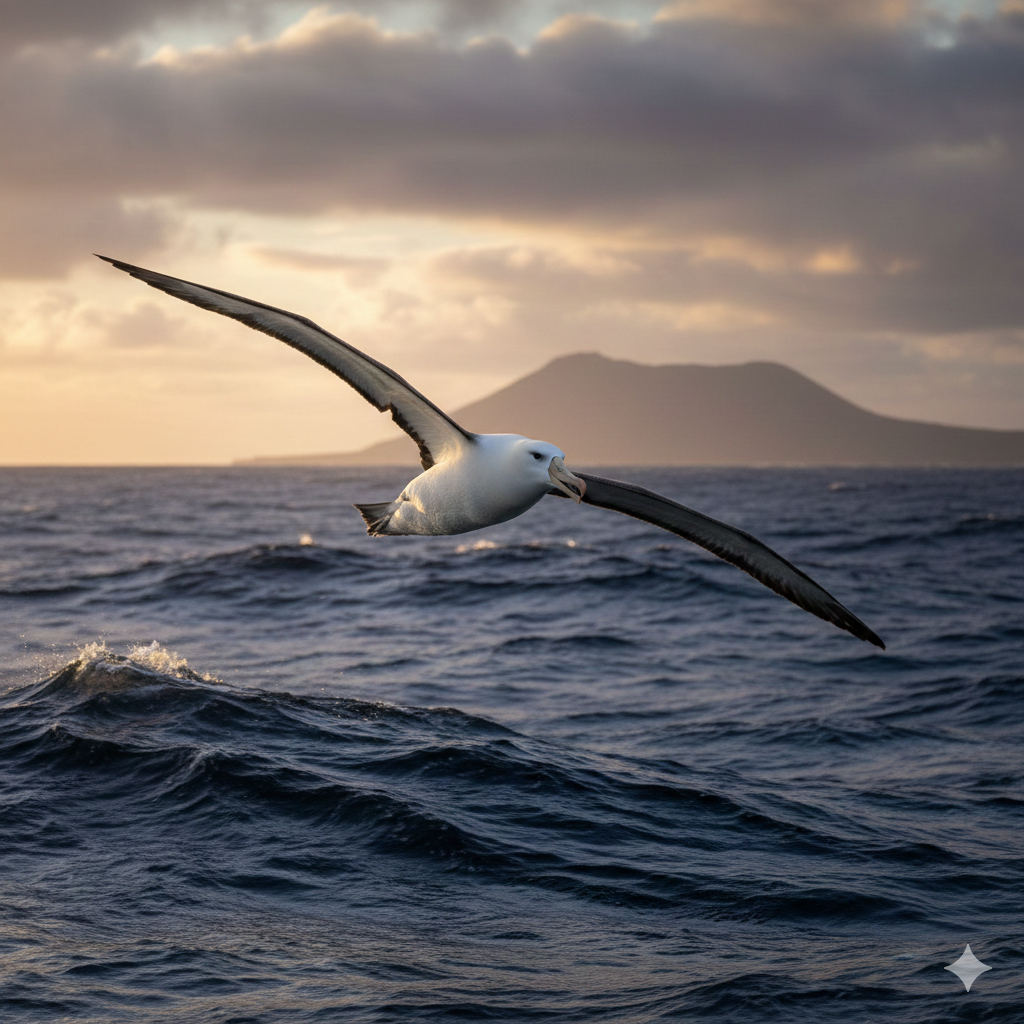
Imagine a bird that can fly for years without ever touching land, sleeping on the wing and traveling thousands of miles with barely a single flap.1 This is not the stuff of seafaring legend, but the daily reality of the albatross. As an ornithological researcher who has spent years studying pelagic bird behavior and participating in Southern Ocean conservation efforts, I have witnessed firsthand the silent, effortless glide of these “princes of the sea.” Additionally I’m telling you that Albetroos is in the best bird category.
The albatross is more than just a bird; it is a biological marvel of efficiency and endurance. In this comprehensive guide, we will explore the fascinating world of the family Diomedeidae, from their record-breaking wingspans to their complex social lives and the modern challenges they face in an ever-changing ocean.
What is an Albatross?
The albatross belongs to a group of birds known as “tubenoses” (order Procellariiformes), a name derived from the prominent tubular nostrils on their large, hooked beaks.2 There are 22 recognized species, divided into four genera: Diomedea (great albatrosses), Thalassarche (mollymawks), Phoebastria (North Pacific albatrosses), and Phoebetria (sooty albatrosses).3
These birds are primarily found in the Southern Ocean and the North Pacific.4 They are almost entirely pelagic, meaning they spend the vast majority of their lives—up to 85%—at sea, returning to remote, wind-swept islands only to breed.5
Key Biological Facts at a Glance
| Feature | Description |
| Largest Wingspan | Up to 11–12 feet ($3.5$ meters) in the Wandering Albatross |
| Lifespan | Often 50–60+ years (The famous Laysan albatross, Wisdom, is over 70) |
| Diet | Primarily squid, fish, crustaceans, and carrion |
| Flight Speed | Can reach speeds of nearly 70–80 mph ($110$ km/h) |
The Physics of Flight: How They Never Stop
One of the most common questions I get asked is: “How can a bird fly for thousands of miles without getting tired?” The answer lies in two specialized flight techniques: dynamic soaring and slope soaring.
Dynamic Soaring
Albatrosses exploit the wind shear—the difference in wind speed between the air just above the waves and the air higher up.6 By performing a series of swooping, S-shaped maneuvers, they gain energy from the wind gradient.7
-
Windward Climb: The bird turns into the wind, using the increasing wind speed at higher altitudes to gain lift and height.8
-
High-Altitude Turn: At the peak of its climb, it turns downwind.9
- Leeward Descent: It swoops back down toward the ocean surface, converting its potential energy into incredible speed.10
-
Low-Altitude Turn: Near the water, where the wind is slowest, it turns back into the wind to start the cycle again.11
Because of a unique “shoulder-lock” tendon, they can keep their wings fully extended without using any muscle power.12 This makes their flight virtually “fuel-free,” allowing them to travel up to 500 miles (13$800$ km) in a single day while burning fewer calories than they do sitting on a nest.14
Life Cycle and “Marriages” of the Air
In my experience observing colonies on the Falkland Islands and Midway Atoll, the social complexity of the albatross is perhaps their most endearing trait. These birds are the epitome of “slow and steady” life histories.15
Mating for Life
Albatrosses are famously monogamous.16 However, they don’t just “find a mate”; they earn one. Young birds spend several years at sea before returning to their birth colonies to engage in elaborate courtship rituals.17 These “dances” involve synchronized bill-clapping, sky-pointing, and vocalizations.18
Once a pair bond is formed, it usually lasts for life. This is vital because raising an albatross chick is an immense commitment.
The Longest Incubation
A pair typically produces only one egg every one to two years.19 The incubation period is one of the longest of any bird, lasting around 70 to 80 days.20 Both parents take turns sitting on the nest while the other travels thousands of miles to find food.21
The Modern Challenges: Threats to Survival
Despite being masters of the wind, the albatross is currently the most threatened family of birds in the world.22 According to the Agreement on the Conservation of Albatrosses and Petrels (ACAP), 15 of the 22 species are threatened with extinction.23
1. Longline Fishing (Bycatch)
The greatest threat at sea is incidental mortality from commercial fishing.24 Albatrosses follow fishing boats to scavenge on bait.25 They often get caught on the hooks of longlines and are dragged underwater and drowned.26 It is estimated that one albatross dies every five minutes in this manner.27
2. Plastic Pollution
Because they feed on the surface, albatrosses often mistake floating plastic for food.28 Tragically, parents unwittingly feed this plastic to their chicks.29 In many colonies, necropsies on deceased chicks reveal stomachs filled with bottle caps, lighters, and microplastics, which lead to dehydration and starvation.
3. Invasive Species
On their breeding islands, “house” mice and rats—introduced by humans—have become predators.30 On places like Gough Island, mice have been documented eating live albatross chicks that are dozens of times their size.
How You Can Help: Practical Solutions
While the challenges seem daunting, there is hope. Conservation efforts have proven that we can turn the tide.
-
Support Bird-Friendly Seafood: Look for seafood certified by organizations like the Marine Stewardship Council (MSC), which ensures fisheries use mitigation measures (like “Tori” lines or weighted hooks) to keep birds away.
-
Reduce Plastic Use: Every piece of plastic kept out of the ocean is a potential life saved. Participate in beach cleanups and reduce single-use plastics.
-
Donate to Conservation: Organizations like BirdLife International and ACAP work directly on the ground to eradicate invasive species and lobby for safer fishing regulations.
Conclusion
The albatross is a sentinel of the sea, a bridge between the vast, uninhabited reaches of the ocean and our human world. Their ability to navigate the globe with grace and efficiency is a reminder of the natural world’s brilliance. By understanding their biology and the threats they face, we can ensure that these magnificent gliders continue to roam our skies for generations to come.
If you are interested in learning more about seabird conservation or want to find out how to get involved in local marine protection efforts, please explore the resources linked above or reach out to your local wildlife organization.
