
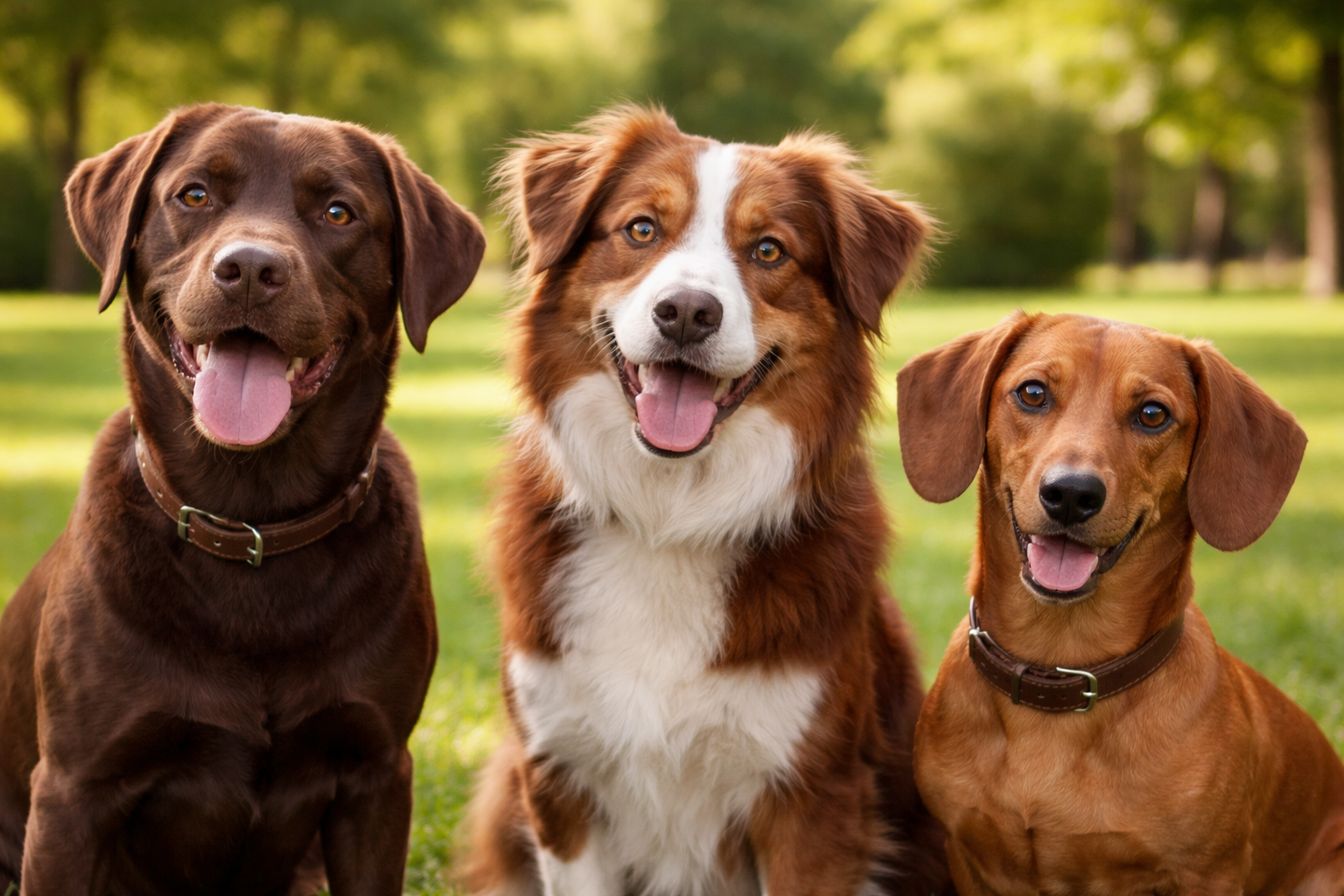
Introduction: What Are Brown Dogs and Why Do They Matter
Brown dogs are dogs with coats ranging from light tan and chocolate to deep mahogany and liver shades. This color appears across dozens of breeds, sizes, and temperaments, making brown dogs some of the most popular and recognizable companions worldwide. From family-friendly Labradors to hardworking hunting dogs, brown dogs have earned a strong reputation for beauty, versatility, and loyalty.
As someone who has spent years studying dog breeds, coat genetics, and canine behavior—and who has worked closely with dog owners facing real-life care challenges—I’ve seen how coat color often sparks curiosity, misconceptions, and questions. Brown dogs, in particular, are sometimes thought to be “ordinary,” yet they include some of the most intelligent, affectionate, and capable breeds in the world.
This guide will help you understand:
- What defines brown dogs
- Popular brown dog breeds
- Temperament and behavior trends
- Grooming, health, and care tips
- Common myths and challenges
Whether you already own a brown dog or are thinking of adopting one, this article will give you reliable, experience-based information you can trust.
What Are Brown Dogs?
They are not a single breed or category but rather dogs that display brown pigmentation in their coat. This pigmentation is caused by eumelanin, a natural pigment responsible for black and brown coloring in dogs.
Brown coats can appear as:
- Solid brown
- Chocolate
- Liver
- Brown with white or tan markings
- Brindle or patterned brown
They can be found in nearly every dog group—sporting, working, toy, herding, and companion breeds.
Popular Brown Dog Breeds
Many well-loved breeds naturally come in brown shades. Here are some of the most popular examples.
Labrador Retriever (Chocolate)
One of the most famous brown dogs, chocolate Labs are:
- Friendly and family-oriented
- Highly intelligent
- Excellent service and therapy dogs
German Shorthaired Pointer
- Athletic and energetic
- Brown or liver-colored coats
- Excellent hunting companions
Dachshund (Brown/Chocolate)
- Small but bold personality
- Loyal and affectionate
- Short or long brown coats
Poodle (Brown)
- Highly intelligent
- Low-shedding coat
- Excellent for allergy-sensitive owners
Doberman Pinscher
- Brown and rust coloration
- Protective yet affectionate
- Excellent guard dogs when trained properly
These examples show that brown dogs are incredibly diverse in size, purpose, and temperament.
Personality and Temperament
Coat color does not determine personality, but many brown dog breeds share common behavioral strengths.
Common Traits Seen in Many Brown Dogs
- Loyalty to family
- Strong work ethic (especially in sporting breeds)
- High intelligence
- Trainability
From my experience, many brown dogs—especially working and sporting breeds—tend to form deep bonds with their owners and thrive when given a job or purpose.
Are They Healthier Than Other Dogs?
There is no scientific evidence that brown dogs are inherently healthier than dogs of other colors. Health depends on:
- Breed genetics
- Responsible breeding
- Diet and exercise
- Veterinary care
However, brown-coated dogs may have fewer sunburn risks than white dogs and fewer pigmentation-related hearing issues seen in some extreme white or merle coats.
Grooming and Coat Care
Grooming Needs Depend on Coat Type
- Short coats: Weekly brushing
- Medium coats: 2–3 times per week
- Long or curly coats: Daily brushing
Brown coats can fade over time due to sun exposure or poor nutrition.
Tips to Maintain a Rich Brown Coat
- Feed high-quality protein
- Include omega-3 and omega-6 fatty acids
- Avoid excessive sun exposure
- Use gentle, color-safe dog shampoos
Many owners I’ve worked with notice a visible coat improvement within 6–8 weeks of diet upgrades.
Diet and Nutrition
Proper nutrition plays a major role in a brown dog’s overall health and coat quality.
Recommended Diet Components
- Animal-based protein (chicken, beef, fish)
- Healthy fats
- Vitamins A, E, and biotin
Avoid foods with excessive fillers, artificial colors, or low-quality meat by-products.
Training: Practical Advice
Training success depends more on breed and consistency than coat color.
Best Training Practices
- Start training early
- Use positive reinforcement
- Keep sessions short and engaging
Many brown dog breeds—such as Labs, Poodles, and Pointers—excel in obedience, agility, and scent work when trained consistently.
Common Questions About Them
Are Brown Dogs More Aggressive?
No. Aggression is influenced by environment, training, and genetics—not coat color.
Do Brown Dogs Shed More?
Shedding depends on breed and coat type, not color.
Do Brown Dogs Fade as They Age?
Yes, some brown dogs develop lighter coats due to aging, sun exposure, or hormonal changes.
Common Challenges with Them(and Solutions)
Challenge 1: Coat Fading
Solution: Improve diet, limit sun exposure, and use proper grooming products.
Challenge 2: Allergies
Some dogs (like retrievers) are prone to skin allergies.
Solution: Identify allergens, use vet-approved diets, and maintain regular grooming.
Challenge 3: High Energy Levels
Many of them belong to working breeds.
Solution: Provide daily exercise and mental stimulation.
Real-Life Experience Example
One dog owner I worked with had a chocolate Labrador suffering from dull coat and constant itching. After switching to a higher-quality diet with omega fatty acids and implementing weekly grooming, the dog’s coat darkened, shedding decreased, and skin irritation nearly disappeared within two months.
This highlights how proper care—not color—determines a dog’s health and appearance.
Myths About Them
Myth 1: Are They Less Desirable
False. Many of the world’s most popular breeds are brown.
Myth 2: Brown Dogs Are Harder to Train
False. Many brown breeds rank among the most intelligent dogs.
Myth 3: Coat Color Determines Behavior
False. Behavior depends on genetics, training, and environment.
Are They Right for You?
They may be perfect if you:
- Want a loyal, adaptable companion
- Are willing to meet exercise needs
- Value temperament over trends
Brown dogs fit into families, working roles, therapy work, and active lifestyles with ease.
Trusted External Resources (Authority & Trust)
- American Kennel Club (AKC) – Dog Breeds & Care
https://www.akc.org - American Veterinary Medical Association (AVMA)
https://www.avma.org - ASPCA – Dog Care Guides
https://www.aspca.org
These organizations provide evidence-based guidance on dog care, health, and behavior.
Conclusion: Why Brown Dogs Make Excellent Companions
They represent some of the most loyal, intelligent, and versatile companions in the canine world. Their rich coat colors, diverse breeds, and adaptable personalities make them ideal for many households.
By understanding their needs, providing proper care, and ignoring outdated myths, you can enjoy a long, healthy, and rewarding relationship with your brown dog.
Brown dogs, with their diverse range of breeds and personalities, offer companionship and loyalty to many families. Their coats require proper care and attention to maintain their health and appearance. Understanding their temperament and specific needs can enhance the ownership experience.
Addressing common challenges, such as coat fading and allergies, ensures a happy and healthy life for these beloved pets. Embracing the unique qualities of each brown dog enriches the bond between them and their owners.
👉 Next Steps:
- Research breeds that fit your lifestyle
- Prioritize training and nutrition
- Consult a veterinarian for personalized care
Explore more dog guides or reach out for expert advice to find the perfect companion.
