
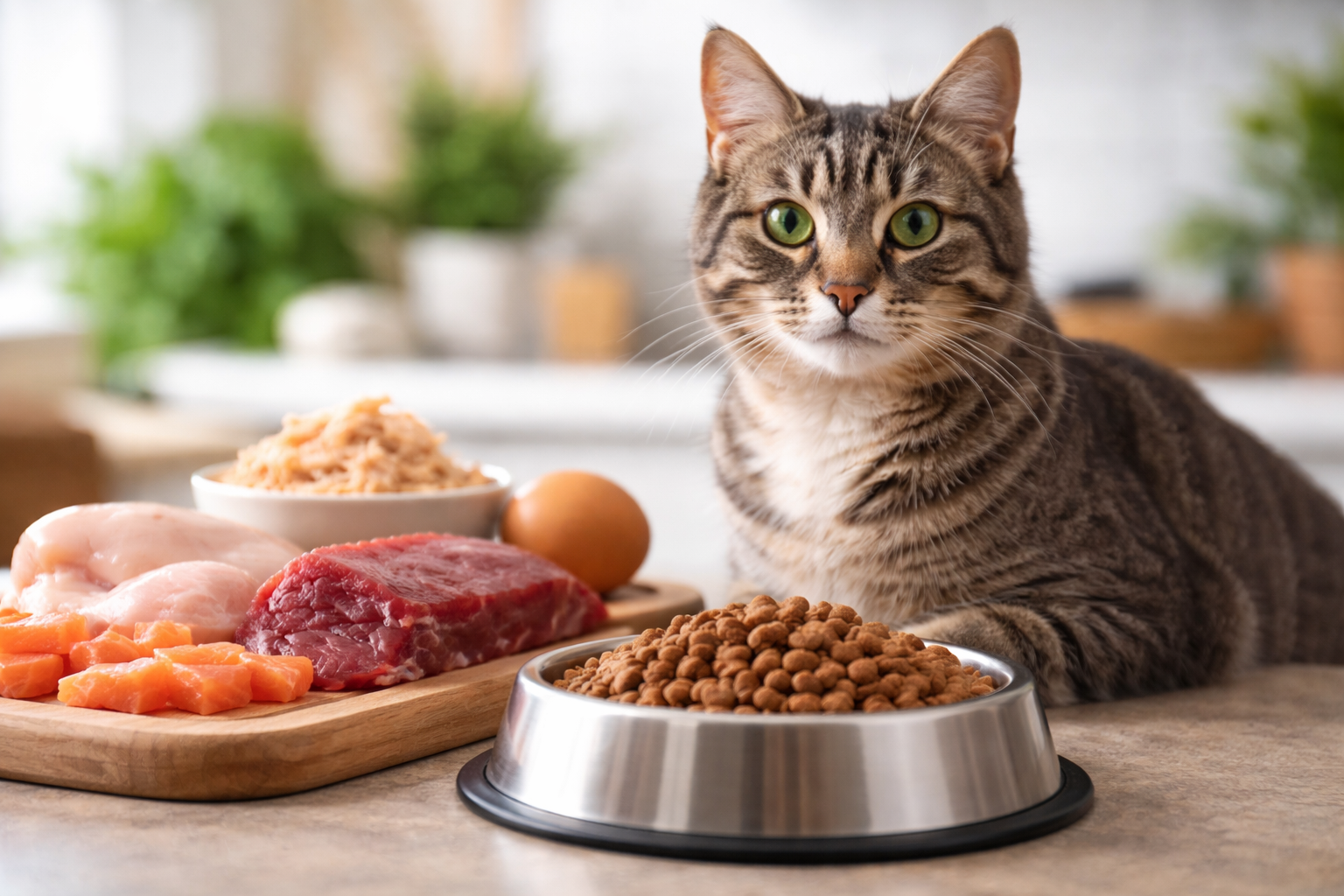
Introduction: What Is High Protein Cat Food and Why Does It Matter
High protein cat food is specially formulated cat food that contains a higher percentage of animal-based protein compared to standard cat diets. Since cats are obligate carnivores, their bodies are biologically designed to thrive on protein-rich nutrition. Unlike dogs or humans, cats rely heavily on protein for energy, muscle maintenance, immune health, and overall well-being.
As someone who has researched feline nutrition extensively and worked closely with cat owners struggling with issues like obesity, muscle loss, dull coats, and low energy in cats, I’ve seen firsthand how switching to high protein cat food can dramatically improve a cat’s health and quality of life.
Homemade wet cat food recipes are moist, meat-based meals prepared at home to mimic a cat’s natural prey diet. Cats are obligate carnivores, meaning they require animal protein to survive.
This guide will help you understand:
- What high protein cat food really is
- Why protein is essential for cats
- How to choose the best high protein cat food
- Common concerns and solutions
- Practical feeding tips based on real experience
Whether you’re a new cat parent or managing a senior cat’s diet, this article will give you everything you need to make informed, confident choices.
What Is High Protein Cat Food?
High protein cat food typically contains 30–50% protein (or more on a dry matter basis), primarily from animal sources such as chicken, turkey, fish, beef, or eggs.
Key Characteristics of High Protein Cat Food
- Protein comes from real meat, not fillers
- Lower carbohydrate content
- Supports lean muscle mass
- Closely mimics a cat’s natural prey-based diet
According to feline nutrition standards, animal protein provides essential amino acids like taurine, arginine, and methionine, which cats cannot produce on their own.
Fact: Taurine deficiency can cause heart disease and vision problems in cats, which is why protein quality matters as much as quantity.
Why Do Cats Need High Protein Diets?
1. Cats Are Obligate Carnivores
Unlike omnivores, cats cannot survive on plant-based diets. Their digestive systems are optimized for meat digestion.
2. Protein Fuels Energy
Cats use protein—not carbohydrates—as their primary energy source. Low-protein diets often lead to lethargy and muscle breakdown.
3. Muscle Maintenance & Growth
High protein cat food helps:
- Maintain lean muscle mass
- Prevent muscle wasting in senior cats
- Support growth in kittens
4. Healthy Skin & Shiny Coat
Many cat owners notice improved coat texture and reduced shedding within weeks of switching to a protein-rich diet.
Benefits of High Protein Cat Food
Improved Weight Management
High protein diets help cats feel fuller longer, reducing overeating. I’ve personally seen overweight indoor cats lose excess fat while maintaining muscle when switched to high protein cat food.
Better Digestive Health
Animal proteins are easier for cats to digest than carbohydrates like corn or wheat.
Stronger Immune System
Protein supports antibody production, helping cats fight infections.
Blood Sugar Control
Low-carb, high-protein diets are especially helpful for diabetic cats, as recommended by many veterinarians.
Dry vs Wet High Protein Cat Food
High Protein Dry Cat Food
Pros:
- Convenient and cost-effective
- Helps reduce plaque buildup
Cons:
- Lower moisture content
- Can be calorie-dense
High Protein Wet Cat Food
Pros:
- High moisture (important for urinary health)
- Often higher meat content
Cons:
- More expensive
- Shorter shelf life after opening
Expert Tip: A combination of high protein dry and wet food often works best for most cats.
How to Choose the Best High Protein Cat Food
1. Check the Ingredient List
Look for:
- Named animal proteins as the first ingredient
- Minimal fillers (corn, soy, wheat)
Avoid foods that list “meat by-products” without specification.
2. Protein Percentage
Aim for:
- Dry food: At least 35% protein
- Wet food: At least 10% protein (as-fed basis)
3. Life Stage Appropriateness
- Kittens need higher protein than adult cats
- Senior cats still benefit from protein but need easy digestibility
4. AAFCO Approval
Choose foods that meet AAFCO nutritional standards for complete and balanced diets.
Common Questions About High Protein Cat Food
Is High Protein Cat Food Safe for All Cats?
Yes, for most healthy cats. However, cats with advanced kidney disease may need controlled protein under veterinary guidance.
Can High Protein Cat Food Cause Kidney Problems?
This is a common myth. Research shows protein does not cause kidney disease; it may only need adjustment once disease is already present.
Is Grain-Free the Same as High Protein?
No. Grain-free does not automatically mean high protein. Always check the protein percentage and ingredient quality.
Challenges Cat Owners Face (And Solutions)
Challenge 1: Cat Refuses New Food
Solution: Transition slowly over 7–10 days by mixing old and new food.
Challenge 2: Budget Constraints
Solution: Look for mid-range brands with real meat as the first ingredient rather than premium marketing claims.
Challenge 3: Digestive Upset
Solution: Choose foods with limited ingredients and avoid sudden diet changes.
Real-Life Experience: A Practical Example
One cat owner I worked with had a 7-year-old indoor cat suffering from obesity and low energy. After switching to a high protein, low-carb wet food, the cat lost 1.5 kg over 4 months, became more active, and showed improved coat shine—without calorie restriction.
This transformation highlights how diet quality matters more than quantity.
Trusted External Resources (Authority & Trust)
For further reading, explore these credible sources:
- International Cat Care (iCatCare)
https://icatcare.org
These sources support the science behind high protein cat food and feline dietary needs.
Conclusion: Is High Protein Cat Food Right for Your Cat?
High protein cat food is not a trend—it’s a biologically appropriate choice rooted in feline physiology. From better muscle health and energy levels to improved digestion and weight control, the benefits are clear when quality protein sources are used.
In conclusion, high protein cat food is essential for maintaining the health and well-being of cats, supporting their unique dietary needs as obligate carnivores. By choosing high-quality protein sources and ensuring appropriate formulations for your cat’s life stage, you can significantly improve their energy, coat condition, and overall quality of life. With informed choices and practical strategies, you can help your feline friend thrive on a nutritious, protein-rich diet.
If you want your cat to thrive—not just survive—choosing the right high protein cat food is one of the most impactful decisions you can make.
👉 Next Steps:
- Read ingredient labels carefully
- Transition your cat slowly
- Consult your vet if your cat has medical conditions
If you’d like personalized recommendations or feeding guidance, feel free to explore more of our resources or reach out for expert help.
