
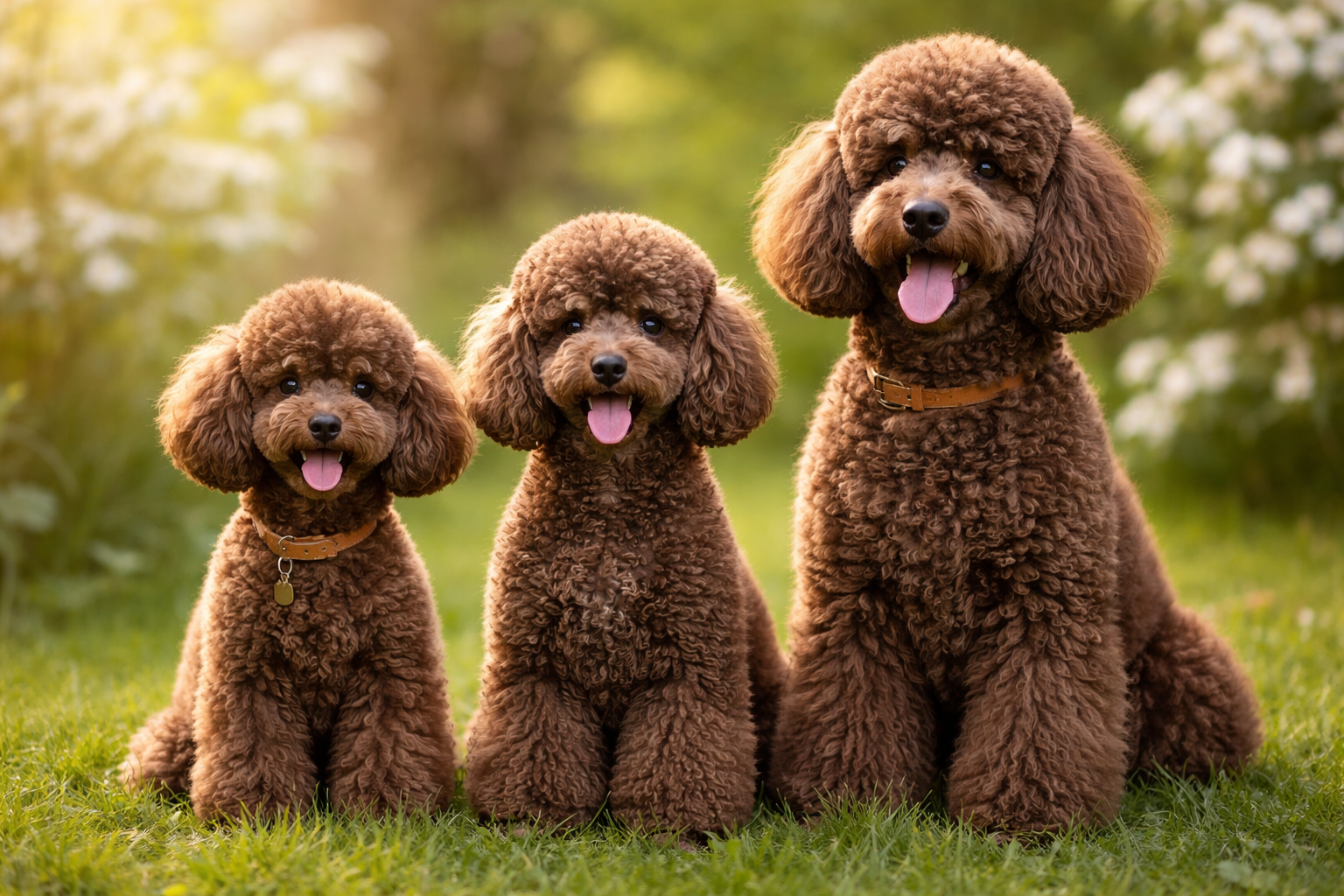
Introduction: What Is a Brown Poodle and Why Does It Matter
A brown poodle is a purebred Poodle that carries a rich chocolate, liver, or café-au-lait coat color instead of the more common white or black. Brown poodles can be Toy, Miniature, or Standard in size, and their unique color makes them especially appealing to families, first-time dog owners, and allergy-sensitive households.
As someone who has worked closely with poodles, poodle mixes, breeders, and owners—helping with breed research, care guides, and real-life problem-solving—I’ve seen firsthand why brown poodles stand out. They’re not just beautiful; they’re intelligent, loyal, and highly adaptable dogs that thrive in many lifestyles. These dogs are like mini poddles.
This guide will walk you through everything you need to know about brown poodles, including temperament, grooming, health, training, common challenges, and practical ownership tips—based on real experience and reliable sources.
What Makes a Brown Poodle Unique?
1. Coat Color Genetics Explained
They get their color from a recessive gene that affects eumelanin pigmentation. Unlike black poodles, brown poodles have:
- Brown noses
- Amber or hazel eyes
- Brown paw pads and lips
Fact: A true poodle is born brown and stays brown, although the shade may lighten with age.
Some of them may fade into lighter tones like café-au-lait or silver-beige, especially if they carry fading genes.
Their Sizes: Toy, Miniature, and Standard
They come in all three official AKC-recognized sizes:
Toy Brown Poodle
- Height: Under 10 inches
- Weight: 4–6 lbs
- Best for apartments and seniors
Miniature Brown Poodle
- Height: 10–15 inches
- Weight: 10–15 lbs
- Ideal for families and small homes
Standard Brown Poodle
- Height: Over 15 inches
- Weight: 40–70 lbs
- Great for active families and outdoor lovers
Each size shares the same intelligence and personality traits—only the physical needs differ.
About Personality & Temperament
Highly Intelligent and Trainable
Poodles are ranked among the top 3 smartest dog breeds. They excel in:
- Obedience training
- Agility sports
- Therapy and service roles
Real-life example: Many of them I’ve seen master basic commands in under two weeks with positive reinforcement training.
Loyal and Emotionally Sensitive
They form strong bonds with their owners. They:
- Sense emotions easily
- Dislike being ignored
- Thrive on companionship
This makes them excellent emotional support dogs—but also means they can develop separation anxiety if left alone too long.
Are Brown Poodles Hypoallergenic?
Yes—They are considered hypoallergenic, just like other poodles.
Why?
- They have hair, not fur
- Minimal shedding
- Less dander production
⚠️ Important: No dog is 100% hypoallergenic, but poodles are one of the safest choices for allergy sufferers.
Tip: Regular grooming dramatically reduces allergens in the home.
Grooming a Brown Poodle: What You Must Know
Coat Maintenance
They require consistent grooming:
- Brushing: 3–4 times per week
- Professional grooming: Every 4–6 weeks
Neglecting grooming leads to:
- Matting
- Skin infections
- Painful knots
Color-Specific Grooming Tips
- Use color-safe dog shampoos
- Avoid harsh sunlight (can fade brown coats)
- Feed a nutrient-rich diet to maintain coat depth
Feeding a Brown Poodle: Diet & Nutrition
They thrive on:
- High-quality protein (chicken, lamb, salmon)
- Omega-3 & Omega-6 fatty acids
- Limited fillers and artificial colors
Common Feeding Mistake
Overfeeding treats during training. Because poodles are eager learners, they can gain weight quickly.
Solution: Use small, soft treats or kibble-sized rewards.
Health Issues Common in Them
They are generally healthy, but like all purebreds, they’re prone to certain conditions:
Common Health Concerns
- Progressive Retinal Atrophy (PRA)
- Hip Dysplasia (Standard size)
- Addison’s Disease
- Ear infections (due to floppy ears)
Experience-based advice: Regular ear cleaning prevents 80% of poodle ear issues.
Lifespan
- Toy & Miniature: 14–18 years
- Standard: 12–15 years
Training for Them: Tips That Actually Work
Best Training Style
- Positive reinforcement
- Short, engaging sessions
- Mental stimulation (puzzle toys)
Common Challenge: Overthinking
Poodles are so smart that they may:
- Anticipate commands
- Get bored easily
- Become stubborn if training is repetitive
Solution: Rotate commands, use games, and reward creativity.
Are They Good Family Dogs?
Absolutely. Brown poodles are:
- Gentle with children
- Friendly with other pets
- Protective without aggression
However, supervision is important with very young kids, especially with Toy Poodles, due to their small size.
Brown Poodle Puppies: What to Look For
Choosing a Responsible Breeder
A trustworthy breeder will:
- Health test both parents
- Provide vet records
- Allow you to meet the puppy’s parents
Avoid breeders who:
- Sell unusually cheap puppies
- Refuse health documentation
- Focus only on color, not health
🔗 Helpful Resource:
American Kennel Club – Poodle Breed Info
https://www.akc.org/dog-breeds/poodle-standard/
Price: What to Expect
Prices vary based on size and breeder reputation:
- Toy Brown Poodle: $1,500–$3,000
- Miniature Brown Poodle: $1,200–$2,500
- Standard Brown Poodle: $1,000–$2,200
Rare shades of brown may cost more—but health should always come first.
Brown Poodle vs Other Poodle Colors
| Feature | Brown Poodle | White/Black Poodle |
|---|---|---|
| Rarity | Less common | Very common |
| Eye Color | Amber/Hazel | Dark brown |
| Coat Fading | Possible | Less likely |
| Temperament | Same | Same |
Truth: Color does NOT affect personality—only genetics and upbringing do.
Common Challenges Brown Poodle Owners Face (And Solutions)
1. Separation Anxiety
Solution: Crate training, gradual alone-time exposure, and interactive toys.
2. Coat Fading
Solution: Quality diet, coat-protective shampoos, limited sun exposure.
3. Overdependence
Solution: Encourage independence early with structured routines.
Is a Brown Poodle Right for You?
They are perfect if you want:
✔ A smart, trainable dog
✔ Minimal shedding
✔ A loyal companion
✔ An elegant but playful breed
They may not suit you if:
✘ You dislike grooming
✘ You’re rarely home
✘ You prefer low-interaction pets
Conclusion: Why the Brown Poodle Is a Truly Special Dog
The brown poodle is more than just a beautiful coat color—it’s a combination of intelligence, loyalty, elegance, and adaptability. Whether you choose a Toy, Miniature, or Standard brown poodle, you’re investing in a companion that can enrich your life for years.
If you’re considering getting a brown poodle or already own one, continue learning, invest in proper care, and don’t hesitate to seek expert guidance when needed.
They are a unique and captivating breed, distinguished by their rich chocolate-colored coats and intelligent, loyal nature. With their adaptability, they thrive in various environments, making them excellent companions for families and individuals alike. Regular grooming and a balanced diet are essential for maintaining their health and appearance.
While they are generally healthy dogs, being aware of potential genetic health issues is important for responsible ownership. Overall, they make wonderful pets that bring joy and companionship to their owners.
👉 Want more breed guides or personalized help choosing the right dog? Keep exploring our resources or reach out for expert advice.
