
Top 10 Best Guard Dog Breeds: Powerful Protectors for Every Home, Introduction
When you’re searching for the best guard dog breeds, you’re looking for more than just size or a loud bark — you’re looking for loyalty, trainability, protection instincts, and suitability for your lifestyle and family. In this article, we’ll explore what makes the best guard dog breeds stand out, why this topic matters for anyone seriously considering a protection or family-guardian dog, and how you can choose wisely. As a canine behaviour specialist with years of experience helping families match dogs to homes, I bring in real-world insight and actionable advice to guide you through this important decision.
Why Guard Dog Breeds Matter
Choosing one of the best guard dog breeds matters because having a dog that looks the part but lacks the temperament or training can lead to trouble. According to the American Kennel Club (AKC), guardian-type breeds “tend to be loyal, fearless, strong and watchful” and need proper training and socialisation. (American Kennel Club)
A dog with innate protection instincts but poor control or socialisation is not just ineffective — it can become a liability. The right guard dog breed will provide peace of mind, integrate into family life, and still perform its role as protector when needed.
Top Guard Dog Breeds: Examples & Facts
Here are some of the best guard dog breeds frequently cited, with their traits, pros and cons:
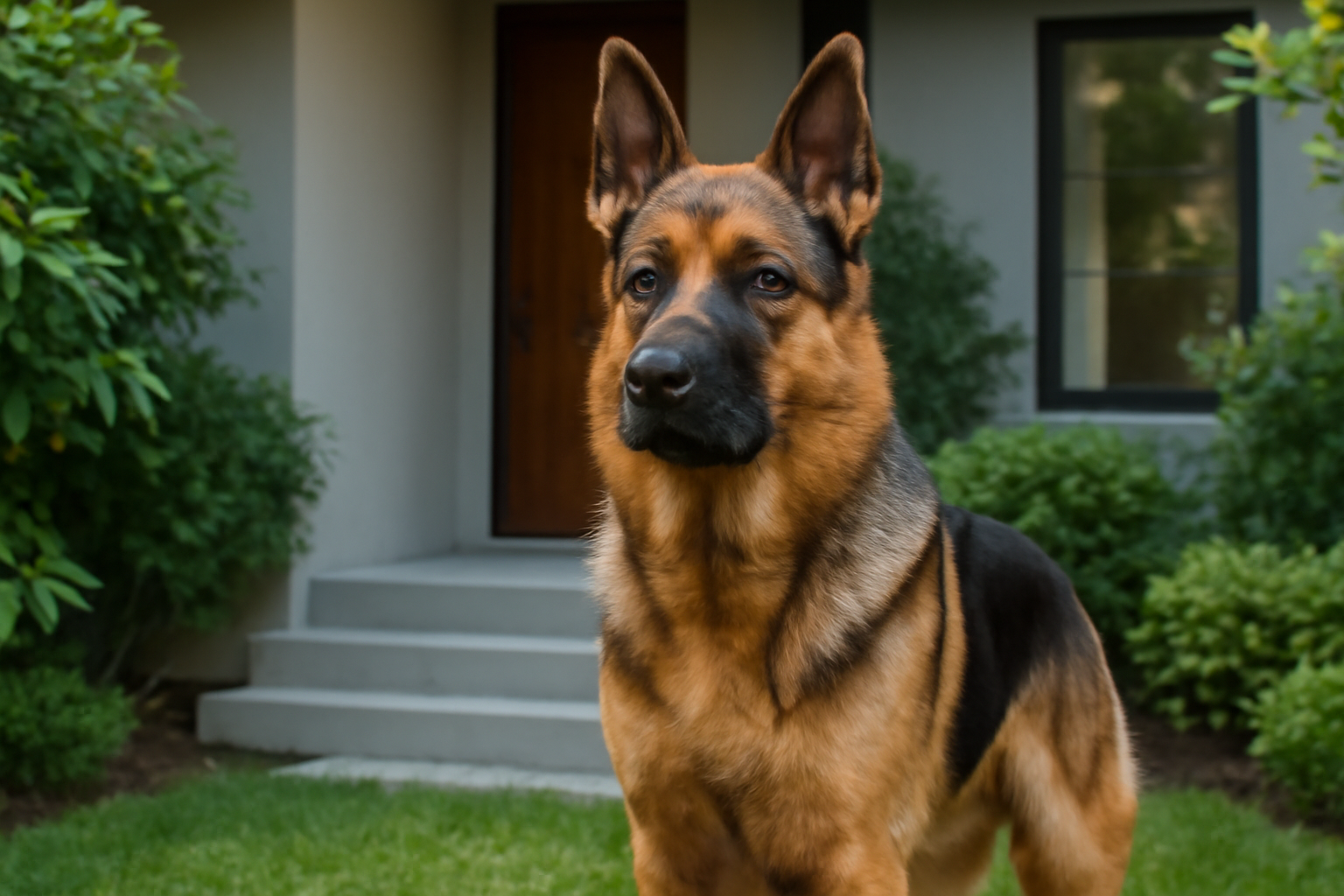
1. German Shepherd
A top pick for guard duty. Highly intelligent, trainable and protective. According to HowStuffWorks, German Shepherds are “protective dogs with strong instincts… making them great family pets and excellent guard dogs.”
Strengths: Versatile, loyal, work background (police/military).
Considerations: Needs mental stimulation, regular exercise; some hip issues in the breed.
2. Doberman Pinscher
Sleek, alert and designed for protection. The Spruce lists it among “Top 10 Best Guard Dog Breeds for Ultimate Protection.”
Strengths: Fast, protective, elegant.
Considerations: Needs firm, consistent training; not ideal for novice owners who won’t provide structure.
3. Bullmastiff
A powerful but calm guardian. Bow Wow Meow identified it as one of the top numbers for guard duty. (BWM)
Strengths: Large size, intimidating appearance, loyal nature.
Considerations: Big space requirement, weight control, and can be slower-moving than some other breeds.
4. Cane Corso
An Italian mastiff is bred historically for estate guard duties. The Spruce mentions it in the “ultimate protection” list.
Strengths: Strong protective instinct, confident presence.
Considerations: Must have an experienced owner; early socialisation essential; size and strength demand control.
5. Belgian Malinois
More agile than many large guard breeds; used widely in working K-9/ protection roles. The MyGAVet blog lists it among the most protective dog breeds.
Strengths: High drive, excellent for active owners, superb trainability.
Considerations: Very high energy — if bored, can develop unwanted behaviours; ideal for active households, not casual owners.
What Makes a Dog One of the “Best Guard Dog Breeds”?
From my experience, these are the attributes you’ll want to look at — not just for breed selection but for long-term success.
A. Protection Instinct + Temperament
A guard dog must have the instinct to protect, but also the temperament to differentiate between normal and threatening situations. As AKC says, such dogs not only alert but “intuitively know when to protect you from a dangerous situation.”
In practice, I’ve worked with a German Shepherd whose owner wanted a “protective family dog”. The dog displayed alertness but no aggression, thanks to proper training and socialisation.
B. Trainability & Socialisation
Even a top guard-breed requires training. Many guard-dog failures are due to a lack of consistent training and socialisation, not breed.
Tip: Begin socialisation with people, pets, and environments early (8–12 weeks) and continue throughout life.
Tip: Use positive-reinforcement training; establish boundaries and have a clear role for the dog.
C. Size, Strength & Body Language
Large size is a deterrent. Strong build, steady posture, confident stance all communicate presence. A Bulmastiff or Cane Corso’s body can say, “I’m not just any dog.”
But size also means responsibility: heavy dogs can be harder to control, need stronger fences, and cost more to maintain.
D. Fit With Lifestyle & Environment
Your home, yard size, activity level and family dynamic matter.
- If you live in a small apartment, a high-drive Belgian Malinois may become frustrated.
- If you have children, pick a breed that has ga ood family-friendly reputation (but still requires training).
- Space, exercise, stimulation — all matter.
E. Health & Longevity
Large guard breeds often have health challenges: hip dysplasia, bloat, joint issues, etc. As an advisor, I always tell owners: check health history, choose a reputable breeder, plan for long-term care.
For example, in Bullmastiffs, you’ll want to monitor weight and heart health carefully.
Common Questions & Answers
Here are some frequent questions I hear from prospective owners.
Q: Are guard dog breeds aggressive by nature?
A: Not inherently. The best guard dog breeds are protective, not gratuitously aggressive. Aggression arises when there’s poor socialisation, lack of boundaries or fear-based handling. The Spruce emphasises: “an ideal guard dog is large, fearless, and easy to train” — but it must never be unbalanced.
Q: Can these dogs live with children and other pets?
A: Yes — many can — but only if proper training and socialisation are done. For example, German Shepherds can be excellent family dogs if they are taught boundaries and supervised around young children. Conversely, breeds like Cane Corso might be better suited for experienced owners who can manage stronger protection instincts.
Q: How much exercise do these breeds need?
A: Guard breeds often require more than star pet dogs. The Belgian Malinois, for example, demands high energy and mental tasks. According to World Animal Foundation, a German Shepherd (another guard breed) “requires nearly two hours of exercise daily to stay fit and focused.” (WAF)
Q: What are the challenges of owning a guard dog breed?
A: Many — including training, socialisation, space requirement, health care, cost, and controlling strength. If untrained, their protective instincts can misfire, or their boredom can lead to destruction.
Practical Tips & Advice from My Experience
Here are actionable recommendations based on working with owners of guard-type breeds.
Tip 1: Start Training & Socialisation Early
Get your dog into structured training by 8–10 weeks. Use puppy classes, multi-person socialisation, and exposure to different environments. Teach commands like “sit/stay/come”, and gradually add more advanced obedience.
When I worked with a Bullmastiff puppy, early socialisation with kids, vvisitorsand other dogs made a major difference in its behaviour around strangers.
Tip 2: Establish Clear Rules & Leadership
Guard dog breeds respond well when leadership is calm, consistent and clear. They should know the household hierarchy, routines and acceptable behaviours.
Avoid using the dog as an “alarm system with no training” — that is a setup for misbehaviour.
Tip 3: Provide Sufficient Physical & Mental Work
Physical exercise alone is not enough. Mental stimulation is equally vital. Use agility, search games, obedience challenges, and protection-sport style work (if you’re trained).
If the dog has no job, it may invent one (and that could be chasing cars or guarding inappropriate items).
Tip 4: Match Breed to Environment & Owner Capacity
- Big yard + active household → Cane Corso, Bullmastiff.
- Household with kids + some space → German Shepherd, Doberman (with good training).
- Very active owner with experience → Belgian Malinois.
- Small home or low-energy owner → guard-breed may not be ideal at all.
Tip 5: Budget for Long-Term Care
Guard breeds often mean higher costs: premium food, joint supplements, fencing, training classes, health checks, and possibly larger-breed veterinary bills.
Plan financially and logistically for the full lifespan of the dog.
Tip 6: Recognise & Mitigate Risks
- Bloat risk: deep-chested dogs (Bullmastiff, Doberman) need meal timing, limited exercise right after eating.
- Hip/elbow issues: large breeds require controlled growth as puppies (avoid too much jumping/ stairs early).
- Behavioural issues: guarding instincts unchecked can lead to over-protectiveness, aggression or fear-based reactions.
Challenges and How to Overcome Them
Challenge: Over-protectiveness
If a guard dog becomes overly suspicious, it may treat normal guests as threats.
Solution: Structured socialisation, “friend or foe” differentiation training, and random, calm greeting behaviour.
Challenge: Owner Inexperience
Many first-time dog owners choose a big-name guard breed without understanding the workload.
Solution: Honestly assess your capacity and home before buying. Attend training courses. Consider hiring a behaviourist or trainer early.
Challenge: Inadequate Space or Energy Outlets
A highly capable guard breed stuck in a small apartment or with minimal activity is a disaster waiting to happen.
Solution: Choose a smaller or less intense breed, or commit to a full exercise/mental programme daily. Consider dog sports or working/duty roles.
Challenge: Health & Maintenance Costs
Large guard dogs have higher veterinary bills, more food, and more wear on the environment.
Solution: Choose a breeder with health testing, maintain a healthy weight, invest in preventive care, and budget accordingly.
Conclusion
Choosing one of the best guard dog breeds is a major decision — one that affects your home, family, schedule and finances. A well-selected, well-trained guard dog can provide protection, loyalty and companionship for years. But the benefits come only with responsible ownership: training, socialisation, environment fit, exercise and care.
Key takeaways:
- Look beyond appearance — focus on temperament, trainability and compatibility with your lifestyle.
- Early training, socialisation and consistent leadership are essential.
- Match the breed’s needs to your home, activity level and resources.
- Understand and accept the challenges — space, cost, exercise, and hand health.
- The right dog, in the right hands, becomes the best protector and friend.
If you’re ready to explore further, talk to reputable breeders, join local training groups, and consider scheduling a consultation with a canine behaviour professional (like I offer) to help you choose and prepare. Let me know if you’d like help identifying which guard dog breed fits your home best, or setting up a training and care plan — I’m here to assist.
- American Kennel Club – Best Guard Dogs: https://www.akc.org/dog-breeds/best-guard-dogs/ (American Kennel Club)
- The Spruce Pets – Best Guard Dog Breeds for Ultimate Protection: https://www.thesprucepets.com/best-dogs-for-protection-4140197 (The Spruce Pets)
- Hermitage Animal Clinic – Best Guard Dogs for Family: https://www.hermitageanimalclinic.com/site/blog/2023/12/15/best-guard-dogs-family (hermitageanimalclinic.com)
