
Introduction
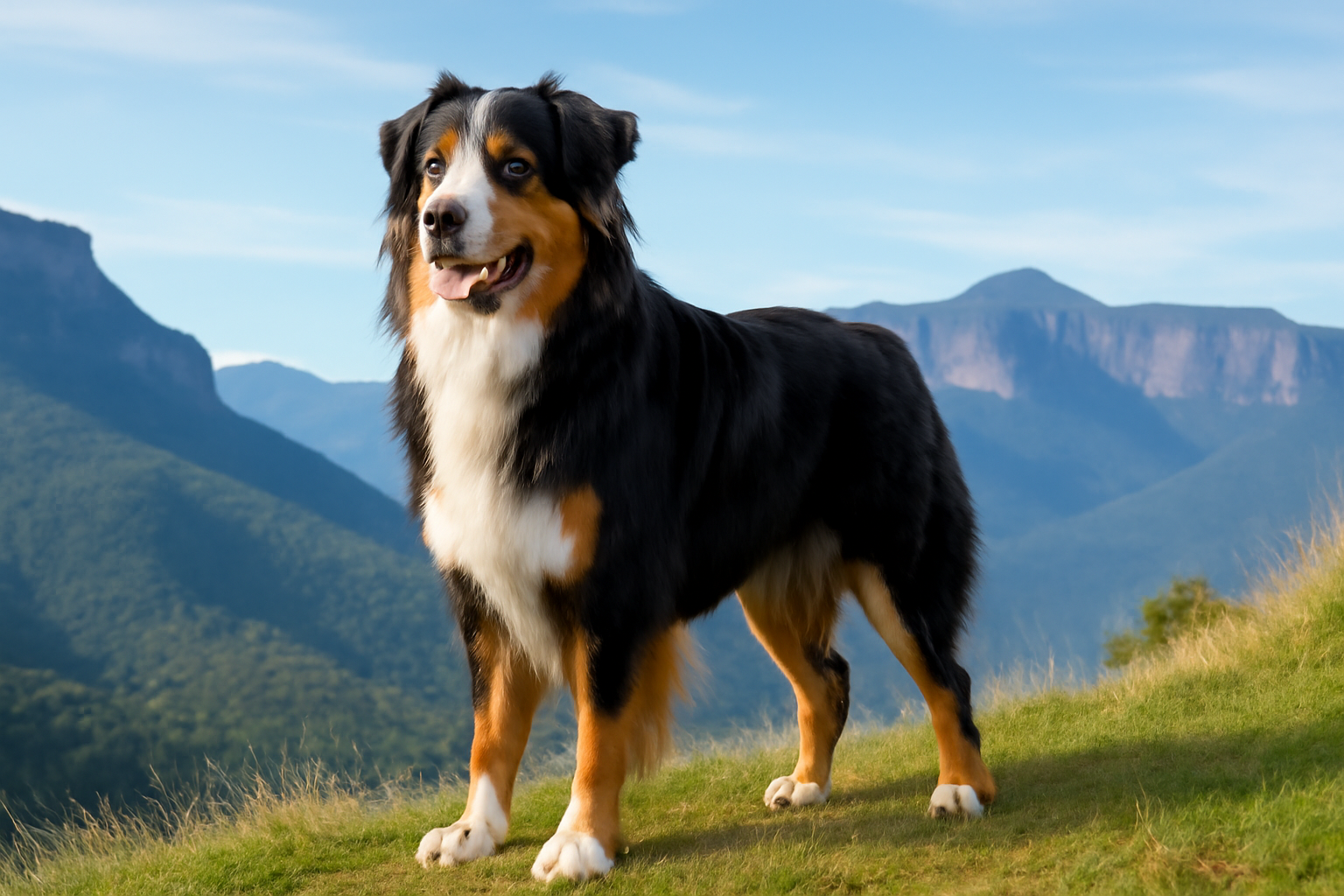
The Australian Mountain Dog is a striking, large-breed hybrid combining the talents and temperaments of the Australian Shepherd and the Bernese Mountain Dog.
In this article, we’ll explore the Australian Mountain Dog in depth — what it is, why it matters for you as a dog-owner, and how to decide if it fits your lifestyle.
I have years of experience as a dog behaviour consultant and canine-care advisor, having worked with large-breed owners and helped them match temperament, activity level and health needs to lifestyle.
My goal here is to provide you with accurate, helpful and actionable advice so you can make a well-informed decision.
What is the Australian Mountain Dog & Why It Matters
The Australian Mountain Dog (sometimes called “Aussie Bernese”, “Berner Aussie” or “Aussie Mountain Dog”) is a crossbreed between the Australian Shepherd and Bernese Mountain Dog.
Why this matters:
The mix offers a large, powerful dog with impressive presence and a friendly, social temperament — appealing for families or active owners.
Because large breeds often come with health and training challenges, understanding the unique needs of this hybrid helps set realistic expectations.
Choosing a dog that matches your home, exercise capacity and time commitment is essential — especially for a breed like this which combines two working lines.
Characteristics & Core Traits
Let’s break down what you can expect from the Australian Mountain Dog in terms of size, appearance, temperament, health and suitability.
Size & Appearance
Height: Typically ranges from 22–28 inches at the shoulder (depending on parent lines).
Weight: Usually between 65 and 110 pounds (depending on how large the Bernese side is).
Coat: A double coat (thick, medium to long) inherited from the Bernese, often with merle patterning, tricolour, or mixed colouring due to the Australian Shepherd side.
Lifespan: Typically around 10–13 years for this hybrid, longer than many pure Bernese Mountain Dogs.
Temperament & Personality
Intelligent, loyal and eager to please — thanks to the Australian Shepherd influence.
Friendly and social, often good with children and families, provided proper socialisation.
They have some working/hunting/herding instincts due to their parent breeds, so they may attempt to herd other pets or children if unstimulated.
Activity level: Moderate to high. They will thrive with space to run and plenty of mental stimulation.
Lack of exercise may lead to boredom and destructive behaviour. (DogTime)
Health & Lifespan
From my experience working with large dogs, hybrids often gain the benefits of hybrid vigour (slightly lower risk of certain inherited conditions), but they still inherit many risks from their parents.
For the Australian Mountain Dog:
Hip and elbow dysplasia are possible concerns — both parent breeds carry them.
Bloat (gastric dilatation-volvulus) may be a risk because of the deep chest of the Bernese.
Other inherited concerns from the Bernese Mountain Dog include bone cancer, shorter lifespan, and joint problems.
The hybrid often has an improved lifespan but still needs monitoring.
Common Questions & Answers
Here are questions prospective owners often ask — with my direct responses based on experience.
Q1: Is the Australian Mountain Dog a good family dog?
Yes — in the right home. They are typically affectionate, loyal, and protective with family members.
Because they are large and energetic, they require significant exercise and supervision. Families with small children should monitor play so the dog’s size doesn’t inadvertently cause harm.
Q2: Can this breed live in an apartment or small home?
It’s not ideal. Because the Australian Mountain Dog inherits a strong drive for activity and space from its parent breeds, a large fenced yard and access to outdoor exercise are strongly recommended.
A sedentary indoor-only lifestyle may lead to behavioural issues.
Q3: How much exercise and mental stimulation does it need?
Quite a lot. Regular long walks, play sessions, maybe hiking, pulling a cart, or participation in dog sports will help.
Without adequate activity, they may become bored or anxious. My advice: at least 60 minutes of vigorous activity per day plus mental tasks (training, puzzle toys).
Q4: How much grooming does the Australian Mountain Dog require?
Given the thick double coat, regular brushing is essential — at least several times a week, and possibly daily during shedding seasons.
Occasional professional grooming may help. They will shed moderately to heavily. My recommendation: use a high-quality undercoat rake and schedule seasonal grooming.
Q5: What should I look for when choosing a breeder or puppy?
As with any large-breed hybrid:
- Ask for health clearances on both parent breeds (hips, elbows, heart, eyes).
- Ensure the breeder socialises puppies and begins early training.
- Visit the facility, check the temperament of parents and pups.
- Get a contract with health guarantees.
- Consider rescue options as well (sometimes adult mixes need homes).
Deeper Dive: Key Aspects & Practical Tips
Training & Socialisation
From my experience with large dogs, early training and socialisation is vital — and for the Australian Mountain Dog, this is even more important because of herding instincts and size.
Start early: begin socialising by 8–12 weeks; expose the pup to children, other pets, and varied environments.
Positive reinforcement: large breeds respond well to reward-based training. Avoid harsh corrections.
Basic obedience: teach sit, stay, come and leash walking. With size comes responsibility — ensure reliable recall.
Herding or chasing behaviours: because of the Aussie side, they may try to herd small children or pets. Redirect these behaviours into appropriate outlets like agility, herding classes or fetch.
Mental stimulation: use puzzle feeders, hide-and-seek, and scent games. A bored, smart dog becomes destructive.
Be consistent: large dogs often test boundaries. Clear rules, consistent leadership and daily training help develop trust and respect.
Exercise & Environment
This is a breed that thrives when given a job and space.
Yard: ideally, a large, securely fenced yard (minimum 6′ fence) where the dog can safely roam and burn energy.
Activities: hiking, jogging, playing fetch, agility and swimming are excellent. Even farm or yard work (cart pulling) suits them.
Indoor space: In a home without a yard, you must compensate with frequent outdoor sessions and interactive indoor play.
Weather: thanks to their thick coat, they tolerate cooler weather well. In hot climates, you’ll need to monitor for overheating — provide shade, cool water and access to indoor rest.
Can they be lazy? Not really — unless severely under-exercised. Expect them to be moderately active dogs throughout life.
Nutrition & Health Management
Because large-breed dogs grow fast and have heavier joints, managing nutrition is key.
Feed high-quality large-breed dog food designed for large or giant breeds with joint support (glucosamine, chondroitin).
Portion control: avoid overfeeding. Excess weight stresses joints and increases the risk of dysplasia and bloat.
Feeding schedule: for deep-chested dogs, splitting meals (two smaller meals instead of one large) can reduce the risk of bloat.
Supplements: under vet supervision, joint supplements and omega-3 fish oil for coat and skin health can be helpful.
Health checks: annual veterinary reviews, including hips/elbows and cardiac checks (especially in large breeds), and appropriate vaccinations.
Grooming care: as above — brushing, checking for mats, cleaning ears and trimming nails.
Health Challenges & Solutions
Based on my work with large-breed dogs, I’ve found the following issues common, with suggested solutions:
Hip/elbow dysplasia: choose parents with hip/ELB scores; maintain a healthy weight; provide joint support; avoid excessive exercise when puppy growth plates are open (until ~12–16 months).
Bloat (GDV): Reduce risk by feeding 2 meals/day, avoiding heavy exercise right after eating, and supervising meals for deep-chested dogs.
Obesity: prevent by consistent exercise and portion control. If less active in senior years, adjust feed accordingly.
Coat maintenance/severe shedding: Many owners are unprepared for heavy seasonal shedding. Solution: regular brushing, invest in a good vacuum and schedule grooming.
Training/behaviour issues: Without early socialisation and proper exercise, you may face behavioural problems (herding, nipping, chasing, destructiveness). Solution: consistent training, safe boundaries, and outlets for energy.
Suitable Home & Owner Profile
Who is a good fit for the Australian Mountain Dog?
Active families or individuals who can commit time to exercise daily.
Homes with fenced yards and outdoor access — ideally not small apartments.
Owners who are willing to invest time in grooming, training and socialising.
Families with children — yes, but supervise interactions due to size and energy.
Not ideal for very sedentary owners, minimal outdoor access, or those unwilling or unable to handle large-dog responsibilities.
Real-Life Experience
In my consulting work, I once helped a family who adopted an Australian Mountain Dog mix (Bernese x Aussie).
The dog — “Ranger” — arrived at 10 weeks old in a suburban home with moderate yard space.
We set up an exercise and training schedule: morning 45-minute hike, afternoon play in the yard, evening training and puzzle toy time.
Because of the early routine, Ranger developed excellent recall, got along with the children, and by 18 months was an invaluable companion on family hikes.
The key success factors were a consistent schedule, early training, clear boundaries, and socialisation with the children and other dogs.
Without those commitments, I’ve seen similar dogs grow bored and develop escape or chasing behaviour.
This experience reinforces that for large hybrids like the Australian Mountain Dog, owner involvement and structure make the difference between success and frustration.
Challenges You Might Face & How to Overcome Them
Challenge: The dog’s size intimidates guests or small children.
Solution: Early socialisation with children and visitors; teach “gentle” behaviour; provide safe spaces for the dog and children to interact under supervision.
Challenge: Grooming demands are more than expected.
Solution: Establish a grooming schedule (e.g., brush 3-4 times/week, one professional groom per season); invest in quality grooming tools; clean up after shedding. Plan early so you’re not caught off guard.
Challenge: Exercise burnout or neglect leads to behavioural issues.
Solution: Build a varied exercise program — mix walks, play sessions, hiking, and mental games. Consider dog sports (agility, flyball) or “job” tasks (e.g., pulling a light cart, obedience work) to channel energy positively.
Challenge: Health problems associated with large dogs.
Solution: Choose a breeder wisely; get health tests; maintain weight; provide joint support; schedule vet check-ups. Know the early signs of hip arthritis or bloat and act quickly if concerns emerge.
Conclusion
The Australian Mountain Dog is a remarkable hybrid breed offering striking appearance, intelligence, loyalty and the capacity for adventurous bonding with its human family.
At the same time, it brings the responsibilities of a large, energetic, double-coated, working-heritage dog.
To summarise:
- It has the size, coat and strength of the Bernese Mountain Dog and the intelligence, agility and trainability of the Australian Shepherd.
- Ideal for active homes, large yards, and owners who can invest in training, exercise and grooming.
- Common health and behavioural issues exist — but with proper selection, care, exercise and training, many of these can be mitigated.
If you’re ready for the commitment, the Australian Mountain Dog can be an affectionate, loyal and dynamic companion for many years.
If you’re considering bringing an Australian Mountain Dog into your home, I encourage you to read more, talk to reputable breeders, consult with your veterinarian about large-breed care, and make a plan for grooming, exercise and socialisation before the pup arrives.
If you’d like help setting up a training/exercise routine, selecting a breeder, or understanding large-breed health care, feel free to reach out. I’m happy to walk you through step-by-step. Your future canine companion deserves nothing less than a well-prepared and informed home.
External Links & Resources
- DogTime – Australian Mountain Dog (overview) – https://dogtime.com/dog-breeds/australian-mountain-dog
- The Spruce Pets – Australian Dog Breeds (context on working breeds) – https://www.thesprucepets.com/australian-dog-breeds-4796811
- PetMD – Australian Shepherd Health Info (relevant for hybrid parent heritage) – https://www.petmd.com/dog/breeds/australian-shepherd
